Wine slang meaning can be confusing, especially when you hear people use casual words and expressions that do not appear on a traditional wine label. From terms like “vino” and “juice” to phrases such as “wine o’clock” and “wine snob,” wine culture has developed its own vocabulary over the years. Understanding these expressions can make conversations about wine much easier and more enjoyable.
Whether you are a complete beginner, a casual wine drinker, a restaurant guest, or someone who enjoys learning modern slang, knowing common wine slang terms can help you understand what people mean in conversations, texts, social media posts, and online communities.
In this guide, we will explore the wine slang meaning, where popular expressions come from, how people use them, and the difference between casual wine slang and professional wine terminology.
What Does Wine Slang Mean?
Wine slang refers to informal words, phrases, nicknames, and expressions people use when talking about wine. Unlike official wine terminology, slang is usually casual, humorous, shortened, or influenced by popular culture.
For example:
- Vino – a casual word for wine.
- Juice – an informal term for wine, especially in wine communities.
- Grape juice – sometimes used humorously to describe wine.
- Wine o’clock – a playful expression for the time when someone feels like having wine.
- Wine snob – someone perceived as being overly particular about wine.
- Corked – technically a wine fault, but often used casually when describing wine affected by cork taint.
- Wine tasting – sampling wine to evaluate its characteristics.
- Old vine – wine made from grapes grown on older vines.
The exact meaning can depend on context. A term that sounds funny in a text message may have a more specific meaning among wine professionals.
Why Is Wine Slang Popular?
Wine has a long history and a strong social culture. As wine became part of restaurants, celebrations, parties, social media, and everyday conversations, people naturally created shorter and more entertaining ways to discuss it.
Wine slang is popular because it:
- Makes conversations more casual.
- Helps people express opinions quickly.
- Adds humor to social media posts.
- Creates a sense of community among wine lovers.
- Makes complicated wine terminology easier to discuss.
- Appears frequently in memes, captions, and online conversations.
For example, instead of saying, “I would like to consume a glass of wine after completing my work,” someone might jokingly say, “It’s wine o’clock.”
Common Wine Slang Terms and Their Meanings
Here are some of the most common expressions you may encounter.
| Wine Slang | Meaning |
|---|---|
| Vino | Casual term for wine |
| Juice | Informal term for wine |
| Grape juice | Humorous reference to wine |
| Wine o’clock | A playful time to enjoy wine |
| Wine snob | Someone overly particular about wine |
| Wine lover | Someone who enjoys wine |
| Wine geek | Someone highly interested in wine details |
| Corked | Wine affected by cork taint |
| Old vine | Grapes from older vines |
| House wine | Wine commonly served by a restaurant |
| Red | Casual reference to red wine |
| White | Casual reference to white wine |
| Rosé | Pink-colored wine |
| Bubbly | Informal term for sparkling wine |
| Big wine | Wine perceived as powerful or full-bodied |
| Easy-drinking | Wine that is smooth and approachable |
Not every expression is technically “slang.” Some are informal descriptions, while others are established wine terms. However, they frequently appear in casual wine conversations.
“Vino” – A Popular Casual Word for Wine
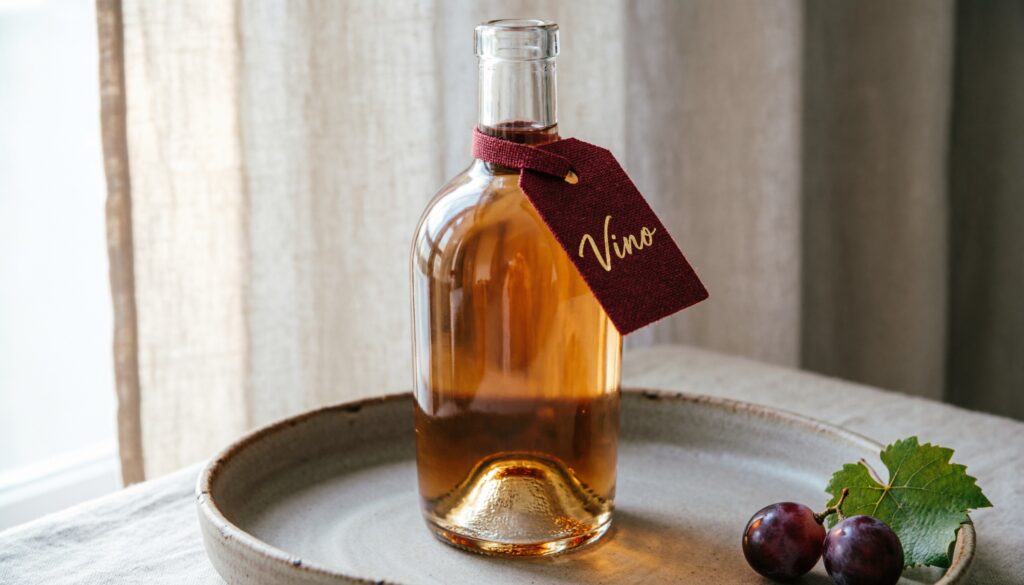
One of the most recognizable wine-related slang terms is vino.
“Vino” comes from Italian and Spanish usage associated with wine. In English conversations, it is often used playfully or casually as another word for wine.
Examples
- “Let’s grab some vino tonight.”
- “This restaurant has some great vino.”
- “I’m looking for a nice bottle of vino.”
The word often gives a conversation a relaxed or stylish feel.
On social media, people may also use “vino” in captions because it sounds shorter and more playful than simply saying “wine.”
“Juice” as Wine Slang
Another expression you may hear in wine communities is juice.
When someone calls wine “juice,” they are usually using an informal nickname rather than talking about ordinary fruit juice.
For example:
“This juice is seriously good.”
In this context, the person means the wine tastes good.
The word is particularly common among enthusiasts who discuss wine in a relaxed way. However, context matters. If someone says “juice” without mentioning wine, they could simply mean a regular beverage.
What Does “Wine O’Clock” Mean?
Wine o’clock is a humorous expression meaning it is time to relax and enjoy a glass of wine.
It is not an actual time on the clock. Instead, it represents the moment when someone feels ready to unwind.
Examples
- “Long day at work. It’s wine o’clock!”
- “Friday evening means wine o’clock.”
- “When the meeting ends, it’s officially wine o’clock.”
The phrase is especially popular in social media captions and memes.
What Does “Wine Snob” Mean?
A wine snob is someone who is perceived as being extremely particular about wine.
A wine snob might:
- Care deeply about wine regions.
- Discuss vintage years.
- Pay close attention to aromas and flavors.
- Prefer certain grape varieties.
- Criticize inexpensive or mass-produced wines.
- Correct other people’s wine terminology.
The phrase can be serious or humorous.
For example:
“I’m becoming a bit of a wine snob.”
This could simply mean someone has started learning more about wine.
It is also worth remembering that being knowledgeable about wine does not automatically make someone a wine snob. The term usually suggests that a person is overly judgmental or pretentious.
What Does “Wine Geek” Mean?
A wine geek is generally someone who is deeply interested in wine.
Unlike “wine snob,” the phrase is often positive or affectionate.
A wine geek may enjoy learning about:
- Grape varieties
- Wine regions
- Winemaking
- Aging
- Wine history
- Tasting techniques
- Food and wine pairing
- Wine production methods
For example:
“My brother is a total wine geek. He can talk about wine for hours.”
Being called a wine geek usually suggests enthusiasm rather than arrogance.
What Does “Bubbly” Mean in Wine Slang?
Bubbly is a common informal term for sparkling wine.
Sparkling wines contain carbon dioxide, which creates bubbles. Champagne is one famous example, although not every sparkling wine is Champagne.
People might say:
- “Let’s open some bubbly.”
- “We brought bubbly for the celebration.”
- “She loves bubbly.”
The expression is especially common at weddings, birthdays, New Year’s celebrations, and other special occasions.
What Does “Corked” Mean?
Corked is a wine term that describes a wine affected by cork taint.
A corked wine can have unpleasant aromas and flavors, sometimes described as musty, moldy, or like damp cardboard.
For example:
“Something seems wrong with this bottle. I think it’s corked.”
This is different from simply saying a wine tastes bad. “Corked” refers to a specific wine fault associated with compounds such as TCA.
Wine Slang in Texting and Chat
Wine slang frequently appears in text messages because people naturally shorten words when communicating casually.
Some examples include:
- “Need vino tonight ”
- “Who’s bringing the bubbly?”
- “Wine o’clock yet?”
- “Grab a bottle of red.”
- “This juice is .”
- “I’m officially a wine geek.”
In texting, the tone is usually more important than technical accuracy.
Wine Slang on Instagram and TikTok
Social media has helped popularize playful wine expressions.
Wine-related posts often use phrases such as:
- Wine o’clock
- Sip happens
- Wine not?
- Save water, drink wine
- Vino vibes
- Wine night
- Wine time
- Cheers
- Rosé all day
Some of these phrases are jokes or slogans rather than strict wine terminology.
For example, “Rosé all day” is commonly used as a playful phrase celebrating rosé wine and relaxed social occasions.
Wine Slang in Dating and Relationships
Wine expressions can also appear in dating conversations.
Someone might text:
“Dinner and vino?”
Here, “vino” simply makes the invitation sound casual.
Other examples include:
- “Wine night?”
- “Let’s grab a bottle.”
- “You bring the snacks, I’ll bring the vino.”
- “A little wine and a good conversation sounds perfect.”
The meaning usually depends on the relationship and context. Wine slang itself does not automatically imply romance or intimacy.
Wine Slang vs. Wine Terminology
It is important to understand the difference between slang and technical wine vocabulary.
Wine slang
Slang is informal and often playful.
Examples:
- Vino
- Juice
- Bubbly
- Wine o’clock
- Wine snob
- Wine geek
Wine terminology
Technical terminology describes specific characteristics or processes.
Examples:
- Tannin
- Acidity
- Vintage
- Terroir
- Body
- Finish
- Varietal
- Fermentation
- Decanting
Knowing both can help you communicate more confidently.
Popular Wine Terms Beginners Should Know
Not every useful wine word is slang. If you are learning about wine, these terms are worth understanding.
1. Tannins
Tannins are natural compounds that can create a drying or slightly bitter sensation in the mouth.
They are particularly noticeable in many red wines.
2. Acidity
Acidity contributes freshness and brightness to wine.
A wine with higher acidity may taste crisp and lively.
3. Body
Body describes how heavy or substantial a wine feels in your mouth.
Common descriptions include:
- Light-bodied
- Medium-bodied
- Full-bodied
4. Finish
The finish is the flavor or sensation that remains after swallowing or tasting wine.
5. Vintage
Vintage generally refers to the year in which the grapes used to make a wine were harvested.
6. Terroir
Terroir describes the combination of environmental and geographical factors that influence grapes and wine, including elements such as soil, climate, and location.
Funny Wine Slang and Expressions
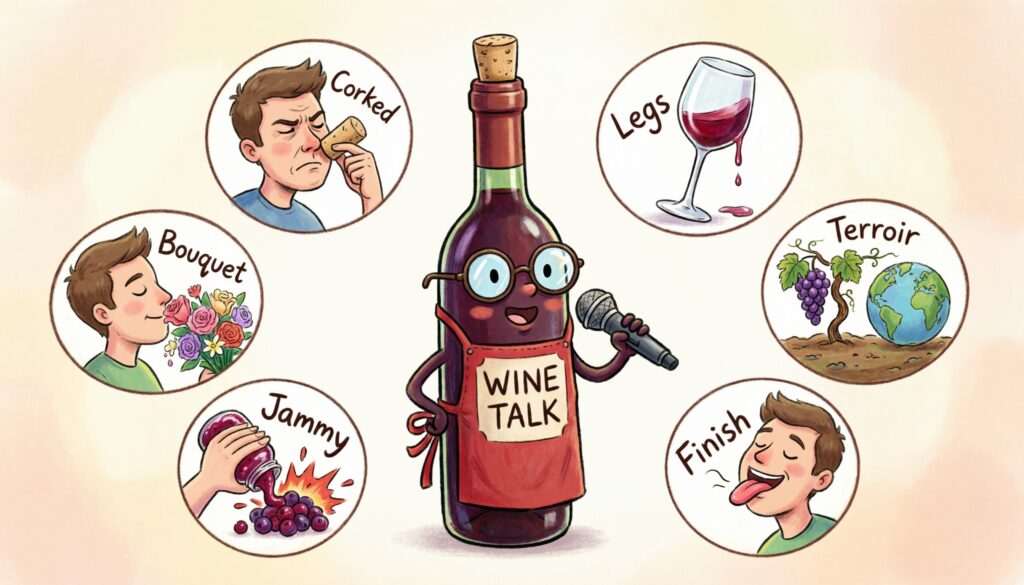
Wine culture has produced many humorous expressions.
Here are some popular examples:
“Wine not?”
A playful variation of “Why not?”
Example:
“Should we open another bottle?”
“Wine not?”
“Sip happens”
A pun on the phrase “stuff happens.”
It is usually used humorously.
“Wine a little, laugh a lot”
A playful social-media-style phrase associated with enjoying wine and having fun.
“Wine down”
A playful expression meaning to relax with wine, inspired by the phrase “wind down.”
These phrases are more about humor than technical wine knowledge.
Wine Slang for Different Types of Wine
People often use shortened or casual descriptions for different wine styles.
Red Wine
Someone might simply say:
- Red
- Red wine
- Big red
- Bold red
“Big red” often suggests a powerful, full-bodied red wine.
White Wine
Common casual descriptions include:
- White
- Crisp white
- Chilled white
Rosé
People may simply say:
- Rosé
- Pink wine
- Rosé season
Sparkling Wine
Common informal expressions include:
- Bubbly
- Fizz
- Sparkles
Again, these are casual descriptions rather than official classifications.
Common Misconceptions About Wine Slang
Misconception 1: Every wine nickname is official terminology
False. Many expressions are simply casual language.
“Wine o’clock,” for example, is not a technical wine term.
Misconception 2: “Vino” refers to one particular type of wine
Not necessarily. In casual English usage, “vino” generally means wine.
Misconception 3: A wine geek and wine snob are the same
Not exactly.
A wine geek is usually enthusiastic and knowledgeable, while “wine snob” can imply someone who is unnecessarily judgmental.
Misconception 4: Every sparkling wine is Champagne
No. Champagne specifically refers to sparkling wine produced under particular rules in the Champagne region of France. Other regions produce many different styles of sparkling wine.
Misconception 5: Expensive wine is always better
Price does not automatically determine quality or personal enjoyment. Taste preferences vary considerably from person to person.
How to Understand Wine Slang in Context
When you encounter an unfamiliar wine expression, look at the surrounding conversation.
Ask yourself:
- Is the person talking about a specific wine?
- Is the phrase being used humorously?
- Is it a social-media caption?
- Is the speaker discussing professional wine tasting?
- Does the term have a technical meaning?
For example, “juice” could mean ordinary fruit juice in one conversation and wine in another.
Context is the key to understanding slang correctly.
Related Wine Expressions and Alternatives
If you are searching for wine slang meaning, you may also encounter these related terms:
- Wine vocabulary
- Wine terminology
- Wine expressions
- Wine phrases
- Wine lingo
- Wine language
- Wine culture
- Wine tasting terms
- Wine words
- Wine nicknames
- Wine abbreviations
- Wine captions
- Wine memes
These keywords can be useful when exploring different aspects of wine culture.
How to Use Wine Slang Naturally
If you want to sound natural when using wine slang, keep it simple.
Casual conversation
“Let’s get some vino.”
Social media
“Friday night = wine o’clock.”
Talking about sparkling wine
“Bring the bubbly!”
Talking about your interest
“I’m becoming a bit of a wine geek.”
Describing a powerful wine
“That’s a big red.”
The goal is not to use as much slang as possible. A few expressions used naturally will sound much better than forcing complicated terminology into a conversation.
Wine Slang: Quick Reference Guide
| Expression | Simple Meaning | Typical Context |
|---|---|---|
| Vino | Wine | Casual conversation |
| Juice | Wine | Wine communities |
| Bubbly | Sparkling wine | Celebrations |
| Wine o’clock | Time to relax with wine | Social media/casual talk |
| Wine snob | Overly particular wine drinker | Casual conversation |
| Wine geek | Enthusiastic wine expert/fan | Wine communities |
| Big red | Powerful red wine | Wine discussions |
| Corked | Affected by cork taint | Wine tasting |
| Wine down | Relax with wine | Casual/social media |
| Sip happens | Humorous wine pun | Social media |
Frequently Asked Questions About Wine Slang Meaning
1. What does wine slang mean?
Wine slang refers to informal words, nicknames, phrases, and expressions people use when talking about wine. Examples include “vino,” “juice,” “bubbly,” and “wine o’clock.”
2. What does “vino” mean in slang?
“Vino” is a casual term for wine. In English conversations, it is often used playfully or informally instead of simply saying “wine.”
3. What does “wine o’clock” mean?
“Wine o’clock” is a humorous expression meaning it is time to relax and enjoy wine. It does not refer to a specific official time.
4. What does “juice” mean in wine slang?
“Juice” can be an informal nickname for wine, particularly among some wine enthusiasts. The meaning depends on the context.
5. What does “wine geek” mean?
A wine geek is someone who is highly interested in wine and enjoys learning about wine regions, grapes, tasting, winemaking, and related subjects.
6. Is “bubbly” slang for Champagne?
“Bubbly” is a casual term for sparkling wine. It does not necessarily mean Champagne because sparkling wines are produced in many places around the world.
7. What is the difference between a wine snob and a wine geek?
A wine geek is generally an enthusiastic and knowledgeable wine lover. “Wine snob” can suggest someone who is overly selective, pretentious, or judgmental about wine.
Conclusion
Understanding wine slang meaning is a fun way to become more comfortable with modern wine conversations. Words such as vino, juice, bubbly, wine o’clock, wine geek, and wine snob can appear in conversations, texts, restaurant discussions, memes, and social media posts.
The most important thing to remember is that wine slang is informal and highly dependent on context. Some expressions are humorous, while others overlap with genuine wine terminology.
If you are new to wine, start by learning a few common expressions and then gradually explore technical terms such as tannins, acidity, body, vintage, terroir, and finish. You do not need to memorize every wine word to participate confidently in a conversation.
Ultimately, wine language is about communication and enjoyment. Learn the terminology, understand the slang, and most importantly, use words naturally rather than trying to sound overly sophisticated. That approach will help you understand wine conversations while making the experience more relaxed and enjoyable.
Discover More Articles:
- Glizzy Meaning Explained: From Internet Slang to Everyday Talk
- Pineapple Slang Meaning: What Does “Pineapple” Mean in Slang?
- Cracker Slang Meaning: What Does “Cracker” Mean in Slang?

Emily Thompson is an English language educator and grammar writer at grammarnestz.com. She specializes in grammar rules, vocabulary development, writing skills, and language-learning resources for students and professionals.