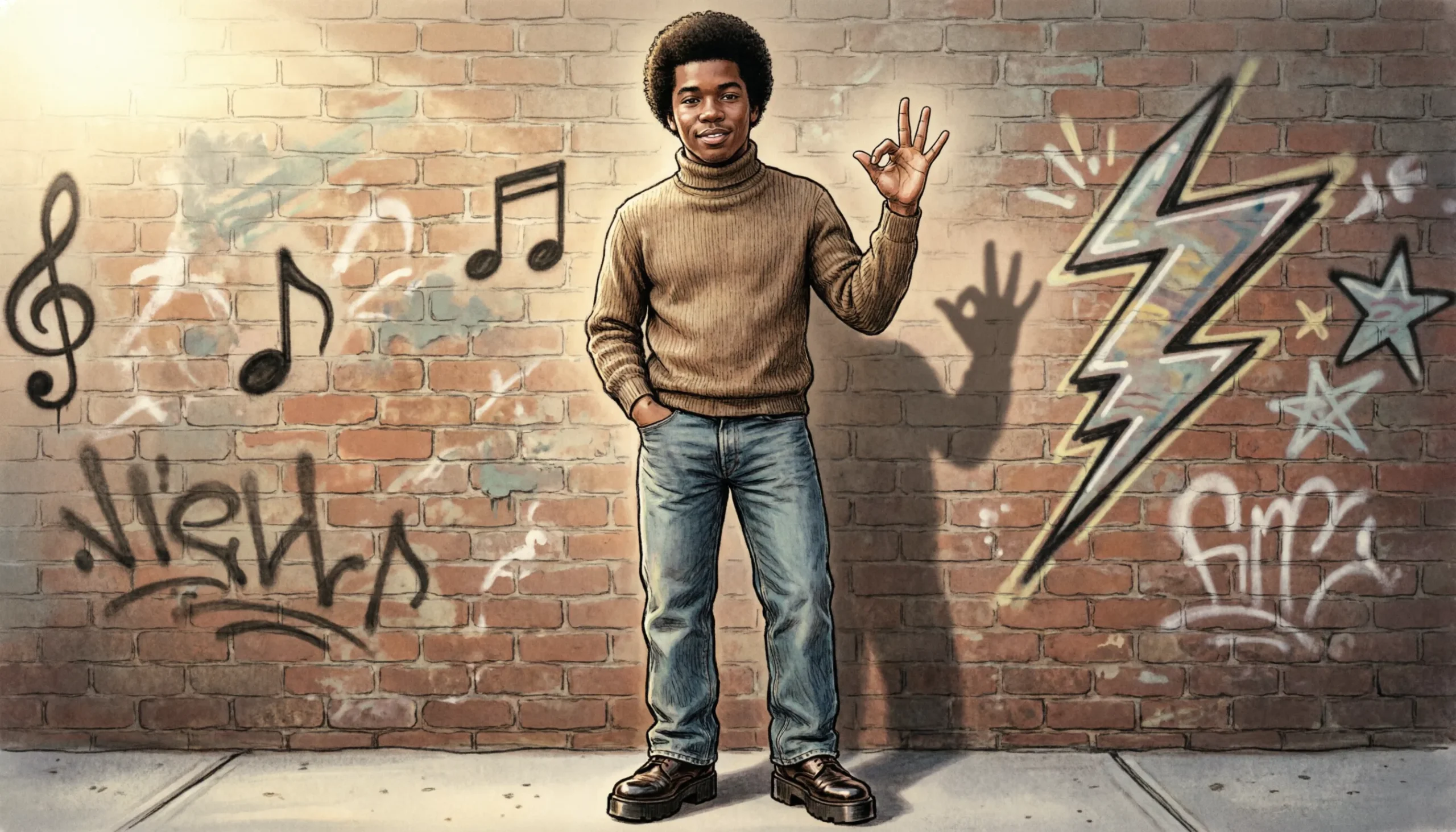
The 1960s slang meaning of tuff is an interesting example of how everyday language changed during one of the most culturally influential decades in modern history. If you have come across old movies, music, magazines, or conversations from the 1960s and wondered what “tuff” meant, you are not alone. Although “tuff” looks like a simple alternative spelling of “tough,” its slang use could communicate something more specific and expressive.
In 1960s slang, tuff was commonly used to describe something that was cool, impressive, stylish, strong, or admirable. Depending on the situation, it could describe a person’s appearance, attitude, possessions, or actions. In some contexts, it could also retain the traditional sense of being tough, difficult, or resilient.
Understanding the 1960s slang meaning of tuff gives us a small window into the fashion, music, youth culture, and informal language of the era.
What Did “Tuff” Mean in the 1960s?
In 1960s slang, “tuff” was generally a playful or stylized spelling of “tough.” Its exact meaning depended heavily on context.
When someone called something “tuff,” they could mean:
- Cool
- Impressive
- Stylish
- Excellent
- Strong
- Bold
- Hard or difficult
- Resilient
- Admirable
For example, a teenager might see someone’s new clothes and say:
“Those boots are tuff!”
In this sentence, tuff means something like “Those boots look really cool.”
However, if someone said:
“He’s tuff.”
the meaning could be closer to strong, fearless, or resilient.
This flexibility is one reason slang can be difficult to translate into a single modern word.
Tuff vs. Tough: What Is the Difference?
One of the biggest questions surrounding this word is whether “tuff” and “tough” actually mean different things.
The answer is: sometimes, but not always.
Tough
The standard spelling tough has been used in English for centuries. It can describe something physically strong, difficult, durable, or a person who can handle difficult situations.
Examples:
- “That material is tough.”
- “She had a tough day.”
- “He is tough enough to handle the pressure.”
Tuff
Tuff can be an informal or stylized spelling used to represent slang pronunciation or attitude. In youth and popular culture, spelling a word differently could make it look more distinctive.
Depending on context, “tuff” could suggest:
- Coolness
- Confidence
- Strength
- Style
- A rebellious attitude
- Something worth admiring
So, tuff was not necessarily a completely different word from tough. Often, the unusual spelling gave the word a more informal, youthful, or fashionable feeling.
Why Was “Tuff” Popular in 1960s Slang?
The 1960s were a period of enormous cultural change. Young people increasingly developed their own styles, expressions, music, fashion, and social identities.
Slang became an important part of this cultural shift.
Young people wanted language that sounded:
- Casual
- Expressive
- Different from formal English
- Connected to their generation
- Easy to use among friends
Words such as cool, groovy, hip, and tuff could communicate approval without sounding formal.
Instead of saying:
“That is very impressive.”
someone could simply say:
“That’s tuff.”
The shorter expression carried personality and attitude.
The Cultural Background Behind “Tuff”
To understand 1960s slang, it helps to understand the decade itself.
The 1960s were associated with major developments in:
- Rock and roll
- Soul music
- Motown
- Surf culture
- Youth fashion
- Counterculture
- Street culture
- Television
- Cinema
- Civil rights movements
- New forms of youth identity
Language naturally changed alongside these cultural developments.
Young people were exposed to different communities, musical styles, regional expressions, and international influences. Informal words could spread quickly through records, radio, movies, magazines, and personal interactions.
The word tuff fits into this broader environment of expressive and constantly changing youth language.
How “Tuff” Was Used in Everyday Conversation

The meaning of tuff depended on what was being discussed.
1. To Describe Something Cool
One of the easiest interpretations is cool or impressive.
Example:
“Man, that new jacket is tuff.”
Meaning:
“That jacket looks really cool.”
This usage is especially useful when discussing clothing, cars, music, or personal style.
2. To Describe Someone Strong
“Tuff” could also describe a person who was physically or emotionally strong.
Example:
“Don’t worry about him. He’s tuff.”
Here, the speaker may mean that the person is strong, fearless, or capable of handling difficulties.
3. To Describe a Bold Personality
The word could also communicate confidence.
Example:
“She’s tuff. Nobody pushes her around.”
In this context, tuff suggests someone who is confident, independent, and difficult to intimidate.
4. To Praise Fashion
Fashion was extremely important to youth culture during the 1960s.
Someone might use “tuff” to compliment:
- Shoes
- Jackets
- Sunglasses
- Hairstyles
- Cars
- Accessories
- Outfits
For example:
“Those shades are tuff.”
Modern readers might naturally interpret this as:
“Those sunglasses are really cool.”
5. To Describe a Difficult Situation
Because “tuff” is related to the standard word “tough,” it could also communicate difficulty.
Example:
“That test was tuff.”
Here, it simply means:
“That test was difficult.”
This meaning is closer to the traditional use of tough than the slang sense of cool.
1960s Tuff Meaning in Different Contexts
| Context | Possible Meaning of “Tuff” | Example |
|---|---|---|
| Fashion | Cool, stylish | “That shirt is tuff.” |
| Music | Excellent, impressive | “That record is tuff.” |
| Personality | Strong, fearless | “He’s tuff.” |
| Cars | Powerful, impressive | “That car is tuff.” |
| Situation | Difficult | “The job was tuff.” |
| Attitude | Bold, confident | “She has a tuff attitude.” |
| Competition | Hard to defeat | “He’s a tuff opponent.” |
The important point is that context determines the meaning.
Examples of “Tuff” in 1960s-Style Sentences
Here are some examples that show how the word could work in conversation:
- “That’s a tuff-looking car.”
Meaning: The car looks impressive or stylish. - “Man, your new jacket is tuff.”
Meaning: Your jacket looks really cool. - “He’s one tuff guy.”
Meaning: He is strong or fearless. - “That was a tuff game.”
Meaning: That was a difficult game. - “Those shoes are tuff.”
Meaning: Those shoes look great. - “She’s pretty tuff.”
Meaning: She is strong, confident, or resilient. - “That band is tuff.”
Meaning: The band is impressive or excellent.
These examples also demonstrate why translating slang word-for-word can be misleading.
Tuff and 1960s Youth Culture
Slang is more than a collection of unusual words. It often reflects how people see themselves.
During the 1960s, young people increasingly embraced distinctive cultural identities. Music, fashion, hairstyles, and speech became ways to express individuality.
A word like tuff could therefore communicate more than simple approval.
It might suggest:
- Confidence
- Individuality
- Masculinity
- Rebellion
- Style
- Strength
- Social awareness
- Youthfulness
The precise meaning could change depending on the speaker and community.
Was “Tuff” Only Used by Teenagers?
Not necessarily.
Slang often becomes associated with young people because teenagers and young adults tend to experiment with language. However, once a slang expression becomes popular, it can spread across different age groups.
The use of tuff could vary according to:
- Region
- Social group
- Music scene
- Community
- Age
- Situation
Therefore, it would be inaccurate to claim that every person in the 1960s used “tuff” in exactly the same way.
Slang is rarely universal.
“Tuff” in Music and Popular Culture
Music played an enormous role in spreading informal language during the 1960s.
Rock, soul, rhythm and blues, surf music, and other genres created new cultural communities. Fans often adopted expressions associated with the people and styles they admired.
A word describing something as tuff could fit naturally into conversations about:
- A new song
- A musician
- A guitar solo
- A record
- A performance
- A fashionable outfit
- A cool car
Popular culture helped slang travel beyond local communities.
How “Tuff” Compares With Other 1960s Slang
The 1960s had many memorable slang terms.
Tuff vs. Cool
Cool usually meant fashionable, impressive, calm, or admirable.
Tuff could overlap with “cool,” especially when describing someone’s style or possessions.
Example:
“That jacket is cool.”
“That jacket is tuff.”
Both could express approval, although the second has a different stylistic flavor.
Tuff vs. Groovy
Groovy was strongly associated with the 1960s and could mean excellent, enjoyable, fashionable, or pleasing.
Example:
“That’s a groovy song.”
“Tuff” could also express approval, but it often emphasized strength, toughness, or an impressive appearance.
Tuff vs. Hip
Hip referred to being fashionable, aware, knowledgeable, or connected with current cultural trends.
Someone could be “hip” because they understood the latest music, fashion, or cultural movements.
“Tuff” was more likely to emphasize coolness, strength, or impressiveness.
Tuff vs. Heavy
“Heavy” could describe something serious, emotionally powerful, or intense.
For example:
“That’s heavy.”
This could refer to an important or emotionally intense subject.
“Tuff” generally carried a different tone, often suggesting strength, coolness, or difficulty.
Common Misunderstandings About the Word “Tuff”
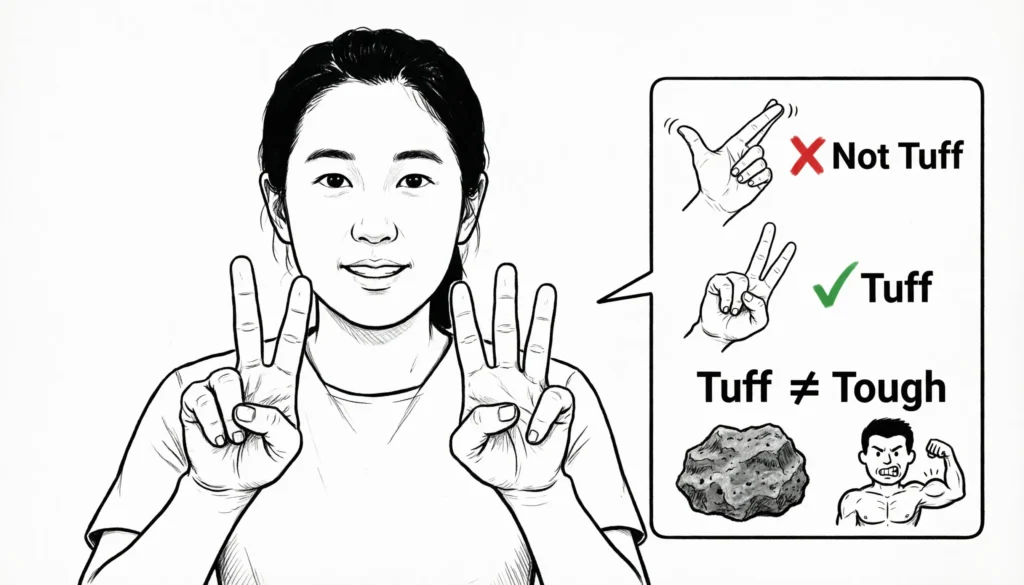
Misunderstanding 1: “Tuff” Always Means Cool
Not necessarily.
Because the word is closely connected to tough, it can also mean difficult or strong.
The sentence matters.
“That car is tuff” might mean impressive.
“That exam was tuff” probably means difficult.
Misunderstanding 2: “Tuff” Was Invented in the 1960s
The concept and spelling cannot be understood as something that suddenly appeared in one year.
“Tuff” has had various uses and spellings over time, and slang develops gradually. The 1960s were simply one period when youth culture and popular media helped informal language become highly visible.
Misunderstanding 3: Everyone Used “Tuff”
Slang differs between communities.
A word may be common in one city, social group, music scene, or publication while being unfamiliar somewhere else.
So it is better to say “tuff was used as an informal expression in some 1960s contexts” rather than claiming it was universal.
Misunderstanding 4: Tuff and Tough Are Completely Unrelated
They are closely connected.
Tough is the standard English spelling, while tuff can function as an informal or stylized spelling. In slang, the spelling can help communicate tone and identity.
Modern Meaning of “Tuff”
Interestingly, tuff has not disappeared completely.
Modern internet and youth slang sometimes uses tuff to mean something like:
- Cool
- Impressive
- Stylish
- Excellent
- Badass
- Admirable
For example:
“That outfit is tuff.”
A modern reader might understand this as:
“That outfit looks really good.”
This shows how slang can return, evolve, or take on new popularity among younger generations.
However, modern usage should not automatically be projected backward onto every historical example.
Is “Tuff” Still Slang Today?
Yes, tuff can still appear in informal online language, although its popularity and exact meaning vary.
It may appear in:
- TikTok comments
- Instagram captions
- Text messages
- Gaming conversations
- Online communities
- Music discussions
- Youth conversations
The modern internet has made it easier for slang to spread quickly across geographical boundaries.
A word that once belonged mainly to a particular community can suddenly become popular worldwide.
Related Words and Alternatives to “Tuff”
If you are trying to understand or replace tuff, these words may be useful depending on the intended meaning.
“Tuff” Means Cool
- Cool
- Stylish
- Awesome
- Impressive
- Excellent
- Great
- Groovy
- Hip
- Sharp
- Fantastic
Strong
- Tough
- Strong
- Powerful
- Hardy
- Resilient
- Fearless
- Durable
- Sturdy
Difficult
- Hard
- Difficult
- Challenging
- Demanding
- Rough
- Complicated
- Intense
Choosing the right alternative depends on the context.
Why Historical Slang Is Important
Studying words like tuff is useful because slang tells us how people actually communicated outside formal writing.
Traditional dictionaries often focus on standardized language, while slang reveals:
- Social identity
- Cultural trends
- Generational differences
- Music influences
- Fashion
- Humor
- Attitudes
- Changing meanings
A single slang word can therefore tell us something about an entire period.
The 1960s are especially interesting because they produced dramatic changes in popular culture, and language changed along with them.
How to Use “Tuff” Correctly Today

If you want to use tuff in a modern informal conversation, context is essential.
To compliment something:
“Those sneakers are tuff.”
Meaning: The sneakers look really good.
To praise someone’s ability:
“She’s tuff.”
Meaning: She is strong or impressive.
To describe difficulty:
“That workout was tuff.”
Meaning: That workout was difficult.
For formal writing, however, tough is usually the safer standard spelling.
Quick Guide to the 1960s Slang Meaning of Tuff
Here is the easiest way to remember it:
Tuff = cool, impressive, stylish, strong, or difficult, depending on context.
the word describes an object such as a jacket, car, song, or pair of shoes, it may mean cool or impressive.
it describes a person, it may mean strong, fearless, or confident.
describes an experience, task, or situation, it may mean difficult or challenging.
FAQs About the 1960s Slang Meaning of Tuff
1. What did “tuff” mean in the 1960s?
The 1960s slang meaning of tuff could include cool, impressive, stylish, strong, fearless, or difficult. The exact meaning depended on the context.
2. Is “tuff” the same as “tough”?
They are closely related. Tough is the standard spelling, while tuff can be an informal or stylized spelling used in slang and popular culture.
3. Did “tuff” mean cool?
Yes. In some informal contexts, tuff could mean cool, stylish, impressive, or admirable, especially when describing clothing, cars, music, or someone’s appearance.
4. Could “tuff” mean difficult?
Yes. Because it is related to tough, “tuff” could also be used informally to express that something was hard or challenging.
5. Was “tuff” common throughout the entire 1960s?
Its use was not necessarily universal. Slang varied by region, community, age group, and cultural scene, so its popularity could differ from one group to another.
6. Is “tuff” still used today?
Yes. The spelling tuff can still appear in modern informal and internet slang, where it may mean cool, impressive, or stylish.
7. What are some synonyms for “tuff”?
Depending on the meaning, alternatives include cool, awesome, stylish, impressive, strong, fearless, difficult, challenging, groovy, and hip.
Conclusion
The 1960s slang meaning of tuff is a great example of how language reflects culture. Although tuff is closely connected to the standard word tough, its informal use could communicate much more than physical strength. Depending on the context, it could mean cool, stylish, impressive, strong, confident, fearless, or difficult.
The best way to understand the word is to look at the sentence around it. someone described a jacket, car, song, or pair of shoes as “tuff,” they could be expressing admiration. When they described a person as “tuff,” they might be emphasizing strength or confidence. they described a task as “tuff,” they probably meant that it was difficult.
If you encounter tuff in 1960s slang, remember that context is everything. Understanding that small detail makes historical slang easier to interpret and gives you a better appreciation for the colorful language of the 1960s.
Discover More Articles:
- ITR Slang Meaning: How to Use ITR Correctly in a Conversation
- Scuba Slang Meaning in Texting: Examples and Common Uses
- YSL Meaning in Social Media: Why Is Everyone Saying YSL?

Hi, I’m Ethan Walker, founder of GrammarNestz. Passionate about language, writing, and clear communication, I help learners and writers improve their grammar skills through practical tips, easy-to-understand guides, and engaging content.