If you have ever spent time around skiers, you may have heard words like “pow,” “gaper,” “send it,” or “yard sale” and wondered what they actually mean. Understanding skiing slang meaning can make conversations on the mountain much easier to follow and help beginners feel more comfortable around experienced skiers. Ski culture has developed its own unique vocabulary, combining technical terms, funny expressions, abbreviations, and phrases that describe everything from snow conditions to skiing styles.
Whether you are planning your first ski trip, learning how to ski, watching ski videos, or simply curious about ski terminology, knowing common ski slang terms can make the experience more enjoyable. In this guide, we will explore the most popular skiing slang words, explain where they come from, and show you how skiers use them in real conversations.
What Does Skiing Slang Mean?
Skiing slang refers to informal words, phrases, expressions, and abbreviations commonly used by skiers. These terms are often used to describe snow, terrain, weather, skiing techniques, accidents, equipment, and experiences on the mountain.
Unlike official skiing terminology, slang is usually casual and can vary between countries, ski resorts, and groups of skiers.
For example:
- Pow means fresh powder snow.
- Gaper describes a skier who looks inexperienced or out of place.
- Send it means to go for a challenging jump, trick, or line without hesitation.
- Yard sale describes a crash where a skier’s equipment becomes scattered across the snow.
- Après refers to social activities after skiing.
- Gnarly describes something difficult, dangerous, or impressive.
These expressions are especially common in ski resorts, social media posts, ski videos, and conversations between friends.
Why Is Skiing Slang So Popular?
Skiing slang is more than a collection of funny words. It is part of ski culture and helps skiers communicate quickly.
A skier might say:
“The pow is outrageous today. Let’s hit the trees before it gets tracked.”
An experienced skier immediately understands that there is fresh powder and that they should ski through the trees before other people disturb the fresh snow.
Ski slang is popular because it:
- Makes communication faster
- Creates a sense of community
- Adds humor to skiing
- Describes situations that are difficult to explain formally
- Helps identify people familiar with ski culture
- Appears frequently in ski videos and social media
- Makes conversations more casual and fun
For beginners, learning these words can also make it easier to understand what other skiers are saying.
50+ Common Skiing Slang Terms and Their Meanings
Below are some of the most common skiing slang expressions you may hear on the mountain.
| Ski Slang | Meaning |
| Pow | Fresh powder snow |
| Powder | Fresh, soft snow |
| Send it | Go for something difficult or risky |
| Gaper | An inexperienced-looking skier |
| Yard sale | A major crash where equipment scatters |
| Après | Social activities after skiing |
| Gnarly | Difficult, dangerous, or impressive |
| Stoked | Very excited |
| Shred | Ski aggressively or skillfully |
| Shredder | Someone who skis very well |
| Sick | Extremely good or impressive |
| Steezy | Stylish and smooth |
| Jib | Perform tricks on terrain features |
| Huck | Jump or launch off something |
| Drop | Jump from a higher point |
| Cliff | A steep rock or snow drop |
| Line | The route a skier chooses |
| Chunder | Rough, chunky snow |
| Crud | Uneven or broken-up snow |
| Slush | Wet, soft snow |
| Corduroy | Freshly groomed snow |
| Ice Coast | Nickname for icy skiing areas in eastern North America |
| Bluebird | Clear, sunny weather |
| Whiteout | Extremely poor visibility |
| Tree skiing | Skiing through wooded areas |
| Backcountry | Skiing outside developed resort terrain |
| Off-piste | Ungroomed or marked terrain |
| Cat track | Narrow, relatively flat trail |
| Bump | Mogul |
| Moguls | Large bumps on the ski slope |
| Park | Terrain park for jumps and features |
| Rail | Metal feature used for tricks |
| Kicker | A jump designed for launching |
| Butter | A smooth rotational or pressing trick |
| Carve | Make clean turns using ski edges |
| Pizza | Snowplow position used by beginners |
| French fries | Skis kept parallel |
| Hot dog | A skier who performs tricks or skis stylishly |
| Full send | Going all-in without hesitation |
| Bomber | Someone skiing very fast |
| Jerry | An inexperienced or careless skier |
| Après-ski | Socializing after skiing |
| First tracks | First people skiing fresh snow |
| Tracked out | Fresh snow covered with ski tracks |
| Freshies | Fresh snow or fresh powder runs |
| Core shot | Damage exposing the ski’s core |
| Ski bum | Person who lives around skiing |
| Face plant | Falling directly onto your face |
| Bail | Abandoning a trick or jump to avoid a crash |
| Eat it | Crash or fall |
| Stack it | Take a hard fall |
| Straight-line | Skiing directly downhill with minimal turning |
1. Pow
Pow is one of the most common skiing slang words.
It is simply a shortened version of powder, referring to fresh, soft snow.
Example:
“We got 20 centimeters of pow overnight.”
When skiers talk about “pow days,” they are usually talking about days when fresh powder makes skiing particularly enjoyable.
Powder is highly valued because it can feel softer and smoother than hard-packed snow.
2. Send It
If someone tells you to send it, they are encouraging you to go for something.
It could mean:
- Attempting a big jump
- Skiing a difficult line
- Going fast
- Trying a trick
- Taking on challenging terrain
Example:
“That jump looks huge, but I’m going to send it.”
“Send it” can be serious, humorous, or motivational depending on the situation.
3. Gaper
A gaper is a slang term for someone who looks inexperienced or unfamiliar with ski culture.
The word often refers to visible beginner mistakes, such as wearing a helmet or goggles incorrectly, carrying equipment awkwardly, or making poor decisions on the mountain.
However, the term can sometimes be used in a teasing or insulting way. Beginners should not feel embarrassed about making mistakes while learning.
Example:
“I looked like such a gaper on my first ski trip.”
4. Yard Sale
A yard sale is a spectacular crash where a skier’s equipment gets scattered across the slope.
For example, after a hard fall:
- One ski may slide downhill.
- A pole may fly away.
- Goggles may come off.
- Gloves or other gear may be scattered around.
Other skiers may jokingly say:
“That was a serious yard sale!”
The phrase compares the scattered equipment to objects spread around a yard sale.
5. Après
Après comes from the French word meaning “after.” In skiing culture, it usually refers to socializing and relaxing after skiing.
Après-ski activities may include:
- Eating
- Drinking
- Listening to music
- Meeting friends
- Visiting restaurants
- Relaxing at the resort
Example:
“Let’s meet for après at four.”
Après is an important part of ski resort culture and can be just as social as skiing itself.
6. Gnarly
Gnarly can describe something difficult, dangerous, intense, or impressive.
For example:
“That was a gnarly run.”
Depending on context, this could mean the run was extremely challenging or simply impressive.
The word is commonly used in action sports, including skiing, snowboarding, surfing, and skateboarding.
7. Stoked
When a skier is stoked, they are extremely excited or enthusiastic.
Example:
“I’m so stoked for tomorrow’s powder day!”
You may hear this word before a ski trip, after fresh snowfall, or after someone completes an exciting run.
8. Shred
To shred means to ski aggressively, confidently, or skillfully.
A person who skis very well might be described as a shredder.
Example:
“She can really shred the mountain.”
The word is also common in other action sports.
9. Steezy
Steezy combines the ideas of stylish and easy.
A skier who performs a trick smoothly and stylishly may be described as steezy.
Example:
“That was a steezy 360.”
The term is especially common in terrain parks and freestyle skiing.
10. Sick
In skiing slang, sick usually does not mean ill.
Instead, it means something is extremely good, impressive, or exciting.
Example:
“That was a sick jump!”
This is an important example of why beginners should understand context when hearing skiing slang.
11. Jib
A jib is to perform tricks on or around terrain features rather than simply skiing down a slope.
Jibbing can involve:
- Rails
- Boxes
- Logs
- Natural features
- Other terrain park obstacles
Example:
“He spends most of the day jibbing in the park.”
12. Huck
To huck means to launch yourself into the air, usually from a jump, cliff, or other feature.
Example:
“He hucked a huge cliff.”
The word generally suggests a significant jump or launch.
13. Line
A skier’s line is the route they choose down a slope.
Two skiers can ski the same mountain but choose completely different lines.
Example:
“That’s a difficult line through the trees.”
Choosing a good line is an important part of advanced skiing, particularly in challenging terrain.
14. Chunder
Chunder refers to rough, chunky, uneven snow.
It can develop when snow becomes heavily tracked, chopped up, or affected by changing conditions.
Example:
“The snow was perfect in the morning, but now it’s mostly chunder.”
Skiing through chunder can require more control and strength.
15. Crud
Crud is another informal word for messy, uneven snow conditions.
It can describe snow that is:
- Chopped up
- Frozen
- Heavy
- Uneven
- Difficult to ski
Example:
“The groomed run was good, but the off-piste was crud.”
16. Slush
Slush is wet, soft snow that often occurs when temperatures rise.
Spring skiing frequently produces slushy conditions.
Example:
“The snow turned into slush by the afternoon.”
Slush can be enjoyable for some skiers but requires a different technique than cold powder.
17. Corduroy
Corduroy is a nickname for freshly groomed snow because the grooming machine leaves long, parallel ridges that resemble corduroy fabric.
Example:
“The corduroy was perfect first thing this morning.”
Many skiers enjoy being among the first people to ski freshly groomed trails.
18. Bluebird
A bluebird day means a beautiful, sunny day with clear blue skies and good visibility.
Example:
“It’s a perfect bluebird day for skiing.”
Bluebird conditions are especially popular because skiers can enjoy excellent mountain views.
19. Whiteout
A whiteout occurs when visibility becomes extremely poor because of snow, clouds, fog, or blowing snow.
During a whiteout, it can become difficult to distinguish:
- The ground
- The horizon
- Terrain changes
- Other skiers
Unlike many slang expressions, this term can also have an important safety meaning. Skiers should slow down and make appropriate decisions when visibility is poor.
20. First Tracks
First tracks means being among the first people to ski on fresh snow.
Example:
“We woke up early to get first tracks.”
First tracks are particularly valuable after a major snowfall because the snow remains untouched.
21. Tracked Out
When powder becomes covered with many ski and snowboard tracks, it is described as tracked out.
Example:
“The powder was amazing early, but it’s already tracked out.”
This is why skiers often arrive early after a major storm.
22. Freshies
Freshies is casual slang for fresh snow or fresh powder runs.
Example:
“Let’s look for some freshies in the trees.”
It is a playful term often used among enthusiastic skiers.
23. Core Shot
A core shot occurs when a ski is damaged deeply enough that the internal core becomes exposed.
Example:
“I hit a rock and got a core shot.”
Core shots can require repair and should not simply be ignored.
24. Jerry
Jerry is ski slang for someone who behaves incompetently, carelessly, or awkwardly on the mountain.
It is similar in some contexts to gaper, although the exact meaning varies.
A Jerry might be associated with:
- Poor technique
- Unsafe behavior
- Strange equipment choices
- Ignoring mountain etiquette
The word is often used humorously online, but it can also be disrespectful.
25. Ski Bum
A ski bum is someone who structures their lifestyle around skiing, often working a seasonal job at a ski resort to spend more time on the mountain.
Example:
“He became a ski bum after college.”
Ski bums are strongly associated with ski-town culture.
Skiing Slang for Beginners
Beginners often encounter slang that describes basic skiing movements.
Two classic expressions are:
Pizza
Pizza describes the snowplow position, where the tips of the skis point toward each other.
It is commonly taught to beginners because it helps them control speed.
French Fries
French fries refers to keeping the skis parallel.
For example:
“Pizza to slow down, French fries to go faster.”
These playful terms make ski instruction easier for children and new skiers.
Skiing Slang for Terrain Parks
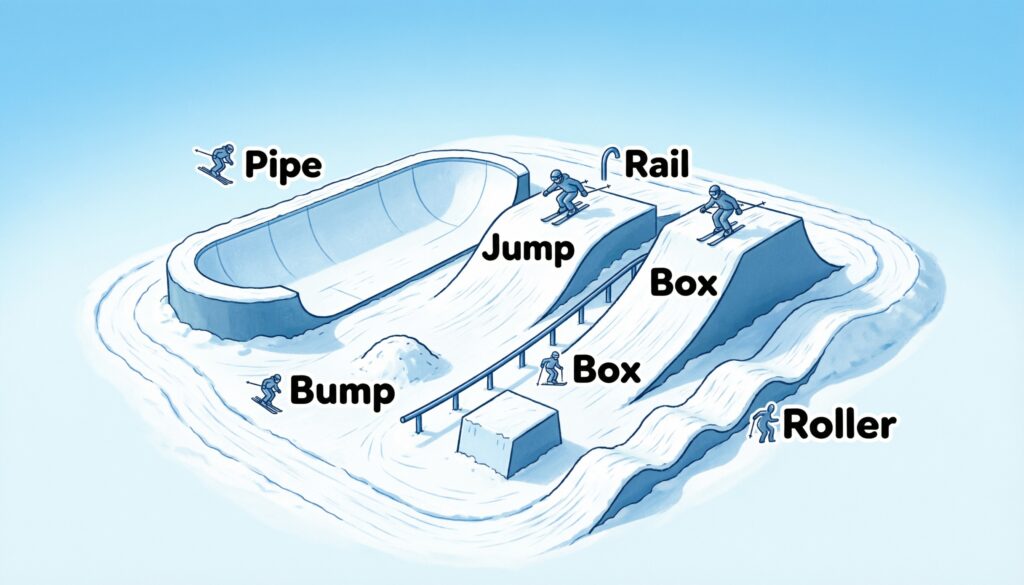
Terrain parks have their own vocabulary.
Common terms include:
Kicker
A jump designed to launch a skier into the air.
Rail
A metal feature used for sliding and tricks.
Box
A wide terrain feature that can be slid across.
Butter
A trick involving pressure, balance, and rotation while maintaining contact with the snow.
Bail
To abandon a trick or jump because continuing could result in a crash.
Drop
A jump or descent from a higher point to a lower one.
Full Send
Going completely for a trick, jump, or difficult feature.
Skiing Slang for Snow Conditions
Understanding snow slang can help you quickly understand what the mountain is like.
| Term | Description |
| Pow | Fresh powder |
| Corduroy | Freshly groomed snow |
| Slush | Wet, soft snow |
| Crud | Rough, uneven snow |
| Chunder | Chunky, heavily chopped snow |
| Ice | Very hard, frozen surface |
| Packed powder | Compacted snow |
| Tracked out | Powder covered with tracks |
| Freshies | Fresh snow |
| Hardpack | Firm, compacted snow |
Knowing these terms can make conversations about conditions much easier.
Skiing Slang vs. Official Ski Terminology
It is important to understand that slang and technical terminology are not the same thing.
Official skiing terminology is generally used in instruction, safety information, competitions, and professional settings.
Ski slang, on the other hand, is informal.
For example:
- “Pow” → slang
- “Powder snow” → standard description
- “Send it” → slang
- “Attempt the jump” → formal description
- “Yard sale” → slang
- “Equipment scattered after a fall” → descriptive explanation
Learning both types of language can help you communicate with beginners and experienced skiers.
Common Misunderstandings About Skiing Slang
1. “Sick” Does Not Always Mean Ill
In ski culture, “sick” often means impressive.
If someone says:
“That was sick!”
They probably mean they liked what they saw.
2. “Gnarly” Is Not Always Negative
A gnarly run can be dangerous, difficult, impressive, or all three.
Context determines the meaning.
3. “Send It” Does Not Always Mean Ski Recklessly
Although the phrase can encourage aggressive behavior, it is often used humorously among friends.
Good judgment and mountain safety should always come first.
4. “Gaper” Is Not a Technical Skiing Term
It is informal slang and can be teasing or insulting. Beginners should not worry about being called one.
5. Ski Slang Changes Over Time
Like other forms of slang, skiing vocabulary evolves. Social media, ski films, younger generations, and different skiing communities continually introduce new expressions.
Skiing Slang on Social Media
Ski slang has become especially popular on platforms such as TikTok, Instagram, YouTube, and other social networks.
You may see captions such as:
- “POV: You found untouched pow.”
- “Full send!”
- “Bluebird conditions.”
- “Another day shredding.”
- “First tracks!”
- “That line was gnarly.”
- “Après time.”
- “Straight into the powder.”
These phrases help create the energetic, adventurous image commonly associated with ski culture.
For people searching ski slang meaning, social media is often one of the reasons these terms become popular outside traditional ski communities.
How to Use Skiing Slang Naturally
You do not need to memorize every word before going skiing.
Start with a few common terms.
For example:
“The pow looks amazing today.”
Or:
“Let’s get first tracks.”
Or:
“That was a gnarly run.”
Or:
“I’m stoked for tomorrow.”
The key is to use slang naturally rather than forcing it into every conversation.
If you are new to skiing, listening to experienced skiers is one of the easiest ways to learn.
Related Skiing Terms You Should Know
Along with slang, several standard skiing terms are useful.
Groomer
A trail that has been prepared by a snow-grooming machine.
Mogul
A large bump on a ski slope.
Backcountry
Ungroomed terrain outside controlled resort areas.
Off-piste
Skiing away from groomed trails, depending on regional usage.
Tree skiing
Skiing through forested terrain.
Terrain park
An area designed for jumps, rails, boxes, and freestyle skiing.
Carving
Making controlled turns using the edges of skis.
Powder skiing
Skiing through deep, soft snow.
These terms are not necessarily slang, but they are important parts of skiing vocabulary.
Why Learning Ski Slang Can Improve Your Ski Experience
Understanding ski slang can help you in several practical ways.
Better communication
You can quickly understand what friends mean when discussing snow or terrain.
More confidence
Knowing the vocabulary can make you feel less like an outsider at a ski resort.
Easier socializing
Skiing is highly social, particularly during lessons, group trips, and après activities.
Better understanding of ski content
You will understand more of the captions, comments, and conversations in ski videos.
Faster learning
Some slang terms are commonly used by instructors or experienced skiers when describing conditions.
Quick Ski Slang Cheat Sheet
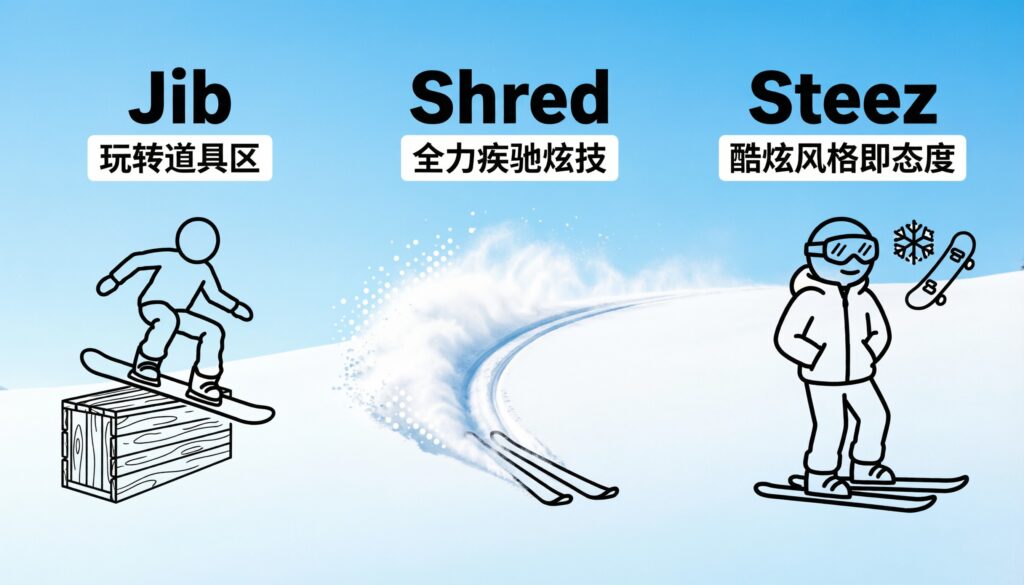
If you only want to remember a few terms, start here:
- Pow = fresh powder
- Shred = ski hard or skillfully
- Stoked = very excited
- Send it = go for it
- Gnarly = difficult, dangerous, or impressive
- Gaper = inexperienced-looking skier
- Jerry = careless or inexperienced skier
- Yard sale = crash with scattered equipment
- Après = socializing after skiing
- Bluebird = sunny, clear day
- Corduroy = freshly groomed snow
- Chunder = rough, chunky snow
- Slush = wet snow
- First tracks = first tracks through fresh snow
- Tracked out = powder covered with tracks
- Steezy = stylish and smooth
- Huck = launch into the air
- Jib = perform tricks on features
- Core shot = damage exposing the ski core
- Full send = commit completely to an attempt
Frequently Asked Questions About Skiing Slang
What is the most common skiing slang?
Some of the most recognizable skiing slang includes pow, shred, send it, stoked, gnarly, gaper, yard sale, après, bluebird, and first tracks.
What does “pow” mean in skiing?
“Pow” is short for powder. It refers to fresh, soft snow that many skiers consider ideal for skiing.
What does “send it” mean in skiing?
“Send it” means to commit to an action, such as skiing a challenging line, attempting a jump, or performing a trick. It is usually informal and can be humorous.
What does “yard sale” mean in skiing?
A yard sale describes a crash where a skier’s equipment, such as skis, poles, goggles, or gloves, becomes scattered across the snow.
What does “shred” mean in skiing?
To shred means to ski aggressively, confidently, or skillfully. A very good skier may be called a shredder.
What does “gaper” mean in skiing?
A gaper is informal slang for someone who looks inexperienced or unfamiliar with ski culture. It can be playful but may also be used negatively.
What does “après” mean in skiing?
Après refers to social activities after skiing. It can include meeting friends, eating, relaxing, listening to music, or spending time at a ski resort.
Conclusion
Understanding skiing slang meaning is a simple way to become more familiar with ski culture and communicate more confidently on the mountain. From pow and first tracks to send it, shred, yard sale, and après, these expressions give skiers a quick and often humorous way to describe their experiences.
You do not need to learn every slang word before your next ski trip. Start with the most common terms and pay attention to how experienced skiers use them. Over time, words like “pow,” “stoked,” “gnarly,” and “bluebird” will become easy to recognize.
Most importantly, remember that skiing slang is about community and fun. Slang can make conversations more entertaining, but safe skiing, good mountain etiquette, and respect for other people should always come first.
So, the next time someone says, “The pow is fresh—let’s get first tracks,” you will know exactly what they mean.
Discover More Articles:
- TGIF Slang Meaning Explained: A Simple Guide for Beginners
- K Meaning in Slang: How Gen Z Uses “K” in Conversations
- Boy Slang Meaning Drugs: What Does “Boy” Mean in Drug Slang?

Hi, I’m Ethan Walker, founder of GrammarNestz. Passionate about language, writing, and clear communication, I help learners and writers improve their grammar skills through practical tips, easy-to-understand guides, and engaging content.