K slang meaning is usually a short way of saying “okay” in texting, messaging, and online conversations. Although it contains only one letter, “K” can communicate different feelings depending on the situation, punctuation, and relationship between the people talking. It may simply mean “okay,” but sometimes it can sound cold, annoyed, dismissive, or even passive-aggressive.
In today’s fast-paced digital world, people often shorten words to save time. Instead of typing “okay,” someone may simply send “K.” This is especially common in text messages, Snapchat, Instagram DMs, WhatsApp, TikTok comments, and other social platforms.
Understanding the meaning of K in texting is important because tone can be difficult to recognize online. A simple “K” from a friend might mean everything is fine, while the same message from someone who is upset may suggest something completely different.
So, what does K really mean? Let’s explore its meanings, origins, examples, and the situations where you are most likely to see it.
What Does K Mean in Slang?
The most common K slang meaning is simply “okay.”
It is an abbreviated form of “OK” or “okay.” People commonly use it in casual digital communication because it is extremely quick to type.
Examples:
- Person A: “I’ll meet you at 7.”
- Person B: “K.”
Here, “K” probably means “Okay, that works.”
Another example:
- Person A: “Can you send me the notes?”
- Person B: “K, I’ll send them soon.”
In this situation, K is friendly and straightforward.
However, the meaning can change depending on the context.
For example:
- “K ” → usually friendly
- “K!” → can sound enthusiastic
- “K lol” → casual
- “K…” → may suggest irritation or uncertainty
- “K.” → can sometimes feel cold or dismissive
Therefore, K does not always have one emotional meaning.
K Meaning in Texting

When someone sends K in a text, they are usually saying “okay,” “alright,” or “I understand.”
It is one of the shortest possible responses to a message.
For example:
“I’m running 10 minutes late.”
Response:
“K.”
The person may simply be acknowledging the information.
However, texting does not provide facial expressions, voice tone, or body language. Because of this, a one-letter response can sometimes create confusion.
K can mean:
- Okay
- Alright
- Got it
- I understand
- Sure
- Fine
- I acknowledge your message
The exact interpretation depends on the conversation.
Why Do People Say “K” Instead of “Okay”?
There are several reasons people use K instead of okay.
1. It is faster
Typing one letter takes less time than typing “okay.”
This is particularly useful during fast conversations.
2. It is convenient
People often use abbreviations and shortened words when chatting online.
For example:
- “you” → “u”
- “are” → “r”
- “okay” → “K”
- “because” → “bc”
- “thanks” → “thx”
3. It is casual
“K” is generally informal. Friends, classmates, partners, and online users may use it in everyday conversations.
4. It can show acknowledgment
Sometimes a person does not need to give a detailed answer. They simply want to show that they received the message.
Is “K” Rude?
One of the biggest questions surrounding K slang meaning is whether it is rude.
The answer is: sometimes, but not always.
“K” itself is not automatically rude. The tone depends heavily on context.
Consider this:
“K ”
This may feel friendly.
Now compare it with:
“K.”
This can feel much colder.
And:
“K…”
could suggest frustration, disappointment, or hesitation.
When K may sound rude
“K” can seem rude when:
- Someone sends it after an emotional message.
- The conversation is already tense.
- The person normally writes longer responses.
- It appears without any additional explanation.
- The punctuation makes it seem cold.
- The sender is responding to something that deserves a thoughtful answer.
For example:
You: “I’m really sorry I hurt your feelings.”
Them: “K.”
In this situation, “K” could sound dismissive rather than accepting.
However, you should not automatically assume someone is angry simply because they wrote “K.” They might genuinely be busy or simply prefer short messages.
K vs. OK vs. Okay: What Is the Difference?
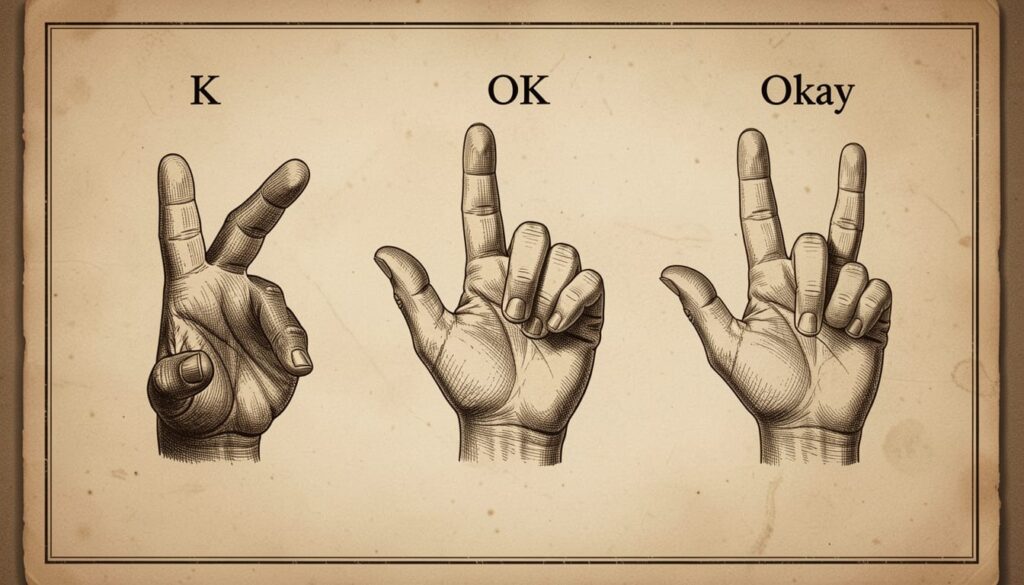
Although these expressions generally communicate agreement or acknowledgment, they can have different tones.
| Expression | Common meaning | Possible tone |
|---|---|---|
| K | Okay | Very short, casual, sometimes cold |
| OK | Okay | Neutral |
| Okay | Okay / I understand | Normal and clear |
| Okaaay | Okay | Playful, doubtful, or surprised |
| Okay! | Okay | Positive or enthusiastic |
| K. | Okay | Can sound serious or dismissive |
| K lol | Okay | Casual or playful |
| kk | Okay | Informal and relaxed |
The difference is often less about the dictionary meaning and more about digital tone.
What Does “K” Mean on Snapchat?
On Snapchat, K usually means “okay.”
Because Snapchat conversations are often informal and fast-moving, users frequently shorten words.
For example:
Friend: “We’re going to the mall at 5.”
You: “K.”
This simply means:
“Okay, I understand.”
However, Snapchat users may also interpret a short “K” emotionally depending on the situation.
If a friend normally responds with emojis, full sentences, or enthusiastic messages but suddenly replies only with “K,” you might wonder whether something is wrong.
The best approach is to consider the entire conversation rather than focusing on one word.
What Does K Mean on WhatsApp?
The K meaning in WhatsApp is generally the same: okay, alright, or understood.
WhatsApp users commonly send “K” when they want to acknowledge a message without continuing the conversation.
Example:
A: “Don’t forget to bring your ID tomorrow.”
B: “K.”
This simply means:
“Okay, I won’t forget.”
But if the conversation involves an argument, “K” may carry a different emotional tone.
Example:
A: “I don’t think you understand what I’m trying to say.”
B: “K.”
Here, the reply could sound dismissive or annoyed.
What Does K Mean on Instagram?
On Instagram, K can be used as a short response in DMs, comments, or casual conversations.
For example:
Person A: “I posted the picture you wanted.”
Person B: “K, thanks.”
Here, the meaning is straightforward: “Okay, thanks.”
In Instagram comments, however, the interpretation can depend on the conversation.
A person responding only with “K” might be:
- Agreeing
- Acknowledging something
- Ending the conversation
- Showing mild annoyance
- Being sarcastic
Always consider the surrounding messages.
What Does K Mean on TikTok?
The K slang meaning on TikTok is also usually “okay.”
TikTok users often use short slang expressions, abbreviations, and reaction words in comments and direct messages.
For example:
“You really think that’s true?”
“K.”
Depending on the context, this might be interpreted as:
“Okay, whatever.”
This is why tone matters so much in online slang.
On TikTok, users may also combine K with other slang or emojis to create a particular reaction.
Examples include:
- K — humorous or unserious
- K bro — casual or dismissive
- K then — ending the discussion
- K lol — casual or playful
- K — humorous disbelief or amusement
K Meaning in Gen Z Slang
Although K is not exclusively Gen Z slang, younger internet users frequently use it in digital communication.
Gen Z and other online communities often prefer short, fast responses.
A single “K” can sometimes communicate more attitude than the longer word “okay.”
For example:
“Okay.”
may sound neutral.
But:
“K.”
can feel more emotionally distant.
This is sometimes referred to as texting tone. Since online communication removes vocal tone and facial expressions, punctuation and message length can influence how a response is perceived.
K Meaning in Relationships and Dating
The meaning of K in texting from a boyfriend, girlfriend, partner, or crush can be especially confusing.
If someone you are dating sends only “K,” you may wonder:
“Are they mad at me?”
Not necessarily.
A single letter does not provide enough information to determine someone’s feelings.
For example:
You: “I’ll call you later because I’m busy right now.”
Partner: “K.”
This may simply mean:
“Okay, talk later.”
But:
You: “I’m sorry about what happened earlier.”
Partner: “K.”
This could sound more distant.
What should you do?
Instead of immediately assuming the worst, look at the broader conversation.
Ask yourself:
- Were you arguing?
- Did they usually send longer replies?
- Did they use emojis before?
- Did they stop responding afterward?
- Is there another reason they might be busy?
Context is much more reliable than one letter.
K vs. KK: What Is the Difference?
K and KK generally mean the same basic thing: okay.
However, they can have slightly different informal tones.
K
“K” is extremely short.
It can be:
- Neutral
- Casual
- Cold
- Dismissive
KK
“KK” often feels more relaxed or friendly.
For example:
“KK, see you tomorrow!”
This usually sounds casual and positive.
In contrast:
“K.”
can feel more serious.
Again, these interpretations are not fixed rules. Different people use texting abbreviations differently.
K vs. Okay: Which One Should You Use?
If you want to avoid misunderstanding, “okay” is usually safer than “K.”
Use K when:
- You are chatting casually.
- You know the other person well.
- The conversation is simple.
- You want a quick acknowledgment.
Use okay when:
- The topic is serious.
- You are talking professionally.
- You want to sound polite.
- You are responding to an emotional message.
- You want to avoid sounding annoyed.
Example
Instead of:
“K.”
Try:
“Okay, I understand.”
The second response is much clearer.
Common Misunderstandings About K Slang
There are several misconceptions about K slang meaning.
Misconception 1: K always means anger
False.
“K” can simply mean “okay.”
Misconception 2: K is always rude
Not necessarily.
Some people naturally use short replies.
Misconception 3: K is only Gen Z slang
No.
“K” has been used as a shorthand for “okay” in informal communication for many years.
Misconception 4: A period always means someone is angry
Not always.
Punctuation can influence perceived tone, but it does not prove someone’s emotional state.
Misconception 5: K has only one meaning
Not exactly.
Its meaning can change according to context, relationship, punctuation, and conversation.
How to Respond When Someone Says “K”
Your response should depend on the situation.
If everything is normal
You can simply continue the conversation.
Them: “K.”
You: “Cool!”
If you think they are upset
Ask politely:
“Everything okay?”
If you want to end the conversation
You can say:
“Alright, talk to you later.”
If they seem dismissive
Avoid immediately starting an argument. Ask for clarification instead.
“Did I upset you?”
This gives the other person a chance to explain.
Alternative Words and Expressions for K
If you’re looking for alternatives to K slang, there are many options.
Casual alternatives
- Okay
- Alright
- Sure
- Yep
- Yeah
- Got it
- Sounds good
- Cool
- Fine
- No problem
Texting alternatives
- OK
- kk
- kk
- yup
- sure
- gotcha
More friendly alternatives
- Sounds good!
- Absolutely!
- Sure thing!
- Got it
- No worries!
- Okay, perfect!
The best choice depends on the relationship and situation.
Examples of K in Everyday Conversations
Here are some realistic examples showing how the meaning can change.
Example 1: Simple acknowledgment
A: “I’ll be there at 8.”
B: “K.”
Meaning: Okay, understood.
Example 2: Friendly conversation
A: “I sent you the photo.”
B: “K, thanks!”
Meaning: Okay, thank you.
Example 3: Possible irritation
A: “I don’t want to argue anymore.”
B: “K.”
Meaning: Possibly “Fine,” or “Whatever.”
Example 4: Ending a conversation
A: “I have to go now.”
B: “K.”
Meaning: Okay, goodbye.
Example 5: Casual planning
A: “Let’s meet at the coffee shop.”
B: “K, sounds good.”
Meaning: Agreement.
Why Context Matters So Much With Online Slang
Words like K, “fine,” “sure,” and “whatever” demonstrate how difficult digital communication can sometimes be.
When people talk face-to-face, they have several ways to express emotion:
- Facial expressions
- Voice tone
- Body language
- Eye contact
- Gestures
Text messages remove most of these signals.
As a result, the reader has to interpret emotion based on:
- Word choice
- Punctuation
- Emojis
- Message length
- Previous conversations
- Relationship between the people
That is why K slang meaning cannot always be determined from the letter alone.
Is K an Abbreviation or Slang?
Technically, K is best understood as an informal abbreviation or shorthand for “okay.”
It is commonly treated as texting slang because it is widely used in casual online communication.
Unlike specialized slang that develops within a particular community, K is broadly understood by internet users and mobile texters.
Its popularity comes from its simplicity.
One letter can replace an entire word.
Tips for Understanding K in Text Messages
If you’re unsure what someone’s “K” means, don’t immediately assume they are angry.
Use these tips:
- Look at the conversation before it.
- Consider your relationship with the sender.
- Check whether punctuation changes the tone.
- Notice whether they normally use short replies.
- Look for emojis or additional words.
- Consider whether the conversation was serious.
- Ask directly if something seems wrong.
The surrounding context is usually more meaningful than the word itself.
Frequently Asked Questions About K Slang Meaning
1. What does K mean in texting?
K usually means “okay.” It is a shortened, informal way of acknowledging a message, agreeing with something, or saying that you understand.
2. Does K mean okay?
Yes. In most casual conversations, K is simply an abbreviation for okay. However, its tone can vary depending on the context.
3. Is K rude in texting?
It can sometimes sound rude, cold, or dismissive, especially during a serious conversation. However, it is not automatically rude. Some people use K simply because they prefer short replies.
4. What does K mean from a girl?
If a girl sends “K,” it generally means okay, but the emotional tone depends on the conversation. It does not automatically mean she is angry or upset.
5. What does K mean from a guy?
A guy using “K” is usually saying okay, alright, or understood. His tone can only be interpreted accurately by considering the context and his usual texting style.
6. What does K mean on Snapchat or WhatsApp?
On both Snapchat and WhatsApp, K generally means “okay.” It is commonly used as a quick response or acknowledgment.
7. What is the difference between K and OK?
Both usually mean okay, but “K” is shorter and may sometimes feel more abrupt. “OK” or “Okay” generally sounds more neutral and explicit.
Conclusion:
The K slang meaning is simple at its core: it usually means “okay,” “alright,” or “I understand.” It is a common piece of texting shorthand used across messaging apps, social media, and everyday online conversations.
However, the emotional meaning of “K” can change depending on context. A friendly “K” may simply acknowledge information, while “K.” during an argument might feel cold or dismissive. Punctuation, emojis, relationship dynamics, and previous messages can all influence how it is understood.
The most important lesson is not to overthink a single letter. If you’re unsure whether someone is annoyed, ask rather than making assumptions.
When using “K” yourself, remember that it is very informal. With friends, it can be perfectly normal. In professional or sensitive conversations, choosing “Okay,” “Got it,” “Sounds good,” or “I understand” can make your meaning clearer and friendlier.
Ultimately, understanding online slang is less about memorizing definitions and more about recognizing context, tone, and communication style.
Discover More Articles:
- Blinker Meaning in Text: What Does It Really Mean?
- Speed Slang Meaning: From Texting to Everyday Conversations
- TTM Meaning in Text: What Does This Slang Really Mean?

Emily Thompson is an English language educator and grammar writer at grammarnestz.com. She specializes in grammar rules, vocabulary development, writing skills, and language-learning resources for students and professionals.