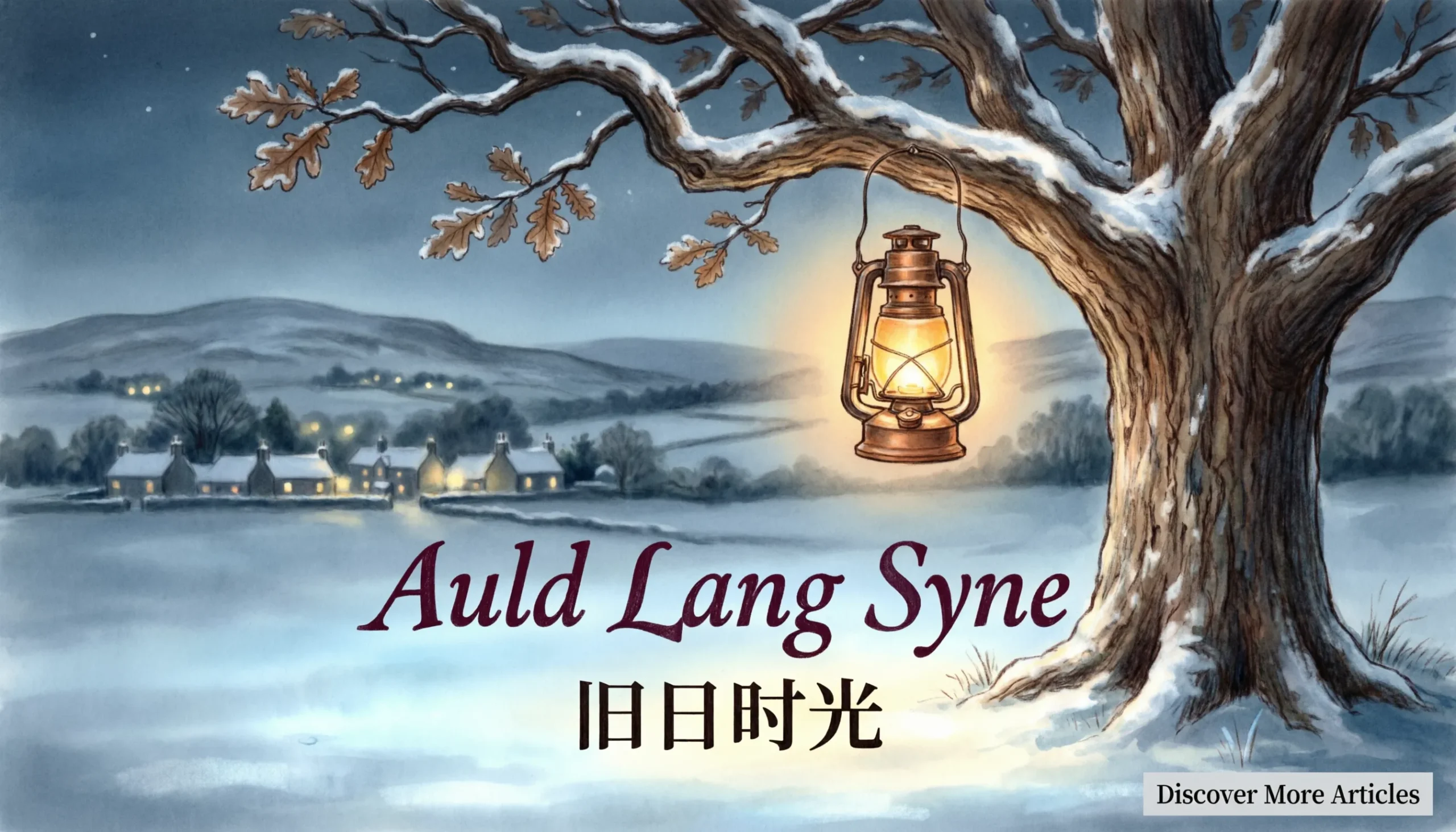
Auld Lang Syne meaning is often connected with New Year’s Eve, friendship, memories, and saying goodbye to the past. You may have heard people sing “Auld Lang Syne” as one year ends and another begins, but the phrase itself can seem confusing because it does not look like modern English.
In simple terms, “auld lang syne” means “old long since,” or more naturally, “for old times’ sake.” It refers to remembering the good times, old friendships, shared experiences, and people who have been important in our lives.
The phrase comes from Scots, and the famous song is strongly associated with the Scottish poet Robert Burns. Today, it is used around the world during New Year celebrations, farewells, reunions, graduations, and other emotional moments.
This guide explains the Auld Lang Syne definition, meaning, history, lyrics, pronunciation, examples, and modern usage in simple language.
What Does Auld Lang Syne Mean?
Auld Lang Syne literally relates to the idea of “old long since” or “days gone by.”
The most natural English interpretation is:
“For old times’ sake.”
It can also communicate ideas such as:
- Old times
- Past memories
- Days gone by
- Long-standing friendship
- Remembering the past
- Shared experiences
- Nostalgia
- Staying connected with old friends
When someone refers to “Auld Lang Syne,” they are usually talking about remembering the past with affection and appreciation.
A Simple Example
Imagine that two childhood friends meet after 20 years. They sit together and remember the games they played, school trips, and funny experiences they shared.
Someone might say:
“Let’s meet again sometime and remember a little Auld Lang Syne.”
Here, the phrase means remembering the old days and the friendship they shared.
Auld Lang Syne Definition
Here is a simple definition:
Auld Lang Syne is a Scots phrase meaning “for old times’ sake,” often used when remembering past friendships, experiences, and happy memories.
It is also the title of a traditional song that is commonly sung at midnight on New Year’s Eve.
The phrase has become much more than a song title. It now represents a cultural idea: honoring the past while moving into the future.
Breaking Down the Words
Understanding the individual words makes the phrase easier to remember.
| Scots word | Modern English meaning |
|---|---|
| Auld | Old |
| Lang | Long |
| Syne | Since / ago / past |
So, a very literal interpretation is:
“Old long since.”
That sounds unusual in modern English, which is why “for old times’ sake” is a better translation for everyday readers.
What Does “Syne” Mean?
The word “syne” is an old Scots word associated with a time that has passed or something that happened previously.
In the phrase “auld lang syne,” it helps create the idea of long ago or times past.
Where Did Auld Lang Syne Come From?
The expression is associated with Scotland and became especially famous through the work of Scottish poet Robert Burns.
Burns wrote down and adapted a version of “Auld Lang Syne” in the 18th century. He sent the song to the Scots Musical Museum in 1788 and described it as an old song he had encountered.
The words became connected with a melody that eventually spread far beyond Scotland.
Over time, “Auld Lang Syne” became internationally recognized as a song about:
- Friendship
- Memories
- The passing of time
- Farewells
- New beginnings
- Nostalgia
Its popularity grew enormously, particularly through its association with New Year celebrations.
Why Do People Sing Auld Lang Syne on New Year’s Eve?
One of the biggest questions people have is:
Why is Auld Lang Syne sung at midnight on New Year’s Eve?
The answer comes from the song’s emotional theme.
New Year’s Eve is a natural time to think about the year that has passed. People remember:
- Friends they spent time with
- Family members
- Important achievements
- Difficult experiences
- Places they visited
- Relationships
- Childhood memories
- Moments they may never experience again
“Auld Lang Syne” fits this mood because it asks us to remember the past and the people who shared it with us.
At midnight, people can look backward and forward at the same time.
The old year is ending, while a new year begins.
That is why the song feels especially meaningful during the celebration.
Auld Lang Syne and Friendship
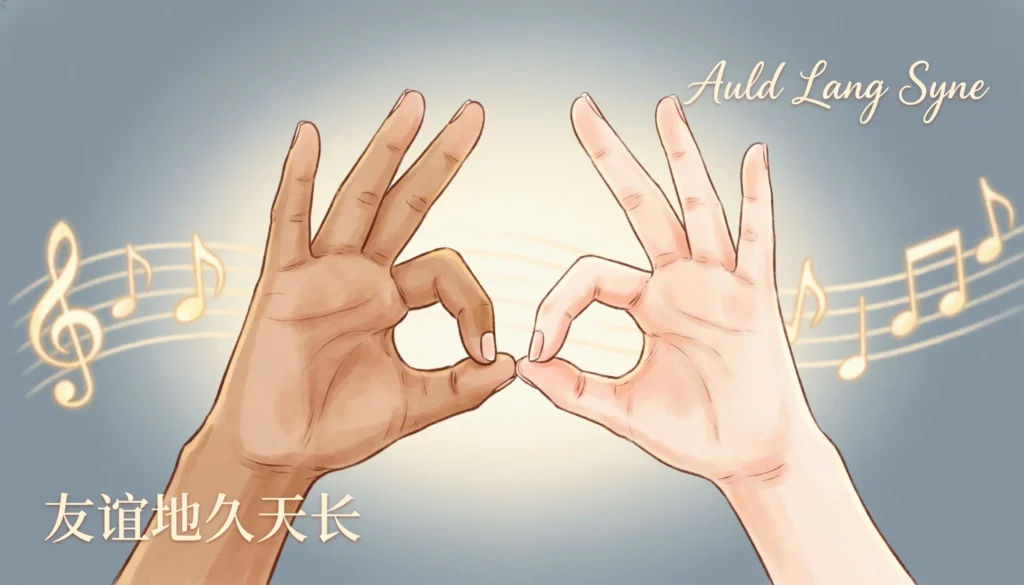
Friendship is one of the strongest themes connected with the phrase.
The famous song asks whether old friendships and memories should be forgotten simply because time has passed.
The answer suggested by the song is essentially no.
Even when people move away, become busy, or stop seeing each other regularly, their shared memories can remain meaningful.
For example:
Two school friends meet after many years. They talk about their childhood and laugh about things they did together. That moment captures the spirit of Auld Lang Syne.
The phrase therefore has an emotional connection to long-lasting relationships and shared history.
Auld Lang Syne Meaning in Modern English
In modern conversations, you could explain the phrase using several expressions.
Common modern equivalents
- For old times’ sake
- Remembering the good old days
- Thinking about the past
- In memory of old times
- Remembering old friendships
- Days gone by
- The good old days
- Nostalgic memories
However, these expressions are not always exact synonyms.
“Auld Lang Syne” has a particularly strong connection with friendship, shared memories, and the passage of time.
What Is the Meaning of “For Auld Lang Syne”?
The expression “for auld lang syne” can be understood as:
“For old times’ sake.”
It suggests doing something because of a shared history or because old memories still matter.
Example
“We don’t talk often anymore, but let’s have coffee for auld lang syne.”
Meaning:
“We don’t talk often anymore, but let’s meet because of our old friendship and memories.”
Another example:
“They returned to their old school for auld lang syne.”
This means they returned because they wanted to remember or honor their past.
Auld Lang Syne Pronunciation
The pronunciation can vary depending on accent, but English speakers commonly pronounce it approximately like:
“awld lang zine”
A simple pronunciation guide:
- Auld → “awld”
- Lang → “lang”
- Syne → “zine”
So:
Auld Lang Syne → awld lang zine
The word “syne” rhymes with “line” and “time” in many English pronunciations.
What Is the Auld Lang Syne Song About?
The song focuses on whether people should forget old times and old friends.
Its central message is simple:
We should remember meaningful relationships and experiences from our past.
The song also includes images of friendship, drinking together, walking through familiar places, and sharing experiences.
Although the language is old-fashioned, the emotional message remains easy to understand.
It is about something most people can relate to:
Remembering people and moments that shaped your life.
Auld Lang Syne Lyrics and Meaning
The complete lyrics are traditionally associated with Robert Burns, but the wording can vary between versions.
One of the best-known ideas in the song is the question of whether old acquaintances should be forgotten.
The meaning is essentially:
Should we forget our old friends and the good times we shared?
The song then answers through its repeated celebration of auld lang syne—the old times.
Rather than focusing only on sadness, the song encourages people to celebrate their shared history.
Auld Lang Syne Meaning in Different Situations
The phrase can be used in several emotional situations.
1. New Year’s Eve
This is the most famous use.
People sing the song as the old year ends and the new year begins.
Example:
“Everyone gathered around the table and sang Auld Lang Syne at midnight.”
Here, the song represents the passing of time and memories from the previous year.
2. Farewells
The phrase can also fit a goodbye.
Example:
“They shared one final dinner for auld lang syne before moving to different countries.”
It suggests remembering their friendship before separating.
3. Reunions
It can describe the feeling of meeting someone from the past.
Example:
“The former classmates met again for auld lang syne.”
The focus is on their shared history.
4. Graduations
Graduation marks the end of one stage of life.
Friends may remember their school or college years before moving forward.
5. Retirement
A retiring employee might look back on decades of work, friendships, and achievements.
The phrase can describe that sense of nostalgia.
Auld Lang Syne vs. “Good Old Days”
These expressions are related, but they are not exactly the same.
| Expression | Main idea |
|---|---|
| Auld Lang Syne | Remembering old times and friendships |
| Good old days | Nostalgically remembering a past period |
| For old times’ sake | Doing something because of past memories |
| Days gone by | A past period or earlier time |
| Nostalgia | A sentimental feeling about the past |
For example:
“I miss the good old days.”
This expresses nostalgia.
But:
“Let’s meet for old times’ sake.”
This suggests taking action because of a shared past.
“Auld Lang Syne” can carry elements of both ideas.
Is Auld Lang Syne a Slang Phrase?
No. Auld Lang Syne is not modern slang.
It is a traditional Scots expression that became famous through a song.
Because people frequently hear it around New Year’s Eve, some may assume it is simply a modern phrase connected to celebrations.
However, its roots go much deeper.
It belongs to Scottish linguistic and cultural history and has been used for centuries in different forms.
Why Does Auld Lang Syne Feel So Emotional?
The phrase connects with a universal human experience: time changes, but memories remain.
Think about childhood friends.
You may not speak to them every day anymore. You may live in different cities or countries. Your lives may have changed completely.
But when you meet again, a simple conversation can bring back memories from years ago.
That emotional experience is the heart of Auld Lang Syne.
The phrase reminds us that:
- Time passes.
- People change.
- Friendships can survive distance.
- Memories can remain valuable.
- The past can influence the present.
- New beginnings do not require forgetting the past.
Common Misunderstandings About Auld Lang Syne
Misunderstanding 1: It means “Happy New Year”
Not exactly.
The song is commonly sung on New Year’s Eve, but “Auld Lang Syne” does not literally mean “Happy New Year.”
Its meaning is connected with old times, memories, and friendship.
Misunderstanding 2: It is only about sadness
Not necessarily.
The song can feel emotional, but it also celebrates friendship and shared experiences.
It is both nostalgic and celebratory.
Misunderstanding 3: It is modern English
It is not.
The phrase comes from Scots, which is why the words may look unfamiliar.
Misunderstanding 4: It is only used in Scotland
The phrase has Scottish roots, but the song is now known internationally.
It is especially famous in countries where New Year’s Eve traditions include singing the song.
How to Use Auld Lang Syne in a Sentence

Here are some natural examples.
- “We met after twenty years for a little Auld Lang Syne.”
- “They sang Auld Lang Syne at midnight.”
- “We went back to our old neighborhood for auld lang syne.”
- “The reunion was a wonderful moment of auld lang syne.”
- “For auld lang syne, let’s visit the restaurant where we first met.”
- “The song reminded everyone of old friends and auld lang syne.”
These examples show how the phrase can express nostalgia, friendship, remembrance, and shared history.
Auld Lang Syne in Popular Culture
“Auld Lang Syne” has become one of the most recognizable traditional songs in the English-speaking world.
You may hear it in:
- New Year’s Eve celebrations
- Movies
- Television shows
- Concerts
- Public celebrations
- Weddings and reunions
- Graduation events
- Farewell ceremonies
- Sporting events
- Community gatherings
Its recognizable melody makes it easy for groups to sing together, even when people do not know every word.
Why the Song Has Lasted So Long
One reason for its continued popularity is that its message is universal.
Almost everyone has experienced:
- Losing touch with an old friend
- Moving away from home
- Finishing school
- Starting a new job
- Leaving a familiar place
- Celebrating a new year
- Remembering childhood
- Meeting someone from the past
These experiences make the message of Auld Lang Syne relevant across generations.
Technology has changed dramatically since the song became famous, but the human feeling behind it has not changed.
Related Words and Concepts
If you are learning English vocabulary, these words are useful alongside Auld Lang Syne:
Nostalgia
A sentimental feeling when remembering the past.
Example:
“Looking at my old school photos filled me with nostalgia.”
Reminisce
To talk or think about past experiences.
Example:
“We spent the evening reminiscing about college.”
Memories
Things remembered from the past.
Example:
“She has wonderful memories of her childhood.”
Friendship
A relationship between people who care about and support each other.
Tradition
A custom or practice passed from one generation to another.
Farewell
An expression used when saying goodbye.
Reunion
A meeting between people who have been separated for some time.
Auld Lang Syne Meaning in One Simple Sentence
If you need to explain it quickly, say:
“Auld Lang Syne means remembering old times and old friends, or ‘for old times’ sake.’”
That is the easiest modern-English explanation.
Frequently Asked Questions
1. What does Auld Lang Syne mean?
Auld Lang Syne means “for old times’ sake.” It refers to remembering old times, friendships, and experiences from the past.
2. Is Auld Lang Syne Scottish?
Yes. Auld Lang Syne is a Scots phrase strongly associated with Scottish culture and the poet Robert Burns.
3. Why do people sing Auld Lang Syne on New Year’s Eve?
People sing it because New Year’s Eve is a time to say goodbye to the past year. The song celebrates old memories and friendships while people prepare for a new beginning.
4. What does “auld” mean?
“Auld” means “old.” It is a Scots form of the word.
5. What does “syne” mean?
“Syne” is an old Scots word associated with times past or something that happened previously. In “Auld Lang Syne,” it contributes to the meaning of “old times.”
6. Is Auld Lang Syne a slang term?
No. It is not modern slang. It is a traditional Scots expression that became internationally famous through the song.
7. What is another way to say Auld Lang Syne?
Common modern alternatives include “for old times’ sake,” “the good old days,” “days gone by,” and “remembering the past.” The exact meaning depends on the context.
Conclusion
The Auld Lang Syne meaning is much more than a phrase people sing at midnight on New Year’s Eve. At its heart, it is about remembering the past, appreciating old friendships, and valuing shared experiences.
The phrase comes from Scots and is commonly understood in modern English as “for old times’ sake.” Its connection with Robert Burns helped make it famous, while its emotional message allowed it to travel far beyond Scotland.
When you hear “Auld Lang Syne,” think about old friends, meaningful memories, days gone by, and the passage of time.
And perhaps that is why the song continues to feel special: moving forward does not mean forgetting where we came from. Sometimes, looking back at the good moments gives us a meaningful way to welcome what comes next.
Discover More Articles:
- Ablation Meaning Explained Clearly: Definition, Examples & More
- Voilà Meaning: Definition, Origin, Examples, and How to Use It
- De Facto Meaning: The Simple Guide to This Useful Phrase

Emily Thompson is an English language educator and grammar writer at grammarnestz.com. She specializes in grammar rules, vocabulary development, writing skills, and language-learning resources for students and professionals.