
Vato slang meaning is something many people search when they come across this casual Spanish slang in chats, TikTok videos, or everyday conversations. If you have seen the word “vato” and wondered what it really means, you are not alone. I remember feeling curious the first time I heard it, because it sounded friendly but also a little confusing.
In simple words, “vato” is often used to refer to a guy, dude, or friend, especially in Mexican Spanish and Chicano slang. In this article, I will explain the meaning of “vato,” where it comes from, and how people use it naturally in modern conversations and online slang.
What Is the Vato Slang Meaning in English?
Vato is a popular Mexican Spanish slang word that means “guy,” “dude,” “man,” “bro,” or “buddy” in English. It is widely used in Mexico and among Mexican-American (Chicano) communities as a casual way to refer to another male. Depending on the situation, vato can describe a close friend, an acquaintance, or simply a man someone is talking about.
Unlike formal Spanish words such as hombre (man) or señor (sir), vato is informal and conversational. You are more likely to hear it in everyday speech, music, movies, social media posts, and text messages than in professional or academic settings.
The meaning of vato changes slightly based on context:
- Friendly: “He’s my vato.” (He’s my buddy.)
- Casual: “That vato is funny.” (That guy is funny.)
- Respectful: “You’re a good vato.” (You’re a good man.)
- Negative: “That vato caused trouble.” (That guy caused trouble.)
Today, many English speakers recognize the word because it frequently appears in rap lyrics, Chicano culture, television shows, and internet slang. Although the word originated in Mexican Spanish, it has become familiar worldwide through popular culture.
Example Sentences
- “That vato always helps his friends.”
- “I met a cool vato at the concert.”
- “Ask that vato if he knows the address.”
- “He’s a funny vato who makes everyone laugh.”
What Does Vato Mean on Urban Dictionary?

According to Urban Dictionary, vato is commonly defined as a guy, dude, homie, or close friend, especially within Mexican-American street culture and Chicano communities. Many entries also describe it as a respectful nickname for another man, similar to calling someone bro or homie.
Urban Dictionary contains definitions written by everyday users rather than language experts, so some entries include jokes, slang, or exaggerated explanations. Even so, most definitions agree on the core meaning of the word.
Some common Urban Dictionary interpretations include:
- A male friend or buddy.
- A cool guy or respected person.
- A member of a neighborhood or local community.
- Someone associated with Chicano culture.
- A casual replacement for “dude.”
You’ll also see related expressions such as:
- Vato loco – inexplicable dude.
- Mi vato – my man or my boyfriend.
- Ese vato – that guy.
Although Urban Dictionary often connects vato with gang culture, that does not mean every use of the word has that meaning. In everyday conversations, most people simply use it as another way of saying guy or bro.
Is Vato a Bad Word?

No, vato is generally not a bad word. It is considered informal slang, not profanity or a curse word. Millions of Spanish speakers use it naturally when talking with friends or family members.
However, whether it sounds polite depends on who says it, where it’s used, and the tone of voice.
When It Is Friendly
Among friends, vato often works like bro, dude, or mate.
Examples:
- “What’s up, vato?”
- “Thanks, vato!”
- “You’re a good vato.”
These uses are friendly and respectful.
When It Can Sound Rude
Like many slang words, vato can sound insulting if spoken angrily.
Examples:
- “That vato is annoying.”
- “Move, vato!”
Here, the word isn’t offensive by itself, but the speaker’s tone makes it feel disrespectful.
Should You Use It?
If you’re speaking with people familiar with Mexican slang, using vato casually is usually acceptable. However, if you don’t know the culture well or you’re in a formal setting, it’s safer to use words like man, guy, or sir instead.
What Does Vato Loco Mean?
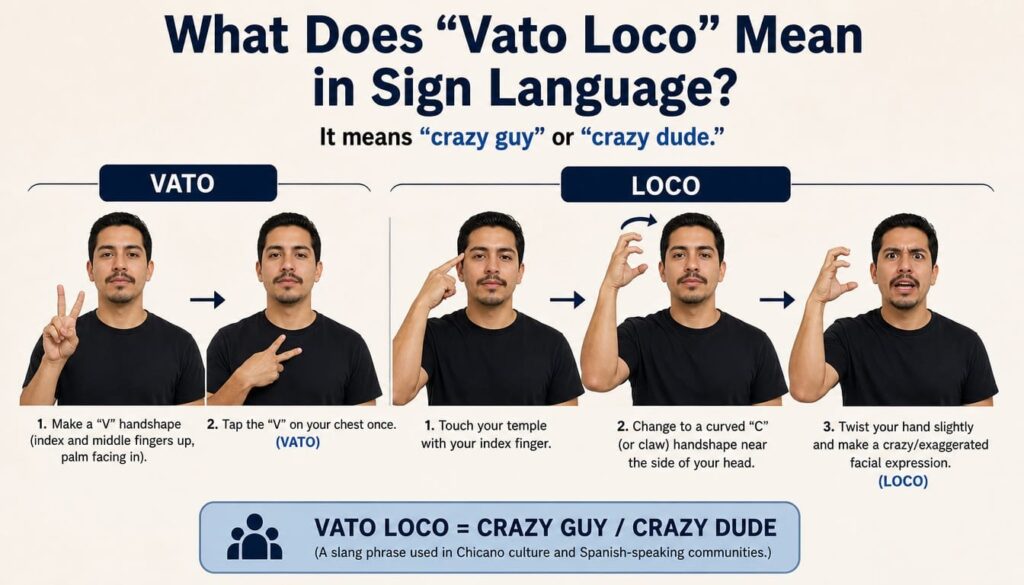
The expression vato loco literally translates to “ unbelievable guy” or “aggravating dude.” It combines:
- Vato = guy or dude
- Loco = shocking
The phrase became famous through Chicano culture, classic films, rap music, and television. While it sometimes refers to someone involved in street life, it is also used humorously among friends.
Possible meanings include:
- A fearless person.
- Someone who behaves wildly.
- A rebellious friend.
- A funny person who does unexpected things.
Examples:
- “You’re a chaotic vato loco!”
- “That vato loco never gets scared.”
- “Everyone knows him as the neighborhood vato loco.”
Not every use has a serious meaning. Many people say vato loco simply as a playful nickname.
Vato Pronunciation
Pronunciation: VAH-toh
- First syllable: VAH
- Second syllable: toh
The emphasis is on the first syllable.
English speakers sometimes pronounce it like vah-toe, which is also commonly understood.
Pronunciation Tips
- Say VAH as in spa.
- Say toh like toe.
- Speak smoothly: VAH-toh.
If you hear native Mexican Spanish speakers, the t is usually softer and the o sound is short and clear.
What Does Mi Vato Mean?

The phrase mi vato means “my guy,” “my man,” “my boyfriend,” or “my partner.”
Since mi means my in Spanish, the phrase expresses closeness, affection, or familiarity.
Depending on the relationship, it may refer to:
- A boyfriend.
- A husband.
- A romantic partner.
- A close male friend.
Examples:
- “I’m going out with my vato tonight.”
- “Mi vato always supports me.”
- “She’s waiting for her vato.”
On social media, many couples use mi vato affectionately when posting pictures together.
What Is the Female Version of Vato?
The feminine form is usually vata.
Just as vato refers to a man, vata refers to a woman or girl in slang.
Examples:
- “She’s a cool vata.”
- “That vata helped everyone.”
However, vata is much less common than vato. In many Spanish-speaking regions, people prefer other words, including:
- Morra – girl.
- Chica – girl.
- Muchacha – young woman.
- Mujer – woman.
Because regional slang varies, you may hear different female equivalents depending on where you are.
Bato or Vato: What’s the Difference?
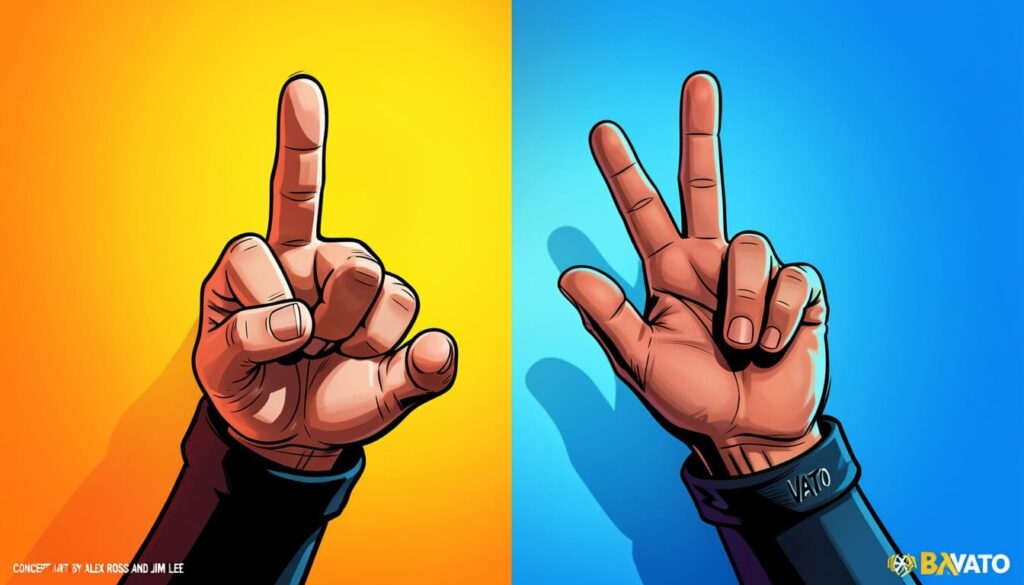
Many people wonder whether bato and vato mean different things. In most cases, they have the same meaning.
Both words refer to:
- Guy
- Dude
- Man
- Buddy
The difference is mainly regional pronunciation and spelling.
Vato
- More common in Mexican-American communities.
- Frequently appears in movies, rap songs, and internet slang.
- More recognizable to English speakers.
Bato
- More common in some parts of Mexico.
- Used in everyday local conversations.
- Shares the same meaning as vato.
Example Comparison
- “That vato is cool.”
- “That bato is cool.”
Both sentences mean exactly the same thing.
In modern English content, vato is usually the preferred spelling because it is more widely recognized online and in popular culture.
Meaning & Definition With Examples
The vato slang meaning is generally “guy,” “man,” “dude,” or “bro.” The word comes from Mexican Spanish and is especially common in parts of Mexico and among Mexican-American communities in the United States.
Unlike formal Spanish words such as hombre (man) or señor (sir), vato is informal slang. It is typically used among friends or acquaintances in relaxed settings.
Examples
- “That vato helped me fix my car.”
- “What’s up, vato?”
- “You’re a cool vato.”
Depending on the tone of voice, facial expression, or surrounding conversation, the word may express:
- Friendship
- Respect
- Familiarity
- Playfulness
- Mild aggression
Because of these varying meanings, context is more important than the word itself.
In English, the closest equivalents include:
- Dude
- Bro
- Guy
- Buddy
- Homie
However, these translations are not always perfect because vato carries cultural associations that simple English equivalents may not fully capture.
Background
The history of vato comes from Mexican Spanish and has been part of everyday speech for many decades. Linguists generally associate it with colloquial language used in various regions of Mexico before becoming popular in Chicano communities throughout the United States.
During the late twentieth century, the term gained wider recognition through:
- Hip-hop music
- Rap culture
- Movies
- Television
- Urban street culture
- Internet memes
Films featuring Latino characters frequently included expressions like:
“What’s up, vato?”
As these movies reached international audiences, people outside Spanish-speaking communities began encountering the word.
Social media accelerated its popularity even further. Today, millions of users see vato in:
- TikTok videos
- Instagram Reels
- YouTube comments
- Gaming communities
- Discord servers
- Facebook memes
Although it has become widely recognized online, it remains strongly connected to Mexican and Chicano culture. Using it respectfully helps avoid misunderstanding or appearing insensitive to its cultural roots.
Usage in Different Contexts
The meaning of vato changes depending on where and how it is used.
Casual Conversations
Among friends, it simply means:
- Dude
- Bro
- Man
Example:
“Hey vato, how have you been?”
Social Media
People often use it humorously.
Example:
“This vato really thought he could win.”
Online Gaming
Gamers sometimes call teammates or opponents “vato.”
Example:
“Good game, vato.”
Music
Many rap songs and Latino artists use the word to create an authentic cultural tone.
Movies
Crime dramas and urban films frequently include the term to reflect realistic dialogue.
Professional Settings
The word is generally not appropriate in workplaces, business meetings, academic writing, or professional emails.
Instead of saying:
“Thanks, vato.”
Use:
- Thank you.
- Thanks, sir.
- Thank you, everyone.
Knowing when not to use slang is just as important as knowing what it means.
Meaning in Chat, WhatsApp, Instagram, and TikTok
Internet users often encounter vato while chatting.
Friends may text:
“Where you at, vato?”
Meaning:
“Where are you, bro?”
Comments might include:
“This vato never misses.”
This usually praises someone.
TikTok
Creators use the word in funny storytelling videos, reaction clips, or memes.
Snapchat
It appears in casual conversations among friends.
Discord
Gaming communities sometimes use it similarly to “bro.”
Memes often include “vato” to imitate humorous Mexican-American conversations.
In nearly all these situations, the tone is informal and friendly unless the surrounding conversation suggests otherwise.
Meaning in Physics, Medical, and Aircraft Terminology
Many readers wonder whether vato has a technical meaning.
Physics
There is no recognized physics term called vato.
If you encounter it in a science discussion, it is almost certainly someone’s username, nickname, or slang rather than scientific terminology.
Medical
There is no standard medical abbreviation or official healthcare definition for vato.
Doctors, nurses, and medical journals do not use it as a technical medical term.
Aircraft
Similarly, vato is not an official aviation abbreviation or aircraft term recognized in aviation communication.
If it appears in aviation discussions, it is usually:
- A nickname
- A username
- A company or product name
- Informal conversation
Therefore, when searching technical fields, users should not confuse slang with official terminology.
Common Misconceptions
Several myths surround this slang word.
Misconception 1
Vato always means gangster.
Not true.
Although movies often associate it with gangs, most speakers simply use it to mean “guy” or “bro.”
Misconception 2
It is offensive.
Not necessarily.
Among friends, it is often perfectly friendly.
Misconception 3
Everyone in Spanish-speaking countries uses it.
No.
Its popularity varies greatly by region.
Misconception 4
It is formal Spanish.
Incorrect.
It is informal slang.
Misconception 5
It has only one meaning.
Context determines whether it sounds respectful, humorous, casual, or confrontational.
Similar Terms & Alternatives
Depending on the region, people may use similar words.
Common alternatives include:
- Dude
- Bro
- Buddy
- Guy
- Homie
- Hombre
- Carnal
- Compa
- Amigo
- Broski
Each carries its own cultural nuance, so they are not always interchangeable.
How to Respond to It
If someone calls you vato, your response depends on your relationship.
Friendly replies include:
- “What’s up?”
- “Hey, bro!”
- “Good to see you.”
- “How’s it going?”
- “Not much, you?”
If the conversation feels confrontational, remain calm and respond politely instead of escalating the situation.
When you’re unsure about the speaker’s intent, paying attention to their tone and the overall conversation is the safest approach.
Differences from Similar Words
Although vato resembles several English slang expressions, there are subtle differences.
| Word | Typical Meaning | Tone |
| Vato | Guy, dude | Mexican/Chicano slang |
| Dude | Guy | Casual English |
| Bro | Friend | Friendly |
| Homie | Close friend | Urban slang |
| Buddy | Friend | Neutral |
| Hombre | Man | Standard Spanish |
These words overlap but are influenced by different cultures and communities.
Relevance in Online Conversations & Dating Apps
Slang helps create a relaxed atmosphere online, and vato occasionally appears in dating apps and social platforms.
On dating apps, someone might jokingly refer to another person as:
“That vato seems funny.”
Among friends, it can make conversations feel casual and authentic.
However, when messaging someone for the first time, using neutral language is usually a better choice. Not everyone understands regional slang, and excessive use may cause confusion.
In multicultural online communities, it’s helpful to remember that expressions familiar to one group may be unfamiliar to another. Choosing words based on your audience improves communication and avoids misunderstandings.
FAQ
- What does vato mean in slang?
It usually means “guy,” “dude,” “bro,” or “man” in informal Mexican Spanish and Chicano slang. - Is vato a bad word?
No. It is generally informal rather than offensive, although tone and context can affect how it is perceived. - Can I use vato in professional conversations?
No. It is best reserved for casual conversations and should generally be avoided in professional or formal settings. - Does vato have a meaning in physics or medicine?
No. It is not a recognized technical term in physics, medicine, or aviation. - Is vato the same as bro?
They are similar in many casual situations, but vato has stronger cultural roots in Mexican Spanish and Chicano communities.
Conclusion
Understanding the Vato Slang Meaning helps you interpret conversations across social media, text messages, entertainment, and everyday speech. In most situations, the word simply refers to a guy, man, or bro, making it a friendly and informal expression rooted in Mexican Spanish and Chicano culture. While it is widely recognized online, its meaning still depends on context, tone, and the relationship between speakers.
Because it is slang, vato is best used in casual conversations rather than professional environments. It also has no official meaning in fields such as physics, medicine, or aviation, despite common online searches suggesting otherwise. By understanding its background, common uses, and cultural significance, you can recognize when the term is appropriate and communicate more confidently in both online and real-world interactions.
Discover More Articles:
- The Complete Guide to Concha Slang Meaning and Its Usage
- No Mames Slang Meaning: Is It Rude, Funny, or Offensive?
- Dutch Slang Meaning: When, Why, and How People Use It

Hi, I’m James Richardson, the creator of GrammarNestz.com. My mission is to help students, writers, and language enthusiasts improve their English grammar skills through practical guides, easy lessons, and useful learning resources.