
Beef slang meaning is one of the most searched internet expressions because people often see the word in text messages, TikTok videos, Instagram captions, rap lyrics, and online arguments. If you’ve ever wondered why someone says they “have beef” with another person, you’re not alone.
While “beef” usually refers to meat, its slang meaning is completely different. In everyday conversations, it describes conflict, disagreement, or personal rivalry between two people or groups. The term has become a common part of internet culture and is used by people of all ages. In this guide, I’ll explain the meaning of beef in simple English, where it came from, how it’s used across different platforms, and when you should or shouldn’t use it. By the end, you’ll understand the expression with confidence.
What Does It Mean to Have Beef With Someone?
The phrase “to have beef with someone” means having a problem, disagreement, or personal conflict with another person. It is commonly used in casual conversations, social media, and online chats.
For example:
- “She has beef with her coworker because of their argument.”
- “Why do you have beef with him?”
This phrase does not always mean a serious fight; sometimes it can refer to a small disagreement or misunderstanding.
Beef Meaning in a Fight or Argument
In the context of a fight, beef meaning in fight refers to a dispute, rivalry, or ongoing argument between people. It can describe anything from a simple personal disagreement to a major conflict.
For example:
- “They had beef after a misunderstanding.”
- “The two teams have had beef for years.”
The word is often used when the conflict continues over time rather than being a one-time argument.
Beef Slang Meaning in Rap and Hip-Hop Culture
The beef meaning in rap is closely connected to hip-hop culture, where it describes a public rivalry between artists. Rap beefs often happen through diss tracks, interviews, or social media exchanges.
Famous rap beefs have made this slang term widely popular because artists use music to express their disagreements or challenge their rivals.
Example:
- “The two rappers started a beef after releasing diss songs.”
Beef Slang Origin: Where Did the Term Come From?
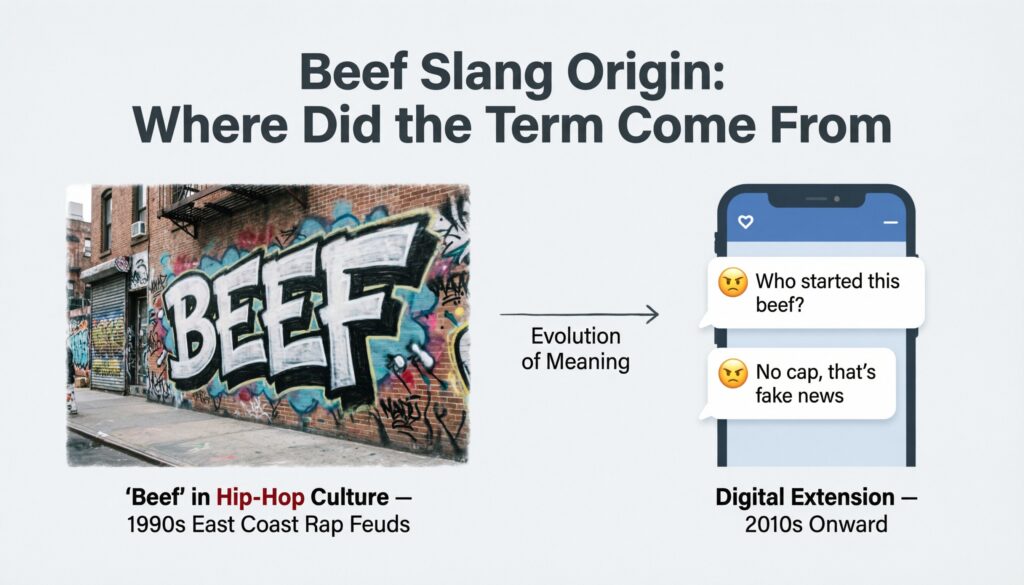
The beef slang origin dates back to older English slang. One popular theory connects it to British working-class expressions where “beef” was used to mean a complaint or disagreement. Over time, the word became associated with arguments and conflicts.
The term became especially popular in American culture through hip-hop, movies, and television, where it started being used for personal rivalries and public disputes.
Beef Slang Meaning in Different Languages
The meaning of slang words can change depending on the language and culture. In Spanish, beef slang meaning in Spanish is usually translated as a conflict, problem, or rivalry. Common translations include words like “problema,” “conflicto,” or “rivalidad.”
Although the word “beef” itself is English slang, many languages now use similar expressions when talking about disagreements or fights.
Beef Slang Meaning in Urdu
In Urdu, beef slang meaning can be understood as جھگڑا، دشمنی، اختلاف، یا کسی سے مسئلہ ہونا. When someone says “I have beef with him,” it means:
“Mera us shakhs ke sath masla hai” or “Meri us se larai ya ikhtilaf hai.”
This slang is commonly used in online conversations, movies, and social media.
Meaning & Definition of Beef Slang Meaning

The beef slang meaning refers to a personal conflict, ongoing argument, dislike, or feud between two people or groups. When someone says, “I have beef with him,” they mean they are upset with that person or have unresolved issues.
Unlike a temporary disagreement, “beef” often suggests a stronger and more personal conflict. It can range from playful competition between friends to serious public feuds involving celebrities, influencers, or musicians.
Simple Definition
Beef (slang): A conflict, disagreement, rivalry, or ongoing problem between people.
Examples
- “They’ve had beef since high school.”
- “Do you still have beef with your coworker?”
- “Those rappers started beefing online.”
- “Ignore the drama—I don’t want any beef.”
In modern conversations, the word doesn’t always mean intense hatred. Sometimes people use it jokingly.
Example:
“I have beef with Mondays.”
Here, the speaker simply means they dislike Mondays.
Because of its flexibility, the term appears frequently in memes, casual conversations, gaming communities, and social media discussions.
Background of Beef Slang Meaning
The slang use of “beef” has existed for many decades. Linguists believe it became popular in American English during the early 1900s, where it originally meant a complaint or grievance.
Later, the word gained even more popularity through hip-hop culture.
Rappers often described public rivalries as “rap beefs,” referring to lyrical battles and personal disputes. Famous celebrity feuds helped spread the expression worldwide.
With the rise of social media, the word evolved again.
Instead of only describing serious rivalries, people now use “beef” for almost any disagreement.
Examples include:
- Gaming arguments
- School drama
- Workplace conflicts
- Family disagreements
- Celebrity feuds
- Friendly rivalries
Today, millions of users use the word every day without realizing its long history.
Usage in Different Contexts (Chat, Social Media, Professional Fields)

One reason the phrase remains popular is its versatility.
Casual Conversations
Friends commonly say:
- “Do you guys have beef?”
- “Why is everyone beefing?”
Social Media
Influencers use it while discussing online drama.
Example:
“The creators have major beef.”
Gaming
Gamers might say:
“That player has beef with our whole squad.”
Workplace
Professionals usually avoid the slang in formal communication, but coworkers might jokingly say:
“There’s no beef between our teams anymore.”
Entertainment
Music fans regularly discuss rapper or celebrity beefs.
Example:
“The internet can’t stop talking about their beef.”
Although acceptable in casual speech, it’s generally better to replace it with “conflict” or “disagreement” in formal writing.
Beef Slang Meaning in Chat, WhatsApp, Instagram, and TikTok
The phrase appears constantly across messaging apps and social platforms.
In Chat
Someone may ask:
“You got beef with me?”
This means:
“Are you angry with me?”
On WhatsApp
Friends often use it during misunderstandings.
Example:
“Bro, what’s the beef?”
Meaning:
“What happened?”
On Instagram
Users mention beef while discussing influencer drama.
Examples:
- “The comments are full of beef.”
- “They’re still beefing.”
On TikTok
TikTok creators frequently post videos about celebrity conflicts.
Captions include:
- “Internet beef.”
- “TikTok beef.”
- “Unexpected beef.”
Many creators exaggerate minor disagreements for entertainment, so not every “beef” is actually serious.
Meaning in Physics, Medical, and Aircraft Terminology
Unlike many abbreviations, beef does not have an official technical meaning in physics, medicine, or aviation.
Physics
There is no recognized scientific definition of “beef.”
If you see the word in a physics discussion, it almost certainly refers to its everyday meaning or is being used humorously.
Medical Field
Doctors do not use “beef” as official medical terminology.
However, the adjective beefy sometimes appears in medicine.
Example:
- “Beefy red tongue”
- “Beefy appearance”
This describes bright red tissue rather than conflict.
Aircraft & Aviation
In aviation, “beef” is occasionally used informally to describe a maintenance issue or complaint.
Example:
“The pilot reported a beef with the landing gear.”
This is informal slang rather than standardized aviation language.
Common Misconceptions About Beef Slang Meaning
Many people misunderstand this slang.
Misconception 1
It always means hatred.
Reality:
Sometimes it’s simply playful teasing.
Misconception 2
Only rappers use it.
Reality:
Everyone uses it today.
Misconception 3
It always involves two enemies.
Reality:
You can jokingly have beef with objects, food, weather, or even technology.
Example:
“I have beef with slow internet.”
Misconception 4
It’s offensive.
Reality:
Usually it isn’t.
Context determines whether it sounds humorous or aggressive.
Similar Terms & Alternatives
Depending on the situation, several words have similar meanings.
| Term | Meaning |
|---|---|
| Conflict | General disagreement |
| Feud | Long-term rivalry |
| Dispute | Formal disagreement |
| Rivalry | Competition |
| Drama | Emotional conflict |
| Tension | Uncomfortable relationship |
| Issue | Problem with someone |
| Argument | Verbal disagreement |
| Clash | Strong disagreement |
| Grudge | Lasting resentment |
Each alternative carries a slightly different tone.
How to Respond to Beef Slang Meaning
Your response depends on the context.
If Someone Says:
“I’ve got beef with you.”
Possible replies:
- “Let’s talk it out.”
- “What happened?”
- “I didn’t know you felt that way.”
- “Can we solve this?”
If Used as a Joke
Example:
“I have beef with Mondays.”
Reply:
- “Honestly, same.”
- “I totally understand.”
Avoid escalating arguments online, especially if the comment was intended humorously.
Differences from Similar Words
Although related, these words are not identical.
| Word | Difference |
|---|---|
| Beef | Personal conflict |
| Argument | Single disagreement |
| Feud | Long-term serious conflict |
| Drama | Emotional or public conflict |
| Rivalry | Competition between people |
| Complaint | Expression of dissatisfaction |
“Beef” usually feels more casual and conversational than “feud.”
Relevance in Online Conversations & Dating Apps
The slang remains extremely common online.
On dating apps, someone might ask:
“Any beef with your ex?”
Meaning:
Do you still have unresolved conflict?
In online communities, users often discuss:
- Celebrity beef
- Influencer beef
- Gaming beef
- School drama
- Friend group conflicts
Because internet culture spreads new expressions rapidly, “beef” continues to stay relevant across platforms.
Using the term naturally helps you understand memes, comments, and viral videos without confusion.
Frequently Asked Questions About Beef Slang Meaning
- What does beef mean in slang?
It means a conflict, disagreement, rivalry, or ongoing problem between people. - Does beef always mean a serious fight?
No. It can describe both serious conflicts and lighthearted jokes. - Why do people say “I have beef with you”?
They mean they are upset with you or have an unresolved issue. - Is beef common on TikTok and Instagram?
Yes. The term is widely used to describe influencer drama, celebrity feuds, and online disagreements. - Can beef be used professionally?
It is generally considered informal. In professional settings, words like “conflict,” “issue,” or “disagreement” are more appropriate.
Conclusion
Understanding the beef slang meaning makes it much easier to follow modern conversations, whether you’re chatting with friends, scrolling through TikTok, or reading comments on Instagram. In slang, “beef” simply refers to a disagreement, conflict, or rivalry between people, although it can also be used humorously to describe frustration with everyday things.
Its popularity comes from music culture, internet communities, and social media, where it’s used to describe everything from celebrity feuds to playful jokes. Remember that context is important—a sentence about “having beef” doesn’t always indicate serious hostility. Knowing how and when to use the term will help you communicate more naturally, understand online trends, and avoid confusion when the expression appears in conversations or viral content.
Discover More Articles:
- What Does BBC Stand for in Slang? Meaning, Uses & Examples
- Nakadashi Meaning in Slang, Anime & Japanese Culture
- What Is Truffle Butter in Slang? Definition with Real Examples

Hi, I’m Ethan Walker, founder of GrammarNestz. Passionate about language, writing, and clear communication, I help learners and writers improve their grammar skills through practical tips, easy-to-understand guides, and engaging content.