If you have ever watched a New York movie, listened to a Brooklyn rapper, or chatted with someone from the city, you may have wondered about the nyc slang meaning behind words like “deadass,” “son,” “mad,” “brick,” or “bodega.” New York City has a unique way of speaking that reflects its diverse neighborhoods, cultures, history, and fast-paced lifestyle.
NYC slang is more than a collection of unusual words. It is a form of communication that can show where someone is from, express emotions, build connections, or add personality to an ordinary conversation. Some expressions have been around for decades, while others have become popular through TikTok, Instagram, music, television, and online conversations.
In this guide, we will explore the meaning of NYC slang, where it comes from, popular New York expressions, how people use them in everyday conversations, and what they really mean.
What Does NYC Slang Mean?
NYC slang refers to informal words, phrases, expressions, and vocabulary commonly associated with New York City and its various communities.
New York is one of the most culturally diverse cities in the world, so its slang has developed through the influence of many languages, ethnic groups, neighborhoods, music scenes, and generations.
For example:
- Deadass – Seriously or genuinely.
- Mad – Very or extremely.
- Brick – Extremely cold weather.
- Bodega – A small neighborhood convenience store.
- Son – A casual way to address another person.
- Whack – Bad, disappointing, or unfair.
- Buggin’ – Acting strangely or overreacting.
- Schmuck – A foolish or annoying person.
- Guap – A lot of money.
- Frontin’ – Pretending or acting like something is true when it is not.
The exact meaning can depend on the speaker, neighborhood, age group, and situation.
Why Is NYC Slang So Popular?
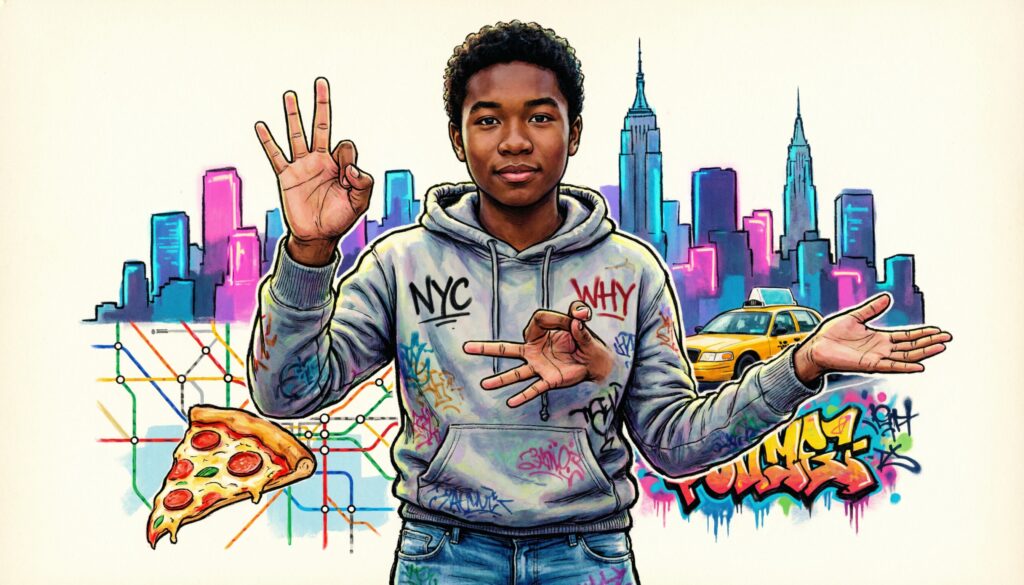
New York City has had an enormous influence on American culture. Its music, fashion, sports, television, movies, comedy, and social media trends have helped spread New York expressions far beyond the city.
Hip-hop has played a particularly important role. New York was central to the development of hip-hop culture, and words used in local communities eventually became recognizable throughout the United States.
Social media has accelerated this process.
A word that once belonged primarily to a particular neighborhood can now appear in:
- TikTok videos
- Instagram captions
- YouTube comments
- Rap lyrics
- Memes
- Text messages
- Podcasts
- Television shows
- Online gaming chats
This is one reason people from outside New York often search for NYC slang meaning when they encounter unfamiliar expressions online.
A Brief Background of New York Slang
New York slang did not come from one single source. It developed over generations as different communities interacted with one another.
The city’s enormous immigrant population brought languages and expressions from around the world. African American and Caribbean communities also had a major influence on New York’s speech and popular culture.
Different boroughs developed their own linguistic identities.
Brooklyn, the Bronx, Queens, Manhattan, and Staten Island can all have slightly different cultural influences and expressions. Even within a single borough, slang can vary from neighborhood to neighborhood.
Music also changed the way New Yorkers communicated.
Hip-hop, especially from the Bronx and other parts of New York, helped introduce local vocabulary to national audiences. Later, movies, television, and social media made these expressions even more widespread.
As a result, New York slang words are constantly evolving.
Some expressions disappear with time, while others become mainstream.
Popular NYC Slang Words and Their Meanings
Let’s look at some of the most recognizable New York slang words and how they are commonly used.
1. Deadass
Deadass is one of the most recognizable New York expressions.
It generally means seriously, honestly, or genuinely.
Example:
“Deadass, I thought you were coming at 7.”
This means:
“Seriously, I thought you were coming at 7.”
It can also be used to emphasize that someone is not joking.
Example:
“I’m deadass tired.”
Meaning:
“I am seriously tired.”
2. Mad
In NYC slang, mad can mean very, extremely, or a lot of something.
It does not necessarily mean angry.
Examples:
“That pizza was mad good.”
Meaning:
“That pizza was extremely good.”
“There were mad people at the party.”
Meaning:
“There were a lot of people at the party.”
This use of “mad” is particularly recognizable in New York and other parts of the Northeast.
3. Brick
When a New Yorker says:
“It’s brick outside.”
They usually mean it is extremely cold outside.
The word creates a strong image of cold, uncomfortable weather.
Example:
“Bring a jacket. It’s brick outside.”
Meaning:
“Bring a jacket because it’s extremely cold.”
This is one of the classic NYC winter slang expressions.
4. Bodega
A bodega is a small neighborhood store, often selling snacks, drinks, groceries, household items, and other everyday necessities.
The word is strongly associated with New York City culture.
Example:
“I’m stopping at the bodega before I go home.”
Depending on the neighborhood, a bodega may also be famous for quick food, sandwiches, coffee, and its neighborhood atmosphere.
5. Son
In New York speech, son can be used casually when addressing another person.
It does not necessarily mean someone’s actual child.
Example:
“Son, what are you doing?”
Depending on the context, it can sound friendly, surprised, annoyed, or humorous.
You may hear it frequently in conversations, movies, music, and online content influenced by New York culture.
6. Buggin’
Buggin’ generally means acting strangely, overreacting, panicking, or becoming unnecessarily upset.
Example:
“Why are you buggin’? It’s not that serious.”
Meaning:
“Why are you overreacting? It’s not that serious.”
It can also describe someone behaving irrationally.
7. Whack
Whack means bad, disappointing, strange, unfair, or low quality, depending on context.
Examples:
“That movie was whack.”
Meaning:
“That movie was bad.”
“That’s whack.”
Meaning:
“That is unfair or disappointing.”
The word is not exclusively New York slang, but it has strong connections with New York hip-hop and urban speech.
8. Frontin’
Frontin’ means pretending, showing off, or acting as if something is true when it is not.
Example:
“Stop frontin’. You know you like the song.”
Meaning:
“Stop pretending. You know you like the song.”
Someone might also say:
“He’s frontin’ like he’s rich.”
This means the person is pretending to have more money or status than they actually do.
9. Guap
Guap is slang for money, often suggesting a large amount of money.
Example:
“He made some serious guap this year.”
Meaning:
“He made a lot of money this year.”
This term is not limited to New York, but it can appear in New York-influenced music and online slang.
10. Tight
Depending on the context, tight can describe being angry, upset, close, or even physically compact.
Example:
“He’s tight because you canceled.”
Meaning:
“He’s upset because you canceled.”
Because slang can change meaning based on context, it is important not to interpret every slang word literally.
NYC Slang in Different Contexts
One interesting thing about NYC slang is that the same word can have different meanings depending on the situation.
NYC Slang in Text Messages
People often use slang in texts because it makes conversations faster and more casual.
For example:
“You deadass coming?”
This means:
“Are you seriously coming?”
Another example:
“It’s brick today.”
Meaning:
“It’s extremely cold today.”
Texting slang is usually informal and should be avoided in professional communication unless you know the audience well.
NYC Slang on TikTok
TikTok has helped spread New York expressions to people around the world.
You may see terms such as:
- Deadass
- Mad
- Buggin’
- Son
- Brick
- Bodega
- OD
- Facts
- Word
Some users use these words naturally, while others use them because they have become internet trends.
This is important because not everyone using NYC slang is actually from New York.
NYC Slang on Instagram
On Instagram, New York slang can appear in:
- Captions
- Comments
- Memes
- Reels
- Stories
- Music-related posts
For example:
“Deadass the best pizza I’ve ever had.”
Here, “deadass” simply adds emphasis.
NYC Slang and Hip-Hop Culture
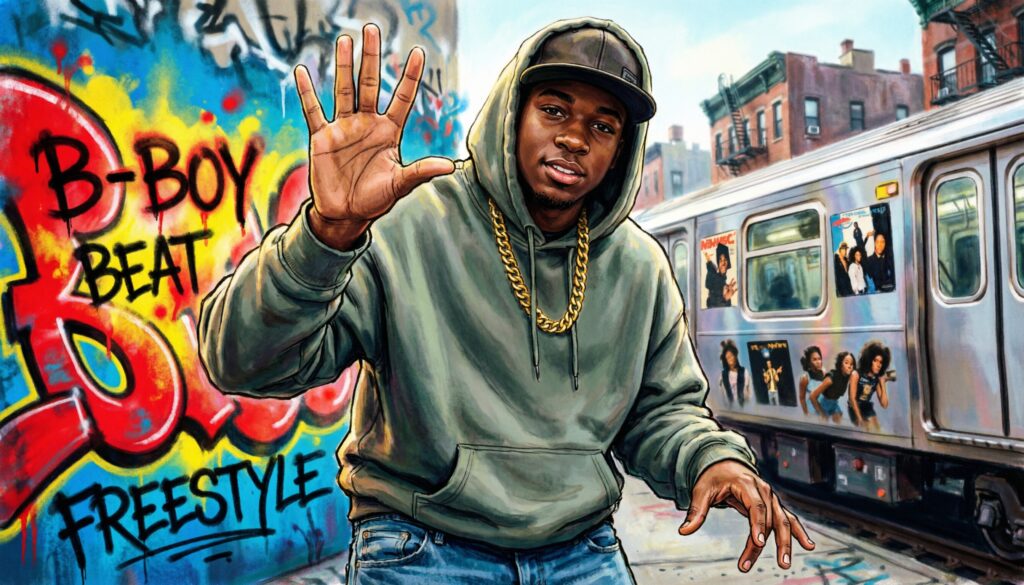
You cannot discuss New York slang meaning without mentioning hip-hop.
New York played a major role in the development of hip-hop culture, and the city’s music scene helped spread many local expressions.
Artists, DJs, producers, and communities introduced New York vocabulary to audiences throughout the United States and eventually around the world.
Rap music often uses slang because it can:
- Create rhythm
- Express identity
- Represent a neighborhood
- Build authenticity
- Make lyrics more conversational
- Communicate ideas quickly
This is why people researching NYC slang words often encounter the same expressions in hip-hop lyrics.
NYC Slang by Borough
New York City consists of five boroughs:
- Manhattan
- Brooklyn
- Queens
- The Bronx
- Staten Island
Although people sometimes talk about “New York slang” as if it is one single language, the reality is more complicated.
Different neighborhoods have different cultural histories and linguistic influences.
Brooklyn Slang
Brooklyn has been especially influential in music, street culture, fashion, and internet culture. Its slang often overlaps with broader New York expressions.
Bronx Slang
The Bronx has a particularly important connection to hip-hop history. Its cultural influence can be seen in music, dance, and language.
Queens Slang
Queens is one of the most diverse areas of New York City, which means its language reflects many cultural and linguistic influences.
Manhattan Slang
Manhattan contains a wide variety of communities and social environments, so the language you hear can differ greatly depending on the neighborhood and social group.
Staten Island Slang
Staten Island has its own local identity, although many expressions overlap with slang used throughout the city.
NYC Slang vs. General American Slang
Not every word associated with New York is exclusively New York slang.
Some terms have become common throughout the United States.
| NYC Expression | Common Meaning | Mainly NYC? |
|---|---|---|
| Deadass | Seriously | Strong NYC association |
| Mad | Very / extremely | Common in Northeast |
| Brick | Extremely cold | Strong NYC association |
| Bodega | Neighborhood store | Strong NYC association |
| Buggin’ | Overreacting | NYC/Northeast association |
| Whack | Bad or unfair | Used widely |
| Guap | Money | Used widely |
| Frontin’ | Pretending | Used widely |
| Son | Casual address | Regional/cultural usage |
This distinction matters because slang constantly moves between cities and communities.
How to Use NYC Slang Naturally
If you are not from New York, using local slang can sometimes feel awkward. The best approach is to understand the meaning before using it.
Here are a few tips.
1. Understand the Context
Don’t use a slang word simply because you saw it online.
First understand how people actually use it.
2. Don’t Overuse It
Putting five slang expressions into one sentence can make your speech sound unnatural.
Instead of:
“Deadass son, it’s mad brick, word, I’m buggin’.”
A natural conversation would normally use slang more selectively.
3. Consider Your Audience
Slang is usually appropriate for:
- Friends
- Casual conversations
- Social media
- Memes
- Informal messages
It may not be appropriate for:
- Job interviews
- Academic essays
- Formal emails
- Business documents
- Professional presentations
4. Remember That Slang Changes
A word that is popular today may sound outdated tomorrow.
Internet culture moves incredibly quickly, so slang evolves constantly.
Common Misunderstandings About NYC Slang
Misconception 1: All New Yorkers Talk the Same Way
This is not true.
New York City contains many communities, accents, cultures, and generations. The language used by a teenager in Brooklyn may be different from that used by an older professional in Manhattan.
Misconception 2: Every NYC Slang Word Is Unique to New York
Many words associated with New York are also used elsewhere.
Some have spread through music, television, social media, and popular culture.
Misconception 3: Slang Is Always Rude
Not necessarily.
Slang can be friendly, humorous, expressive, or affectionate. Meaning depends heavily on tone and context.
Misconception 4: NYC Slang Never Changes
Actually, it changes constantly.
New expressions appear while older ones become less common.
Related NYC Expressions You May Hear
If you are interested in New York City slang, you may also encounter these expressions:
- OD – Extremely, excessively, or a lot.
- Facts – Used to agree strongly with someone.
- Word – A casual expression of agreement or acknowledgment.
- My guy – Friendly way to address someone.
- Wildin’ – Acting mistaken or behaving excessively.
- Type – Used to describe a particular kind or preference.
- Ock – A relatively recent internet-associated NYC term used as a form of address, especially in certain online contexts.
- Shorty – A casual term that can refer to a young person or someone, depending on context.
- C’mon – A shortened form of “come on,” often used to express disbelief, encouragement, or frustration.
- Regular – In some New York food-ordering contexts, it can refer to a familiar or customary preparation.
Remember that some of these terms are broader American or internet slang rather than exclusively New York expressions.
Why People Search for “NYC Slang Meaning”
People search for nyc slang meaning for many reasons.
A person might hear an unfamiliar word in a rap song. Someone might see “deadass” in a TikTok comment. Another person might visit New York and hear “bodega” or “brick” for the first time.
Understanding slang can make conversations easier because slang often contains cultural information that a dictionary definition cannot fully explain.
Learning NYC slang can also help people understand:
- New York movies
- Rap music
- Social media conversations
- Memes
- Local culture
- Informal texting
- Popular expressions
- Online trends
However, understanding a word is different from sounding like a native speaker. Slang is strongly connected to culture, experience, and context.
Examples of NYC Slang in Conversations
Example 1: Talking About Weather
Person A: “You going outside?”
Person B: “Nah, it’s brick.”
Here, “brick” means extremely cold.
Example 2: Confirming Something
Person A: “You really saw him there?”
Person B: “Deadass.”
Here, “deadass” means “seriously” or “I’m telling the truth.”
Example 3: Complaining
Person A: “They charged me $20 for that?”
Person B: “That’s whack.”
Here, “whack” means unfair or disappointing.
Example 4: Overreacting
Person A: “Why are you buggin’?”
Person B: “Because you didn’t tell me about the plan!”
Here, “buggin’” means overreacting or becoming upset.
NYC Slang vs. Gen Z Slang
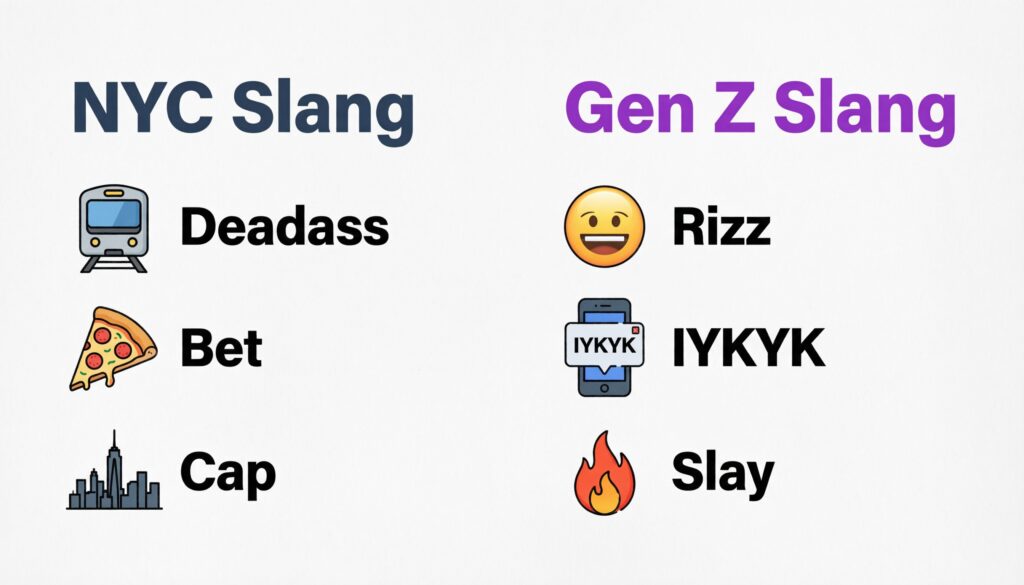
There is some overlap between NYC slang and Gen Z slang, but they are not exactly the same thing.
Gen Z slang often spreads nationally or internationally through TikTok, Instagram, gaming, and other online platforms.
NYC slang, meanwhile, is often connected to local culture and communities.
For example:
- “Deadass” has a strong New York association.
- “Rizz” is broader Gen Z/internet slang.
- “No cap” became widely used across the United States.
- “Brick” has a strong regional association with New York and the Northeast.
The internet has blurred these boundaries, making it difficult to label every word as belonging to one specific group.
Tips for Understanding New York Slang
If you are trying to understand a New York conversation, don’t focus only on individual words.
Pay attention to:
Tone
The same expression can be friendly or aggressive depending on how it is said.
Situation
A word can have different meanings in different situations.
Speaker
Age, neighborhood, culture, and social group can influence vocabulary.
Surrounding Words
The sentence around a slang term often reveals its meaning.
Pop Culture
Movies, music, podcasts, and social media can provide useful examples of how expressions are used.
Frequently Asked Questions About NYC Slang Meaning
1. What does NYC slang mean?
NYC slang refers to informal words and expressions associated with New York City and its communities. It includes terms influenced by local culture, music, neighborhoods, immigrant communities, and popular culture.
2. What does “deadass” mean in NYC slang?
“Deadass” generally means seriously, honestly, or genuinely. It is often used to emphasize that someone is telling the truth or is not joking.
3. What does “brick” mean in New York slang?
In New York slang, brick usually means that the weather is extremely cold.
For example:
“It’s brick outside.”
means:
“It’s extremely cold outside.”
4. What does “mad” mean in NYC slang?
“Mad” can mean very, extremely, or a lot of rather than angry.
For example:
“That place is mad crowded.”
means:
“That place is extremely crowded.”
5. What is a bodega in NYC?
A bodega is a small neighborhood store commonly found throughout New York City. Many sell snacks, drinks, groceries, coffee, sandwiches, and other everyday items.
6. Is NYC slang the same in every borough?
No. New York City has five boroughs and many different communities. Slang can vary by neighborhood, generation, culture, and social group.
7. Is NYC slang still popular today?
Yes. Many New York expressions continue to appear in music, social media, movies, television, memes, and everyday conversations. However, slang changes over time, and some expressions become less common while new ones emerge.
Conclusion
Understanding the nyc slang meaning is really about understanding more than vocabulary. New York City’s expressions reflect its neighborhoods, communities, history, music, humor, and fast-moving culture.
Words such as deadass, mad, brick, bodega, son, buggin’, and whack can make conversations sound more casual and expressive. At the same time, their meanings can change depending on context, tone, and the person using them.
If you want to understand NYC slang naturally, focus on how words are used rather than simply memorizing dictionary definitions. Listen to conversations, pay attention to context, and remember that not every expression is exclusive to New York.
Most importantly, use slang naturally. You do not need to fill every sentence with New York expressions to understand or appreciate the culture.
Whether you discovered NYC slang through TikTok, hip-hop, movies, texting, or a visit to the city, learning these expressions can give you a better understanding of the unique language and culture of New York.
The key takeaway: NYC slang is constantly evolving, deeply connected to local culture, and best understood through context. Learn the meaning, understand the situation, and use each expression appropriately.
Discover More Articles:
- OT Meaning in Social Media: Slang Explained Simply
- Motorboat Slang Meaning: What Does “Motorboat” Mean in Slang?
- Blinker Meaning in Text: What Does It Really Mean?

Emily Thompson is an English language educator and grammar writer at grammarnestz.com. She specializes in grammar rules, vocabulary development, writing skills, and language-learning resources for students and professionals.