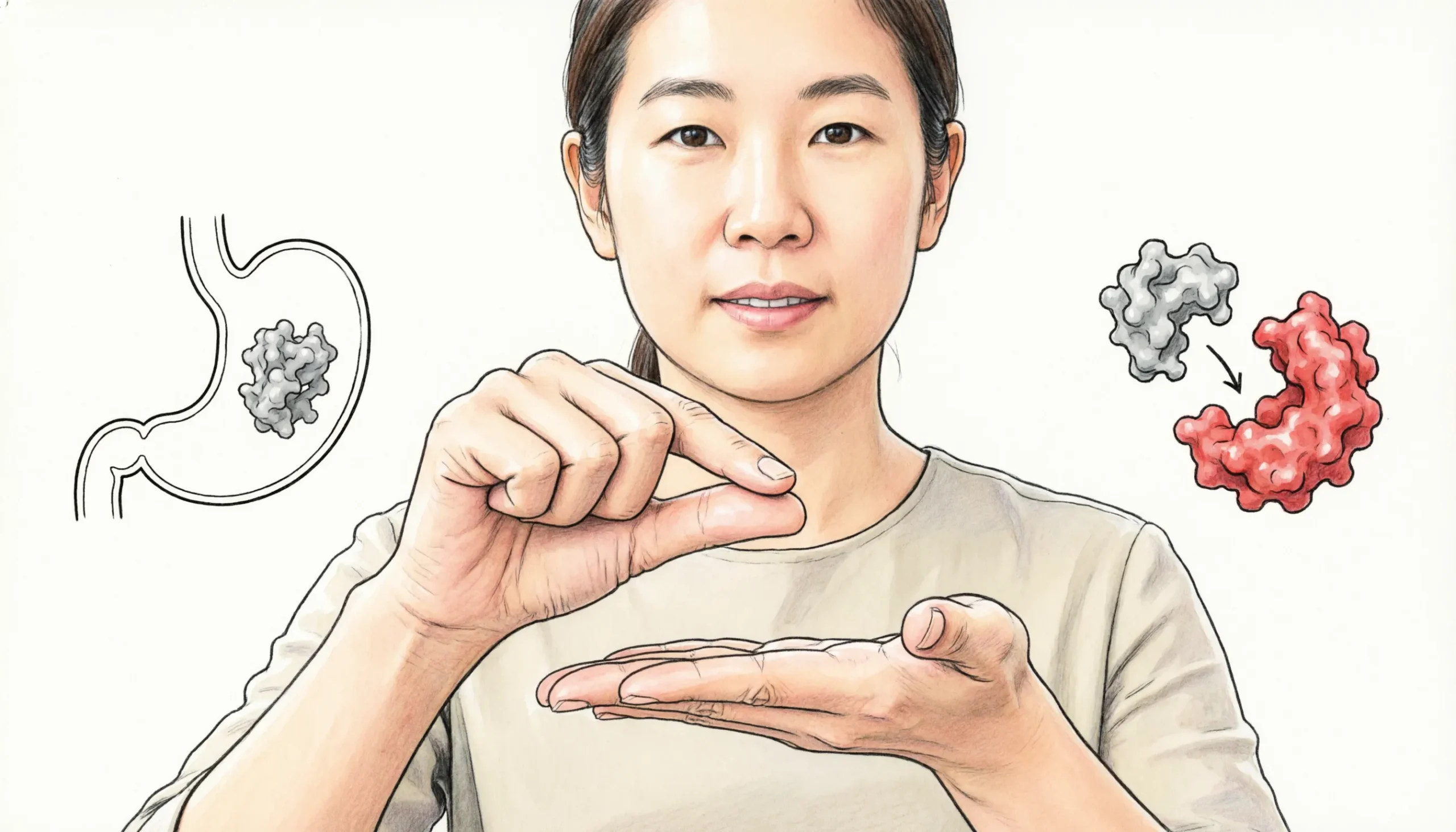
Pepsinogen meaning refers to an inactive digestive enzyme precursor produced mainly by cells in the stomach. When pepsinogen enters the acidic environment of the stomach, it can be converted into pepsin, an active enzyme that helps break down proteins from food.
Understanding pepsinogen is useful because it connects several important parts of digestion, including stomach acid, protein digestion, gastric health, and certain medical tests. Although the word may sound complicated, its basic role is quite simple: pepsinogen is essentially the inactive form that can become pepsin when the right conditions are present.
In this guide, we will explain what pepsinogen means, where it comes from, how it works, the difference between pepsinogen I and II, what pepsinogen blood tests can indicate, and some common questions people have about it.
What Is the Pepsinogen Meaning?
The simple pepsinogen definition is:
Pepsinogen is an inactive precursor of the digestive enzyme pepsin that is produced in the stomach and activated in an acidic environment.
The word can be understood by breaking it into two parts:
- Pepsin – a digestive enzyme that breaks down proteins.
- -ogen – a suffix commonly used to describe an inactive precursor that can become an active substance.
So, pepsinogen means a substance that can produce or become pepsin.
Pepsinogen itself does not perform the same protein-digesting job as active pepsin. Instead, it acts as a stored or inactive form that can be activated when conditions are appropriate.
What Does Pepsinogen Do?
The main role of pepsinogen is to provide the stomach with a safe way to produce pepsin, an enzyme needed for protein digestion.
When you eat foods containing protein, such as:
- Meat
- Eggs
- Fish
- Milk and dairy products
- Beans
- Lentils
- Nuts
- Seeds
your digestive system needs enzymes to break large protein molecules into smaller pieces.
Pepsin is one of the enzymes involved in this process.
However, having a powerful protein-digesting enzyme constantly active inside stomach cells could potentially damage those cells. Producing it initially as an inactive precursor provides an important protective mechanism.
The basic process
The process can be simplified into three steps:
- Stomach cells produce pepsinogen.
- Stomach acid creates a low-pH environment.
- Pepsinogen is converted into active pepsin.
The active pepsin then begins breaking down proteins into smaller peptide fragments.
Where Is Pepsinogen Produced?
Pepsinogen is produced primarily by specialized cells in the stomach called chief cells.
Chief cells are located in the gastric glands, particularly in the body and fundus of the stomach.
Different regions and cell types contribute to the production of different forms of pepsinogen.
There are two major groups commonly discussed:
- Pepsinogen I (PG I)
- Pepsinogen II (PG II)
These forms have different patterns of production within the stomach and can therefore provide useful information when measured in clinical testing.
Pepsinogen I vs. Pepsinogen II
One of the most important concepts related to pepsinogen is the difference between pepsinogen I and pepsinogen II.
| Feature | Pepsinogen I | Pepsinogen II |
|---|---|---|
| Also called | PG I | PG II |
| Main production | Mainly gastric chief and related cells in the fundus/body | Produced in several regions of the stomach |
| Role | Precursor of pepsin | Precursor of pepsin |
| Found in blood | Yes | Yes |
| Used in testing | Yes | Yes |
| Can help assess gastric mucosa | Yes | Yes |
Doctors may consider the levels of both forms, as well as their ratio, when evaluating certain stomach conditions.
What Is the Pepsinogen I/II Ratio?
The pepsinogen I/II ratio is calculated by comparing the amount of pepsinogen I with the amount of pepsinogen II in the blood.
In general, the ratio can provide additional information beyond looking at either measurement alone.
A lower ratio can occur when the cells that normally produce more pepsinogen I are reduced or affected. This is one reason pepsinogen measurements may be used as a marker of changes in the stomach lining.
However, a pepsinogen result should not be interpreted by itself. Reference ranges and clinical significance depend on the laboratory, the person’s circumstances, and other test results.
How Does Pepsinogen Become Pepsin?
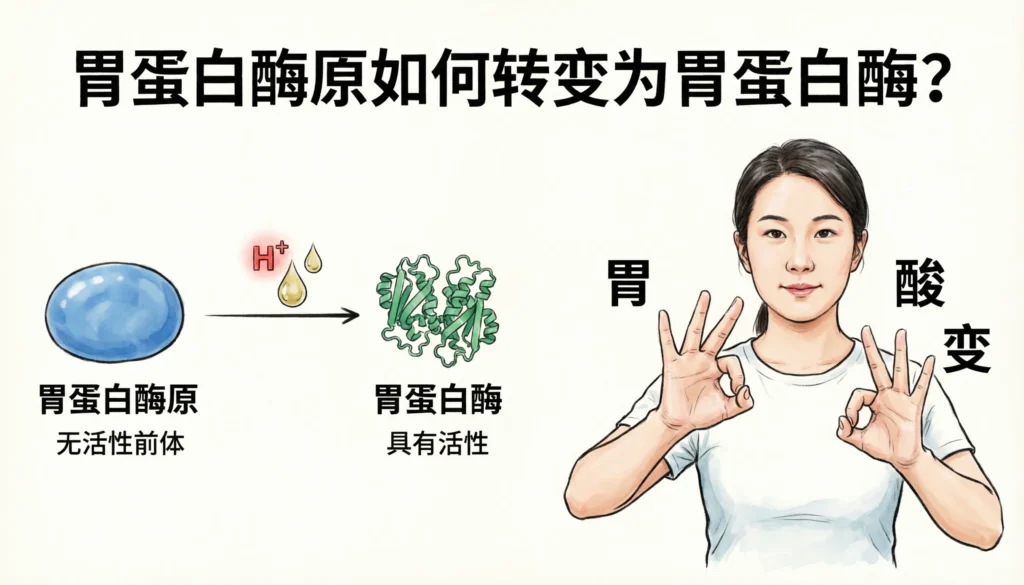
This is where stomach acid becomes particularly important.
Pepsinogen is released into the stomach in an inactive form. The stomach contains hydrochloric acid, which creates a strongly acidic environment.
Under these acidic conditions, pepsinogen undergoes a structural change and becomes pepsin.
Interestingly, once some pepsin has been created, it can help activate additional pepsinogen molecules. This creates a process sometimes described as autocatalytic activation.
The simplified pathway looks like this:
Pepsinogen → acidic stomach environment → Pepsin → protein digestion
Why isn’t pepsin produced in its active form?
Producing an inactive precursor provides protection.
If large amounts of active pepsin were produced inside the cells that manufacture it, the enzyme could potentially begin breaking down proteins in those cells.
Producing pepsinogen first helps keep the enzyme inactive until it reaches the appropriate environment.
Pepsinogen and Protein Digestion
Protein digestion begins in the stomach but continues through the digestive tract.
When protein-rich food reaches the stomach, stomach acid helps denature proteins, meaning it unfolds their structures.
Pepsin then helps break proteins into smaller fragments called peptides.
For example:
Protein-rich food → stomach acid + pepsin → smaller protein fragments → further digestion in the small intestine
Other digestive enzymes later continue breaking these fragments down into smaller components, including amino acids, which the body can absorb and use.
So, pepsinogen has an indirect but essential connection to protein digestion.
Why Is Pepsinogen Important in Medicine?
Pepsinogen isn’t only a digestive substance. It can also be measured as a biomarker.
A biomarker is a measurable substance that can provide information about a biological process or condition.
Because different stomach cells produce different amounts and types of pepsinogen, changes in blood concentrations may reflect changes in the gastric lining.
Doctors and researchers have therefore studied pepsinogen measurements in relation to conditions involving the stomach.
These can include:
- Gastric mucosal atrophy
- Chronic gastritis
- Certain forms of gastric gland damage
- Conditions associated with Helicobacter pylori
- Assessment of gastric cancer risk in particular clinical settings
Importantly, pepsinogen testing is generally considered an assessment tool, not a standalone diagnosis.
What Is a Pepsinogen Blood Test?
A pepsinogen blood test measures the amount of pepsinogen circulating in the blood.
Depending on the test, the laboratory may measure:
- Pepsinogen I
- Pepsinogen II
- The PG I/PG II ratio
The test is usually performed using a blood sample.
The results can give healthcare professionals additional information about the condition of the stomach lining.
However, the meaning of an abnormal result depends on the entire clinical picture.
Important point
A high or low pepsinogen result does not automatically mean that a person has a particular disease.
Doctors may consider other information, such as:
- Symptoms
- Medical history
- Other laboratory tests
- H. pylori testing
- Endoscopy findings
- Biopsy results
- Age and other risk factors
What Can Low Pepsinogen Levels Mean?
Low levels of pepsinogen, particularly pepsinogen I, may occur when the gastric glands responsible for producing it become reduced or damaged.
One example is atrophic gastritis, a condition involving thinning or loss of some stomach gland structures.
However, interpretation depends heavily on which pepsinogen measurement is low.
For example, a low PG I level combined with a low PG I/PG II ratio can provide different information from a low PG I result alone.
This is why online explanations should not be used to diagnose a stomach condition from a single laboratory number.
What Can High Pepsinogen Levels Mean?
Higher pepsinogen levels can also occur in certain circumstances.
For example, changes in the stomach lining or inflammation can affect pepsinogen release.
Some studies have also examined relationships between pepsinogen concentrations and H. pylori-associated gastric inflammation.
But again, a high pepsinogen result doesn’t automatically identify one specific disease.
The result must be considered alongside the laboratory’s reference range and other clinical information.
Pepsinogen and Helicobacter pylori
Helicobacter pylori, often shortened to H. pylori, is a bacterium that can colonize the stomach.
It has been associated with:
- Chronic gastritis
- Peptic ulcer disease
- Changes in the gastric mucosa
- Increased risk of certain stomach cancers
Because H. pylori can affect the stomach lining, it may also influence pepsinogen levels.
For this reason, pepsinogen measurements have been studied as part of approaches to assess gastric health and risk.
However, pepsinogen testing and H. pylori testing are not necessarily interchangeable. A healthcare professional may use specific tests depending on the question being investigated.
Pepsinogen vs. Pepsin
These two words are easy to confuse.
The key difference is activity.
| Pepsinogen | Pepsin |
|---|---|
| Inactive precursor | Active digestive enzyme |
| Produced by stomach cells | Formed from pepsinogen |
| Does not actively digest proteins in its precursor form | Breaks down proteins |
| Activated by acidic conditions | Works in the acidic stomach environment |
A simple way to remember it is:
Pepsinogen = inactive form
Pepsin = active form
Think of pepsinogen as an enzyme that is still “switched off,” while pepsin is the activated version.
Pepsinogen vs. Stomach Acid
Pepsinogen and stomach acid work together, but they are not the same thing.
Stomach acid
Stomach acid is primarily hydrochloric acid. It helps:
- Create a low-pH environment
- Denature proteins
- Support pepsin activation
- Help protect against some swallowed microorganisms
Pepsinogen
Pepsinogen is an enzyme precursor.
Its primary purpose is to become pepsin, which contributes to protein digestion.
So, the relationship can be summarized as:
Stomach acid creates the conditions → pepsinogen becomes pepsin → pepsin helps digest protein.
Common Misunderstandings About Pepsinogen
1. Pepsinogen is the same as pepsin
Not exactly.
Pepsinogen is the inactive precursor, while pepsin is the active enzyme.
2. More pepsinogen always means better digestion
Not necessarily.
The digestive system is complex, and a blood pepsinogen measurement isn’t a direct measurement of how efficiently someone digests food.
3. A low pepsinogen result automatically means cancer
No.
Pepsinogen levels can be influenced by different stomach conditions. A test result alone cannot diagnose stomach cancer.
4. Pepsinogen only exists in the stomach
Pepsinogen is mainly associated with the stomach, but small amounts and related forms can be found in other contexts. Its primary physiological importance, however, is connected to gastric digestion.
5. Pepsinogen and stomach acid are the same thing
They are completely different substances with different roles.
Why Does the Body Make Inactive Enzymes?
Pepsinogen is one example of a broader biological strategy.
The body often produces digestive enzymes in inactive forms called zymogens or proenzymes.
This provides an important safety mechanism.
Other digestive enzymes are also produced as inactive precursors. For example:
- Trypsinogen → trypsin
- Chymotrypsinogen → chymotrypsin
- Pepsinogen → pepsin
The basic idea is simple:
Produce the enzyme safely → transport or release it → activate it where it is needed.
This prevents digestive enzymes from unnecessarily damaging the cells that produce them.
A Simple Everyday Example
Imagine you eat a meal containing grilled chicken.
The chicken contains a large amount of protein.
After swallowing, the food travels to your stomach. The stomach releases acid and digestive substances.
Stomach cells release pepsinogen, not large quantities of fully active pepsin directly.
The acidic stomach environment helps convert pepsinogen into pepsin.
Pepsin begins breaking the chicken’s proteins into smaller peptide fragments.
Later, digestion continues in the small intestine with additional enzymes.
This shows why pepsinogen is an important part of the overall digestive process.
Related Terms You Should Know
If you’re researching pepsinogen meaning, you may also come across these terms:
Pepsin
An active digestive enzyme that breaks proteins into smaller peptides.
Gastric acid
Hydrochloric acid produced by specialized cells in the stomach.
Chief cells
Stomach cells that produce pepsinogen.
Gastric mucosa
The inner lining of the stomach.
Atrophic gastritis
A condition involving loss or thinning of gastric gland structures.
H. pylori
A bacterium associated with chronic stomach inflammation and several gastric conditions.
Gastrin
A hormone that helps regulate gastric acid secretion and other aspects of stomach function.
Zymogen
An inactive enzyme precursor that can be activated under suitable conditions.
Frequently Asked Questions About Pepsinogen Meaning
1. What does pepsinogen mean in simple words?
Pepsinogen is an inactive form of the digestive enzyme pepsin. Stomach cells produce it, and acidic conditions in the stomach help convert it into active pepsin for protein digestion.
2. What is the main function of pepsinogen?
Its main function is to serve as the inactive precursor of pepsin. Once activated, pepsin helps break down proteins during digestion.
3. Where is pepsinogen produced?
Pepsinogen is produced mainly by specialized cells in the stomach, particularly chief cells. Different forms are produced in different areas of the stomach.
4. What is the difference between pepsinogen I and II?
Pepsinogen I and II are different groups of pepsinogen with different patterns of production in the stomach. Their levels and ratio can provide information about the condition of the gastric mucosa.
5. What does a pepsinogen blood test measure?
A pepsinogen blood test measures circulating pepsinogen, commonly including pepsinogen I, pepsinogen II, and sometimes the ratio between them.
6. Does low pepsinogen mean stomach cancer?
No. Low pepsinogen, especially in certain patterns, can be associated with changes such as gastric atrophy, but it does not by itself diagnose stomach cancer. Additional medical evaluation may be necessary.
7. Why is pepsinogen inactive?
Pepsinogen is produced in an inactive form to help protect the cells and tissues that produce it. It can be activated when it reaches the acidic environment of the stomach.
Conclusion
The pepsinogen meaning becomes much easier to understand when you remember one simple relationship: pepsinogen is the inactive precursor of pepsin.
Stomach cells produce pepsinogen, and the acidic environment of the stomach helps convert it into active pepsin. Pepsin then contributes to the digestion of proteins from food.
Pepsinogen also has an important medical role because measurements of pepsinogen I, pepsinogen II, and their ratio can provide information about the condition of the gastric lining in appropriate clinical settings.
If you encounter a pepsinogen result on a medical report, avoid interpreting the number in isolation. Look at the laboratory’s reference range and discuss the result with a qualified healthcare professional, especially if other stomach-related tests or symptoms are involved.
In short: pepsinogen is not the active digestive enzyme itself—it is the inactive form that can become pepsin and help your body digest protein.
Discover More Articles:
- FTE Meaning in Jobs: Full-Time Equivalent Explained
- TIL Meaning Explained for Beginners and Social Media Users
- Penultimate Meaning: Definition, Usage, Examples & FAQs

Hi, I’m James Richardson, the creator of GrammarNestz.com. My mission is to help students, writers, and language enthusiasts improve their English grammar skills through practical guides, easy lessons, and useful learning resources.