
Retcon meaning is short for “retroactive continuity.” It describes a change made to a story’s previously established facts, events, characters, or history. In simple words, a retcon happens when a writer changes or adds information about the past so that an existing story can work differently.
You may have seen this happen in a movie sequel when a character who was supposedly dead suddenly returns, or in a TV show when a new episode reveals that something we believed about a character was never actually true. These changes can be confusing, exciting, or even controversial, depending on how they are handled.
In this guide, we’ll explain what retcon means, where the term came from, how it is used in movies, TV shows, comics, books, and video games, and how to recognize a retcon in everyday discussions.
What Does Retcon Mean?
Retcon means retroactive continuity. It refers to changing, adding, removing, or reinterpreting details that were previously established in a fictional story.
The word can be used as both a noun and a verb.
For example:
- “The writers introduced a retcon in the latest season.”
- “The new movie retconned that character’s origin.”
- “That scene feels like a major retcon.”
- “The sequel retconned what happened in the original film.”
The important idea is that the new information affects how audiences understand something that happened earlier in the story.
Simple Definition of Retcon
Retcon means changing or reinterpreting previously established story details to create a new version of continuity.
It is especially common in long-running fictional universes where different writers create stories over many years.
What Does “Retcon” Stand For?
Retcon stands for retroactive continuity.
Let’s break the phrase down:
- Retroactive = affecting something from the past
- Continuity = the consistent sequence of events and facts within a story
Together, retroactive continuity means making a new change that affects how the fictional past is understood.
For example, imagine a superhero movie says:
“John lost his powers in 2015.”
Years later, another movie reveals:
“John actually never lost his powers. He secretly continued using them.”
The second story changes the audience’s understanding of the first story. That is a retcon.
Where Did the Term Retcon Come From?
The term retcon has a long history in discussions about fictional continuity. It became particularly associated with comic books, where characters and universes can continue for decades.
Comic book publishers often need to update old stories because:
- Characters become more popular.
- New writers take over.
- Storylines become complicated.
- Older stories no longer fit newer ideas.
- Characters need updated origins.
- Different versions of the same character need to be connected.
Because comic book universes can contain hundreds or thousands of stories, continuity can become difficult to maintain.
As the concept became more widely discussed, retcon moved beyond comics and became a common term for changes to established fictional history.
Today, people use the word when talking about movies, television, anime, manga, books, video games, comics, and fictional universes.
How Is Retcon Used in Stories?
A retcon can work in several different ways. Not every retcon completely erases an earlier event.
Here are some common types.
1. Adding New Information
Sometimes a writer adds information without completely contradicting what audiences already know.
For example:
In an earlier movie, a character says:
“I grew up alone.”
A later movie reveals that the character actually had a sister who disappeared when they were young.
The original statement may still technically be true from the character’s perspective, but the audience now understands the character’s past differently.
This is sometimes called a soft retcon because the new information fits reasonably well with what came before.
2. Changing an Established Fact
A stronger retcon directly changes something audiences previously believed.
Imagine a story establishes:
“The king died during the war.”
A later installment reveals:
“The king survived and secretly lived under another identity.”
That is a more obvious retcon because the new story changes an established fact.
3. Changing a Character’s Origin
Character origins are frequently retconned.
A superhero may originally be described as gaining powers because of an accident. Years later, a new story could reveal that the accident was actually caused by another character or that the hero already possessed unusual abilities.
The character still has the same general identity, but the explanation behind their history has changed.
4. Reinterpreting an Earlier Event
A retcon does not always say that the original event never happened.
Instead, it may give the event a completely different meaning.
For example:
At first, a character appears to betray their friends.
Later, viewers discover that the character was secretly working undercover.
The betrayal still happened, but its meaning and context have changed.
This type of storytelling can make audiences look back at older scenes differently.
Soft Retcon vs. Hard Retcon
One of the most useful distinctions is between a soft retcon and a hard retcon.
| Type | Meaning | Example |
|---|---|---|
| Soft retcon | Adds or changes details while trying to preserve earlier events | A character secretly had an older sibling |
| Hard retcon | Directly contradicts or replaces established information | A character who died is revealed to have never died |
| Reinterpretation | Changes the meaning of an earlier event | A supposed betrayal was actually a secret mission |
| Origin retcon | Changes how a character became who they are | A hero’s origin story is rewritten |
The exact terminology can vary among fans and writers, but these categories help explain how major a continuity change is.
Retcon Meaning in Movies
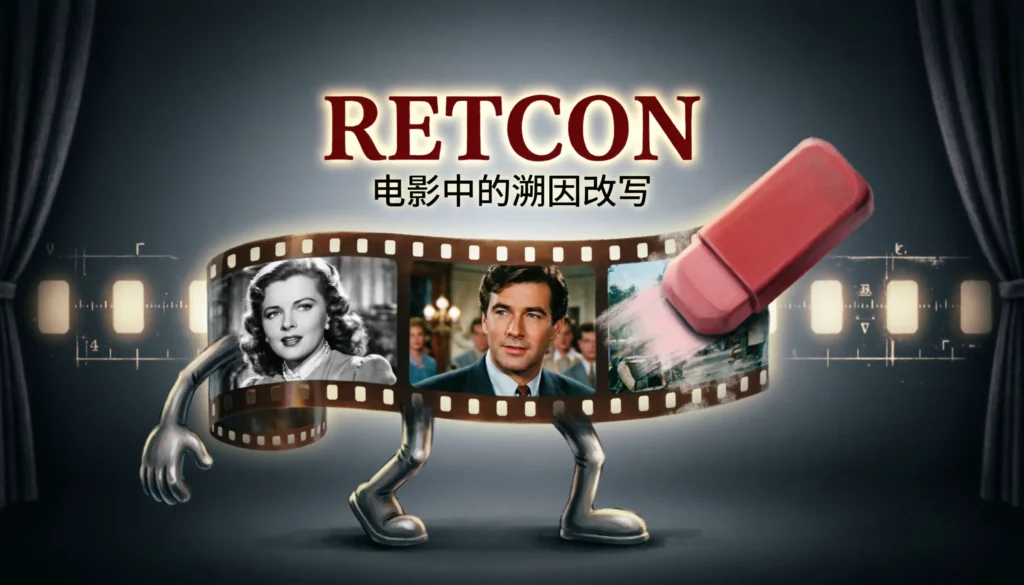
Retcon meaning in movies is usually connected to sequels, franchises, reboots, and expanded fictional universes.
A movie franchise may continue for many years. As new directors and writers join the project, they may introduce ideas that do not perfectly match earlier films.
A retcon can be used to make the new story possible.
Example
Suppose Movie 1 establishes:
“The villain was destroyed forever.”
Movie 3 introduces the same villain again and explains:
“The villain survived because the destruction only affected their physical body.”
The writers have effectively changed the audience’s understanding of what happened in Movie 1.
This is a retcon.
Retcon Meaning in TV Shows
Television shows are especially likely to use retcons because they can run for many seasons.
A series might introduce a character in Season 1 and later decide to give that character a different background.
For example:
- Season 1: The character says they have no siblings.
- Season 5: The story introduces their secret brother.
- New episodes explain why the brother was never mentioned.
That new information changes the character’s previously established history.
Why TV Writers Use Retcons
Retcons can help writers:
- Extend a popular storyline
- Bring back an old character
- Fix continuity problems
- Introduce unexpected twists
- Create new conflicts
- Expand a fictional universe
- Correct mistakes from earlier seasons
However, poorly explained retcons can frustrate viewers because they may feel that the writers are ignoring what happened before.
Retcon Meaning in Comics
Comics are one of the places where retcon is most commonly discussed.
Comic book characters can exist for decades. During that time, many writers may contribute to the same universe.
A character’s:
- Age
- Origin
- Powers
- Relationships
- History
- Identity
- Major life events
may change over time.
Retcons allow publishers to keep characters relevant while adjusting older material.
Why Comics Need Retcons
Imagine a superhero was created in 1960 and originally given a simple origin story.
Decades later, readers may expect a much more detailed explanation.
A new writer might expand the original story by adding previously unknown events.
That can create a richer fictional history without completely discarding everything that came before.
Retcon Meaning in Anime and Manga
The concept of retcon can also apply to anime and manga.
Long-running series sometimes reveal new information about:
- Character origins
- Family relationships
- Historical events
- Powers
- Organizations
- Previous battles
- Hidden identities
A later revelation may cause fans to reinterpret earlier episodes or chapters.
Not every surprise revelation is automatically a retcon, though.
If the new information was simply hidden from the audience and does not contradict earlier facts, it may be better described as a plot twist or revelation.
Retcon vs. Plot Twist
These terms are sometimes confused, but they are not identical.
A plot twist is an unexpected development in a story.
A retcon changes or reinterprets previously established continuity.
Example of a Plot Twist
You believe Character A is the hero, but later discover Character A was secretly the villain.
If this information was always part of the story’s hidden truth, it can be a plot twist.
Example of a Retcon
The story previously established that Character A was born in 1990.
A later story says:
“Character A was actually born in 1980.”
That is a retcon because an established fact has been changed.
Can Something Be Both?
Yes.
A writer can use a retcon as a plot twist.
The audience might suddenly learn that an earlier event happened differently from what they originally believed.
Retcon vs. Reboot
A reboot is another concept that is often confused with a retcon.
A reboot generally starts a fictional universe or continuity again, often with major changes.
A retcon usually changes specific parts of an existing continuity.
Simple Difference
Retcon:
“This part of the old story happened differently.”
Reboot:
“We’re starting the story’s continuity again with a new version.”
A franchise can also use both.
For example, a reboot may establish an entirely new continuity and then introduce additional retcons within that new timeline.
Retcon vs. Continuity Error
A continuity error is usually an inconsistency or mistake.
A retcon is generally an intentional storytelling decision.
Continuity Error Example
A character is shown wearing a blue shirt in one scene and suddenly wearing a red shirt in the same scene without explanation.
That is probably a continuity error.
Retcon Example
A writer deliberately changes the character’s history and explains the change through a later story.
That is a retcon.
In short:
Continuity error = likely mistake
Retcon = intentional change or reinterpretation
Sometimes, however, fans disagree about whether a contradiction was intentional or simply an error.
Why Do Writers Use Retcons?

Retcons can serve several storytelling purposes.
Fixing Old Problems
Writers may discover that an earlier story created a problem that makes future storytelling difficult.
A retcon can provide a solution.
Bringing Back Characters
A popular character may have been killed off years earlier.
A new writer may want to bring them back.
A retcon can provide an explanation.
Updating Old Stories
Older fictional universes may contain outdated ideas.
Writers may revise certain details to fit modern storytelling.
Creating New Story Opportunities
A previously unknown connection can create an entirely new storyline.
For example:
“The mysterious stranger was actually connected to the hero’s family all along.”
That revelation can open up many new plot possibilities.
Famous Types of Retcon Examples
Without focusing on one particular franchise, here are some common examples you may recognize from popular entertainment.
The Secret Relative
A character suddenly discovers they have a previously unknown:
- Brother
- Sister
- Parent
- Child
- Twin
This can change their backstory and relationships.
The Fake Death
A character was believed to have died but later returns.
The story then explains that the original death was misunderstood, faked, or survived.
The Hidden Identity
A character who seemed unrelated to an important event is later revealed to have been involved.
The Changed Origin
A character’s original backstory is replaced or expanded with a different explanation.
The Rewritten History
A major historical event in the fictional universe is changed or explained differently.
Is Retcon a Bad Thing?
Not necessarily.
A retcon can be useful when it improves a story or solves a continuity problem.
A well-written retcon can:
- Add depth to a character
- Make an old story more interesting
- Repair confusing continuity
- Create new storylines
- Connect different parts of a fictional universe
However, audiences may dislike a retcon when it feels forced or contradicts important events without a convincing explanation.
The reaction often depends on how well the change is written.
Common Misunderstandings About Retcon
Misunderstanding 1: Every Plot Twist Is a Retcon
Not every twist changes continuity.
A twist may simply reveal information that was hidden from the audience.
Misunderstanding 2: Retcon Always Means Erasing the Past
A retcon can add information without deleting earlier events.
Sometimes it simply changes how those events are understood.
Misunderstanding 3: Retcon Only Happens in Comics
Retcons can appear in:
- Movies
- TV shows
- Comics
- Manga
- Anime
- Books
- Video games
- Fictional universes
Misunderstanding 4: Retcon Always Creates a New Timeline
Not necessarily.
Some retcons modify the existing continuity without creating a completely separate timeline.
How to Identify a Retcon
When you’re watching a movie or reading a book, ask yourself these questions:
- Was this information already established?
- Does the new information contradict the old information?
- Does it change how an earlier event should be understood?
- Does it rewrite a character’s history?
- Does the story provide an explanation for the change?
If the answer is yes to several of these questions, you’re probably looking at a retcon.
Retcon in Everyday Internet Conversations
The word retcon is no longer limited to professional discussions about fiction.
Fans commonly use it on:
- X
- TikTok
- YouTube
- Discord
- Gaming forums
- Movie discussions
For example:
“The new season retconned his entire backstory.”
Or:
“I don’t think that’s a retcon. The writers never actually said that before.”
The term is useful because it gives fans a short way to describe changes in fictional continuity.
Retcon as a Verb
Retcon can also be used as a verb.
For example:
- “The sequel retconned the character’s origin.”
- “The writers retconned his death.”
- “They retconned the relationship.”
- “The new episode retcons several details.”
This means the writers changed or reinterpreted something that had previously been established.
Retcon Synonyms and Related Terms
There isn’t always a perfect synonym for retcon, but several related terms can help you understand the concept.
| Term | Meaning |
|---|---|
| Retcon | Retroactively changes established continuity |
| Reboot | Restarts or substantially resets a fictional continuity |
| Rewrite | Changes previously written material |
| Reinterpretation | Gives an earlier event a new meaning |
| Plot twist | Unexpected story development |
| Continuity change | Modification to established story facts |
| Continuity error | An inconsistency, often accidental |
| Revision | Change made to an existing story or idea |
These words overlap, but they should not always be treated as interchangeable.
Retcon Examples in a Simple Story
Let’s create a fictional example.
Original Story
In Chapter 1, Emma says:
“My father disappeared when I was five.”
Readers assume her father abandoned the family.
Later Story
In Chapter 20, readers discover that Emma’s father was secretly investigating a criminal organization and disappeared to protect her.
This changes the meaning of his disappearance.
Depending on what the original story established, this could function as a retcon or simply a later revelation.
Now imagine Chapter 20 says:
“Emma’s father never disappeared. He was living in the same city under another name.”
If Chapter 1 clearly established that nobody had seen him since his disappearance, the new information becomes a much stronger continuity change.
Why Fans Debate Retcons
Retcons can create passionate discussions among fans because people become attached to established fictional histories.
One fan may appreciate a new explanation because it makes the story more interesting.
Another may dislike it because they preferred the original version.
Fans may debate whether a change is:
- A retcon
- A plot twist
- A continuity error
- A reboot
- A new interpretation
- A contradiction
The answer can sometimes depend on exactly what the earlier story established.
How to Use “Retcon” in a Sentence
Here are some natural examples:
- “The latest movie introduced a major retcon.”
- “The writers retconned his original backstory.”
- “That revelation isn’t necessarily a retcon.”
- “Fans noticed several retcons in the new season.”
- “The sequel appears to retcon an important event.”
- “I actually liked the way they handled that retcon.”
- “The character’s origin was changed through a later retcon.”
These examples show how the term works naturally in conversations about fictional stories.
Frequently Asked Questions About Retcon Meaning
1. What does retcon mean in simple words?
Retcon means changing or adding information that affects something previously established in a fictional story. It comes from retroactive continuity.
2. What does retcon stand for?
Retcon stands for retroactive continuity. It describes changes that affect the established history or continuity of a fictional story.
3. Is retcon short for retroactive continuity?
Yes. Retcon is a shortened form of retroactive continuity.
4. Is a retcon the same as a plot twist?
No. A plot twist is an unexpected development, while a retcon specifically changes or reinterprets previously established story information. A retcon can sometimes also function as a plot twist.
5. What is a soft retcon?
A soft retcon adds or changes information while attempting to remain compatible with previous events. It usually modifies the audience’s understanding without completely rewriting the past.
6. What is a hard retcon?
A hard retcon makes a more direct change to established continuity. It may contradict or replace information that the story previously presented as true.
7. Where is the word retcon commonly used?
The term is commonly used when discussing comics, movies, TV shows, anime, manga, books, video games, and other fictional universes.
Conclusion:
Understanding retcon meaning becomes much easier when you remember one simple idea: a retcon changes the way an established part of a fictional story works or is understood.
The word comes from retroactive continuity, and it is particularly common in long-running fictional universes. Writers may use retcons to expand a character’s history, fix continuity problems, bring back characters, create new story possibilities, or reinterpret earlier events.
Remember the key differences:
- Retcon = changes established continuity
- Plot twist = unexpected story development
- Reboot = restarts or substantially resets continuity
- Continuity error = usually an accidental inconsistency
When you hear someone say, “That was a retcon,” look at what changed in the story’s established past. If a new story alters or reinterprets something audiences previously understood as true, you’re likely looking at a retcon.
Discover More Articles:
- Overwhelmed Meaning and Synonyms You Should Know
- IMY Meaning: What Does IMY Mean in Texting and Social Media?
- Feening Meaning: What Does Feening Mean in Slang and Texting?

Hi, I’m James Richardson, the creator of GrammarNestz.com. My mission is to help students, writers, and language enthusiasts improve their English grammar skills through practical guides, easy lessons, and useful learning resources.