Shibari meaning refers to a Japanese style of rope tying that has developed into a form of artistic expression, cultural practice, and consensual adult activity. The word is often associated with carefully arranged rope patterns, body positioning, and an emphasis on aesthetics, communication, and trust.
Today, people may encounter Shibari meaning in discussions about Japanese rope art, photography, performance, relationships, or adult communities. However, Shibari is more than simply “tying someone with rope.” Its history, terminology, and modern interpretations are much broader.
This guide explains the Shibari definition, its Japanese roots, how the practice developed, common terms, misconceptions, and related concepts in simple language.
What Does Shibari Mean?
Shibari (縛り) is a Japanese word associated with binding or tying. In modern Western usage, it commonly describes Japanese-inspired rope bondage or rope art.
Depending on the context, Shibari can involve:
- Decorative rope patterns
- Artistic body positioning
- Performance and photography
- Meditation and concentration
- Consensual adult intimacy
- Communication and trust between partners
The meaning can therefore change depending on how the word is being used.
It is also important to understand that Shibari and Japanese rope traditions are not exactly the same thing. Modern Shibari developed through several historical and cultural influences, while contemporary practitioners have created their own styles and interpretations.
Shibari Meaning in Simple English
In very simple English, Shibari means Japanese-style rope tying or binding, often practiced for artistic, cultural, or consensual adult purposes.
For example:
“She became interested in Shibari because of its intricate rope patterns and artistic appearance.”
Here, Shibari refers to the broader practice rather than simply tying a knot.
Where Did Shibari Come From?
The history of Japanese rope practices is complicated and should not be reduced to a single origin story.
Japan has a long history of using rope for practical purposes, ceremonies, crafts, and forms of restraint. Historical Japanese restraint practices are often discussed under the term hojōjutsu, which was associated with the use of rope to restrain prisoners.
Over time, different cultural influences contributed to the development of modern rope practices.
The contemporary form commonly called Shibari became particularly visible through Japanese artistic and erotic culture during the 20th century. Later, international communities adopted, adapted, and expanded these practices.
Because of this history, it is useful to distinguish between:
| Term | General meaning |
|---|---|
| Shibari | Japanese-style rope tying or binding |
| Hojōjutsu | Historical Japanese restraint tradition |
| Kinbaku | A term often used for Japanese rope bondage |
| Rope art | Artistic use of rope and tying techniques |
| Rope bondage | A broader international term for consensual rope restraint |
These terms overlap, but they are not always interchangeable.
Shibari vs. Kinbaku
One of the most common questions is whether Shibari and Kinbaku mean the same thing.
They are closely related, but terminology varies among practitioners.
Shibari is commonly translated or explained as “binding” or “tying,” while Kinbaku is often associated with Japanese rope bondage, particularly in erotic contexts.
In Western discussions, the two words are sometimes used interchangeably.
However, some practitioners make distinctions based on history, aesthetics, intention, or style. Therefore, there is no single definition accepted by everyone.
Why Does the Difference Matter?
Language surrounding Shibari has evolved as the practice moved between Japan and other countries. Different communities may use the terms differently.
When reading about Shibari, it is therefore better to consider the context rather than assuming every person uses the terminology in exactly the same way.
Is Shibari Only About Sexuality?
No.
Modern Shibari can have different purposes depending on the people involved.
Some people are interested in:
- Visual aesthetics
- Photography
- Performance art
- Rope patterns
- Japanese-inspired art
- Concentration and mindfulness
- Trust and communication
- Consensual adult intimacy
For some practitioners, the artistic and technical aspects are more important than sexuality.
For others, Shibari is specifically connected to consensual adult intimacy.
The important point is that Shibari does not have one universal purpose.
Why Do People Find Shibari Interesting?
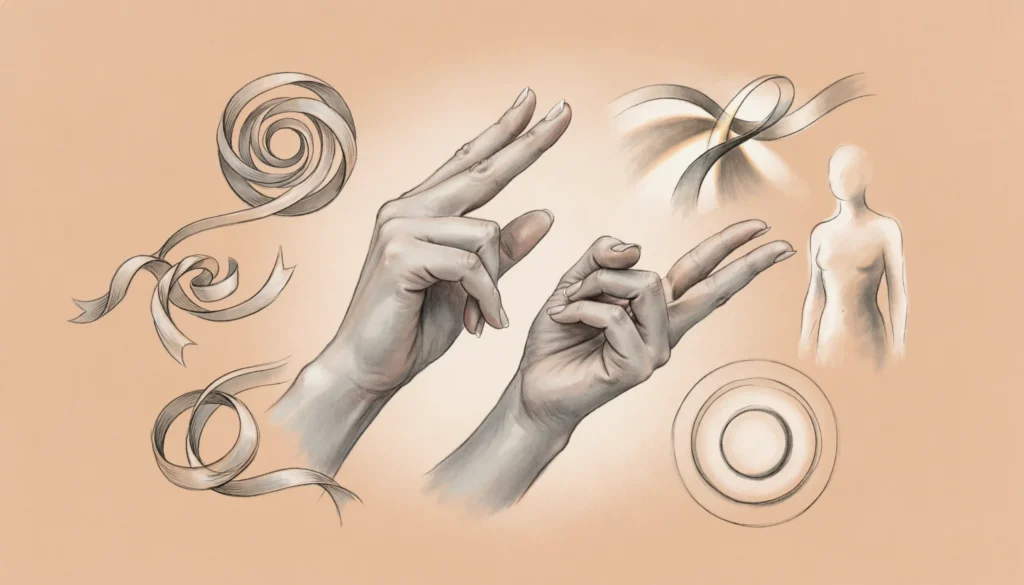
Shibari attracts interest for several different reasons.
1. Artistic Appearance
One of the most noticeable features of Shibari is the appearance of carefully arranged rope.
Rope can create geometric shapes, symmetrical patterns, and visually striking designs. This makes Shibari appealing in photography and performance art.
2. Concentration
Learning rope techniques requires attention.
A person learning the practice may need to focus on:
- Rope placement
- Pattern consistency
- Communication
- Positioning
- Comfort
- Safety
This concentration can make the activity feel absorbing and deliberate.
3. Trust and Communication
When practiced consensually between adults, Shibari can involve a high degree of communication.
Participants may discuss:
- Boundaries
- Comfort levels
- Expectations
- Consent
- Signals
- Aftercare
This communication is an important part of responsible practice.
4. Cultural Curiosity
Some people discover Shibari through Japanese culture, photography, traditional crafts, or contemporary art.
They may initially become interested in the visual style before learning about its wider history.
Shibari in Modern Culture
The internet has played a major role in spreading awareness of Shibari.
Today, people may encounter it through:
- Photography
- Art exhibitions
- Social media
- Films and documentaries
- Performance events
- Adult education communities
- Japanese cultural discussions
Because online content often focuses heavily on its visual appearance, newcomers may not immediately understand the historical and cultural background.
This is why learning the terminology and history can provide useful context.
Common Shibari Terms
If you are researching Shibari meaning, you may come across several related words.
Rope
Rope is the primary material used in many forms of Shibari. Different materials have different characteristics, textures, and handling properties.
Tie
A tie is a particular arrangement or method of using rope.
Rope Work
“Rope work” is a broader phrase describing techniques and activities involving rope.
Kinbaku
Kinbaku is commonly associated with Japanese rope bondage and is sometimes used interchangeably with Shibari.
Hojōjutsu
Hojōjutsu refers to historical Japanese techniques of restraining people with rope.
Rope Art
Rope art emphasizes visual design, creativity, and artistic presentation.
Shibari Examples in Everyday Language
People may use the word Shibari in different types of sentences.
Example 1
“The photographer explored Shibari as a visual art form.”
Here, the emphasis is on photography and artistic composition.
Example 2
“He started studying Shibari after becoming interested in Japanese rope traditions.”
Here, the word refers to learning about the practice and its background.
Example 3
“The workshop discussed communication and consent alongside rope techniques.”
This describes Shibari in a consensual adult educational setting.
Common Misunderstandings About Shibari
Several misconceptions appear frequently online.
Misconception 1: Shibari Is Just Tying Someone Up
This is an oversimplification.
Shibari can involve aesthetics, technique, cultural history, communication, performance, and consensual adult practices.
Misconception 2: Every Shibari Practitioner Uses It Sexually
Not necessarily.
Some people approach Shibari primarily as art, photography, performance, or rope craft.
Misconception 3: Shibari and Hojōjutsu Are Identical
They are related historically and conceptually, but modern Shibari should not automatically be treated as identical to historical restraint traditions.
Misconception 4: Any Rope Tying Is Shibari
Not necessarily.
A person can use rope without practicing Shibari. The term generally refers to a particular Japanese-influenced approach to rope tying and its associated aesthetics or traditions.
Misconception 5: The Practice Requires One Specific Style
Modern practitioners use different approaches and styles. There is no single visual pattern that defines every contemporary Shibari practice.
Shibari and Consent
When Shibari involves adults in an intimate or bondage context, consent is fundamental.
Consent should be:
- Freely given
- Clear
- Informed
- Ongoing
- Reversible
A person should be able to stop the activity at any time.
Good communication can include discussing boundaries beforehand and checking in during the activity.
Because rope can create physical risks, responsible participants also need to understand that consent alone does not eliminate those risks.
Basic Safety Awareness
Shibari can involve physical risks, particularly when rope is placed around sensitive areas or when body positioning is restricted.
For beginners, education from qualified instructors and careful attention to safety are important.
General safety principles include:
- Learn from reliable educational sources.
- Never ignore pain, numbness, or unusual sensations.
- Communicate clearly throughout the activity.
- Avoid treating online demonstrations as a substitute for proper instruction.
- Understand that different bodies have different limitations.
- Have a clear way to stop immediately.
- Do not assume that a visually attractive tie is automatically safe.
For activities involving significant physical restraint, professional instruction is especially valuable.
Shibari as an Art Form
One fascinating aspect of Shibari is its visual quality.
Rope patterns can create:
- Lines
- Shapes
- Symmetry
- Contrast
- Repetition
- Texture
- Geometric designs
This makes the practice interesting to photographers and visual artists.
In an artistic context, the rope arrangement may be considered part of the composition, similar to clothing, lighting, posture, or movement in photography.
Shibari and Photography
Shibari has become particularly recognizable through photography.
Photographers may focus on:
- Rope patterns
- Shadows
- Body positioning
- Composition
- Texture
- Lighting
- Movement
In this context, the rope itself can become an important visual element.
However, photographs showing Shibari do not automatically tell viewers the purpose or relationship behind the scene. Context and consent remain important.
Shibari and Mindfulness
Some practitioners describe rope work as requiring intense concentration.
The process can encourage attention to:
- Breathing
- Movement
- Texture
- Repetition
- Communication
- Present-moment awareness
This does not mean Shibari is automatically a form of meditation. Rather, some people experience focused rope work as calming or mentally absorbing.
Individual experiences can differ considerably.
Related Concepts You May Want to Explore
If you are interested in Shibari meaning, several related concepts may help you understand the topic.
Japanese Rope Traditions
Learning about Japanese rope history provides cultural context for modern practices.
Hojōjutsu
This historical restraint tradition helps explain some of the broader history of Japanese rope use.
Kinbaku
This term is commonly associated with Japanese rope bondage and appears frequently in discussions about Shibari.
Art provides a useful perspective when the emphasis is on visual design rather than intimacy.
Rope Bondage
This is a broader international term covering consensual rope restraint practices.
Why Is Shibari Trending Online?
Search interest in Shibari is partly connected to the growth of visual social media, photography, alternative art communities, and online educational content.
People may search phrases such as:
- Shibari meaning
- What does Shibari mean?
- Shibari definition
- Shibari meaning in Japanese
- Shibari vs Kinbaku
- Japanese rope art
- Shibari history
- What is Shibari?
- Shibari rope meaning
- Japanese rope bondage
These searches show that people are often looking for both a simple definition and deeper cultural context.
Shibari Meaning in Japanese
The Japanese term 縛り (shibari) is connected to the idea of tying or binding.
The underlying verb shibaru (縛る) means “to tie,” “bind,” or “restrain.”
However, translating a Japanese word into English does not always capture every cultural or contextual meaning associated with its modern use.
This is especially relevant because Shibari as a contemporary international practice has developed beyond the basic dictionary meaning of the Japanese word.
Is Shibari a Japanese Word?
Yes.
Shibari (縛り) is a Japanese term related to binding or tying.
However, the contemporary English-language use of “Shibari” often refers specifically to Japanese-inspired rope practices.
Therefore, the dictionary meaning and the modern cultural meaning are connected but not completely identical.
Shibari vs. Western Rope Bondage
Both can involve rope, restraint, and consensual adult activity, but the terminology and cultural traditions can differ.
| Shibari | Western rope bondage |
|---|---|
| Japanese-influenced terminology and aesthetics | Broader international terminology |
| Often emphasizes visual patterns | Can include many different styles |
| Connected to Japanese rope traditions | Developed across various cultures |
| Frequently associated with artistic presentation | May emphasize intimacy, experimentation, or restraint |
| Terminology includes Japanese terms | Terminology is usually English |
These categories can overlap considerably in modern communities.
Frequently Asked Questions
What does Shibari mean?
Shibari is a Japanese word associated with tying or binding. In modern English, it commonly describes Japanese-style rope tying, rope art, or consensual rope bondage.
Is Shibari Japanese?
The word Shibari is Japanese, and modern Shibari is strongly associated with Japanese rope aesthetics and traditions. However, contemporary international Shibari communities have developed their own interpretations.
What is the difference between Shibari and Kinbaku?
The terms are closely related, and many people use them interchangeably. Some practitioners distinguish them based on context, history, aesthetics, or erotic meaning.
Is Shibari always sexual?
No. Shibari can be approached as art, photography, performance, rope craft, cultural exploration, or consensual adult intimacy.
What does Shibari mean in English?
A simple English explanation is “binding” or “tying.” In modern usage, Shibari commonly refers to Japanese-style rope tying or rope art.
Is Shibari the same as Hojōjutsu?
No. Hojōjutsu refers to historical Japanese restraint techniques, while modern Shibari is a contemporary practice influenced by Japanese rope traditions and other cultural developments.
Why is Shibari popular?
Its popularity comes from several factors, including its striking visual appearance, Japanese cultural associations, photography, performance, online communities, and interest in consensual rope practices.
Conclusion
Understanding Shibari meaning requires more than translating the word as “rope tying.” The term has Japanese linguistic roots and is now widely used to describe a variety of contemporary rope practices involving art, aesthetics, performance, cultural interest, and consensual adult activity.
The most important points to remember are:
- Shibari is a Japanese term associated with tying or binding.
- Modern Shibari often refers to Japanese-style rope tying or rope art.
- Kinbaku is a closely related term, although usage varies.
- Hojōjutsu represents a historical Japanese restraint tradition rather than simply being another word for modern Shibari.
- Shibari can have artistic, cultural, educational, or intimate contexts.
- Consent, communication, and safety are essential when adults practice it as a physical or intimate activity.
If you encounter the term online, always consider the context. A photograph, historical discussion, art project, and adult-community conversation may all use Shibari differently. Understanding that broader context gives you a much clearer picture of what the word actually means.
Discover More Articles:
- Copacetic Meaning: Definition, Origin, Examples, and How to Use It
- GMFU Meaning: What Does GMFU Mean in Text and Slang?
- Tire Size Meaning: How to Read and Understand Tire Numbers

Hi, I’m Ethan Walker, founder of GrammarNestz. Passionate about language, writing, and clear communication, I help learners and writers improve their grammar skills through practical tips, easy-to-understand guides, and engaging content.