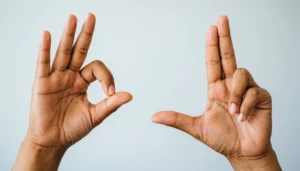
Ta-ta slang meaning is a simple but interesting phrase that usually means “goodbye” or “see you later.” It has a friendly, playful, and sometimes slightly old-fashioned sound. You may hear someone say “Ta-ta!” when leaving a conversation, ending a phone call, or saying goodbye to friends or family.
Although ta-ta is not one of the newest Gen Z slang expressions, it still appears in casual conversations, social media posts, movies, British English, and humorous online messages. Depending on the context, it can sound cute, cheerful, dramatic, sarcastic, or nostalgic.
In this guide, we will explore the ta-ta slang meaning, its origin, how people use it in texting and social media, examples, related expressions, common misunderstandings, and the best ways to respond when someone says “ta-ta.”
What Does Ta-Ta Mean?
The most common ta-ta meaning in slang is “goodbye.”
It is an informal expression used when someone is leaving or ending a conversation. In most situations, “ta-ta” is friendly rather than rude.
Simple definition
Ta-ta = Goodbye / Bye / See you later
For example:
“I have to go now. Ta-ta!”
This simply means:
“I have to go now. Goodbye!”
The expression can also have a playful or humorous tone. Someone might say “Ta-ta!” instead of the ordinary “Bye!” because they want their farewell to sound more cheerful or theatrical.
Is “Ta-Ta” Actually Slang?
“Ta-ta” can be described as informal language or a casual farewell expression rather than modern slang in the same way as words such as “rizz,” “sus,” or “no cap.”
It has been used in English for a long time, particularly in British English. Today, people may use it because it sounds:
- Friendly
- Playful
- Cute
- Lighthearted
- Old-fashioned
- Humorous
- Slightly dramatic
Its meaning usually depends more on tone and context than on the word itself.
For example:
Friendly:
“Okay, I’m heading home. Ta-ta!”
Playful:
“Ta-ta for now! See you tomorrow.”
Humorous:
“My work here is done. Ta-ta!”
In each example, the basic meaning is still “goodbye,” but the feeling is different.
The Origin and History of “Ta-Ta”
The exact origin of “ta-ta” is not completely certain, but it has a long history in informal English as a farewell expression.
The word became particularly associated with British English. It was often used as a light and familiar way of saying goodbye.
Unlike many modern internet slang terms, “ta-ta” did not originate from social media, texting, or Gen Z culture. It existed long before smartphones and social networking sites became popular.
Over time, it developed a recognizable personality. When people hear “ta-ta,” they may imagine a cheerful or slightly old-fashioned farewell.
This is why the expression can sometimes sound humorous when used by younger speakers.
Ta-Ta Meaning in Texting
In texting, ta-ta usually means “bye” or “goodbye.”
Because texting does not provide facial expressions or voice tone, the phrase can add personality to a simple farewell.
For example:
Person A:
“Are you still coming tonight?”
Person B:
“No, something came up. Ta-ta!”
Here, “ta-ta” simply means goodbye.
Another example:
Friend:
“I’m going offline. Ta-ta!”
This means:
“I’m going offline. Bye!”
People may also stretch or modify the expression for humor:
- “Ta-ta!”
- “Ta-ta for now!”
- “Okay, ta-ta!”
- “Ta-ta”
- “Ta-ta, everyone!”
- “Right, ta-ta!”
The meaning remains essentially the same.
Ta-Ta Meaning on Social Media
On platforms such as TikTok, Instagram, Facebook, X, and messaging apps, “ta-ta” can be used as a humorous or dramatic way to leave.
For example, someone might post:
“I said what I said. Ta-ta!”
The phrase here does more than simply say goodbye. It suggests:
“I’m finished with this conversation, and I’m leaving.”
Another example:
“No more arguing. Ta-ta!”
This could communicate a playful or slightly dismissive attitude.
Social media users may choose “ta-ta” because it sounds more entertaining than simply writing “bye.”
Ta-Ta Meaning in British English
“Ta-ta” is especially associated with British English.
In Britain, it has traditionally been used as an informal way of saying goodbye. Depending on the speaker, it can sound natural, affectionate, humorous, or old-fashioned.
For example:
“See you tomorrow. Ta-ta!”
Someone unfamiliar with British expressions might wonder whether “ta-ta” has another hidden meaning. Usually, it does not.
It is simply a casual farewell.
Why does it sound unusual to some people?
Many English speakers are more familiar with:
- Bye
- Goodbye
- See you
- See you later
- Take care
- Catch you later
Because “ta-ta” is less common in some regions, it may sound unusual or playful.
Ta-Ta vs. Bye
Both expressions can mean goodbye, but their tone can be different.
| Expression | Meaning | Typical Tone |
|---|---|---|
| Bye | Goodbye | Casual |
| Goodbye | Farewell | Neutral/formal |
| See ya | See you | Very casual |
| Later | See you later | Casual |
| Ta-ta | Goodbye | Playful/informal |
| Ta-ta for now | Goodbye for now | Friendly/playful |
| Farewell | Goodbye | Formal/dramatic |
“Bye” is much more common in everyday modern conversation.
“Ta-ta” has a more distinctive personality and may sound playful or old-fashioned.
Ta-Ta Meaning in Different Contexts
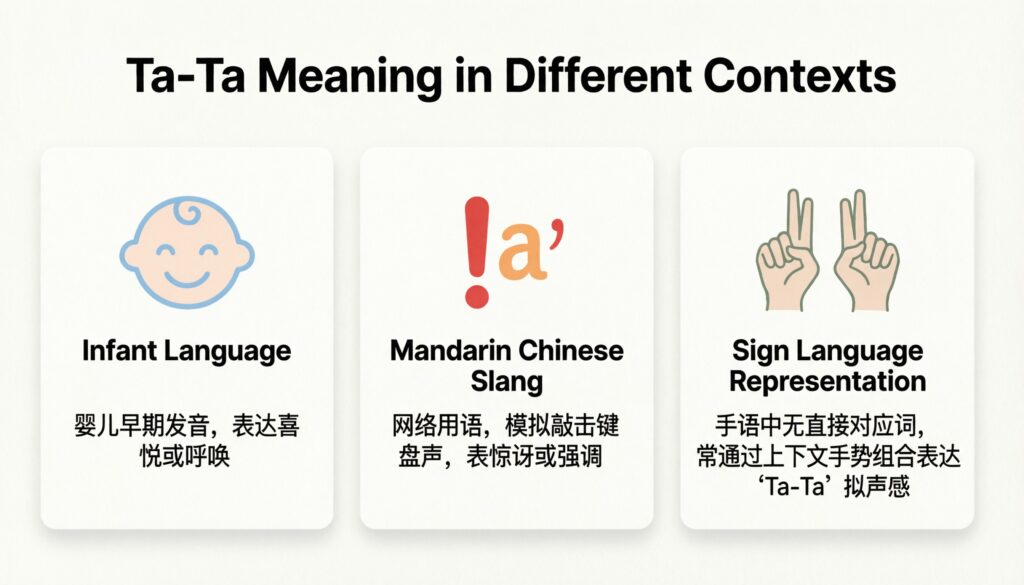
The phrase can carry slightly different feelings depending on where and how it is used.
1. Friendly conversation
“I’m going home now. Ta-ta!”
Meaning:
“I’m going home now. Bye!”
This is warm and friendly.
2. Text messages
“Okay, I need to sleep. Ta-ta!”
Meaning:
“Okay, I need to sleep. Goodbye.”
This can make the message sound cheerful.
3. Social media
“I’m deleting this app. Ta-ta!”
Here, “ta-ta” can make the statement humorous or dramatic.
4. Sarcastic conversation
“You don’t want my advice? Fine. Ta-ta!”
Here, the phrase may sound sarcastic or slightly annoyed.
5. Playful conversation
“My shift is over. Ta-ta, everyone!”
This creates a humorous farewell.
6. Children’s speech
A parent or adult might use “ta-ta” when speaking playfully with a child:
“Say ta-ta to Grandma!”
Here, it means “say goodbye.”
Is Ta-Ta Rude?
Generally, no. “Ta-ta” is not inherently rude.
However, context matters.
If someone says:
“Ta-ta!”
with a smile, it is likely friendly or playful.
But if someone says:
“Oh, you don’t agree? Ta-ta.”
the expression might sound dismissive or sarcastic.
The same word can therefore communicate different emotions depending on:
- Tone
- Situation
- Relationship
- Punctuation
- Emojis
- Conversation history
In text messages, context is especially important.
Ta-Ta Meaning in a Relationship or Dating
When used between romantic partners, “ta-ta” is usually playful.
For example:
“Goodnight, handsome. Ta-ta”
This could sound affectionate and cute.
However, if someone writes:
“Whatever. Ta-ta.”
it may sound like they are ending the conversation because they are annoyed.
So, if you receive “ta-ta” from someone you are dating, don’t automatically assume it means something negative. Look at the rest of the conversation.
Ta-Ta Meaning in a Funny or Sarcastic Way
One of the reasons people still use “ta-ta” is because it can make a sentence funny.
For example:
“You want me to do all the work? Ta-ta!”
The person may be jokingly refusing.
Another example:
“No coffee left? Ta-ta, productivity!”
Here, “ta-ta” is being used creatively rather than as a literal farewell to a person.
This type of humorous usage is common in memes, captions, and casual online conversations.
Common Examples of “Ta-Ta”
Here are several examples that show how the expression works.
Example 1: Leaving a party
“It was great seeing everyone. Ta-ta!”
Meaning:
“I’m leaving now. Goodbye!”
Example 2: Ending a chat
“I have class now. Ta-ta!”
Meaning:
“I have class now, so goodbye.”
Example 3: Going offline
“My battery is at 1%. Ta-ta!”
Meaning:
“I’m about to lose my phone, so bye!”
Example 4: Humorous exit
“I’ve finished my part. Ta-ta!”
Meaning:
“I’m done here. Goodbye.”
Example 5: Sarcastic usage
“You don’t need me? Ta-ta!”
Meaning:
“Fine, I’m leaving.”
Example 6: Affectionate usage
“Sleep well! Ta-ta”
Meaning:
“Goodbye/goodnight in a cute way.”
“Ta-Ta for Now” Meaning
You may also see the phrase “ta-ta for now.”
It means:
“Goodbye for now; I expect to see or talk to you again.”
For example:
“I have to leave for work. Ta-ta for now!”
This does not necessarily mean a permanent goodbye. It is simply a lighthearted way of saying “see you later.”
“Ta-ta for now” can sound particularly cheerful or playful.
Ta-Ta and “TTFN”
A related expression you may encounter online is TTFN, which stands for:
Ta-ta for now
TTFN became known as an informal farewell expression and has appeared in British popular culture and entertainment.
Someone might write:
“Time for me to go. TTFN!”
This means:
“Time for me to go. Goodbye for now!”
TTFN is much less common in everyday texting today, but it can still appear in humorous, nostalgic, or playful contexts.
Is “Ta-Ta” Used by Gen Z?

“Ta-ta” is not primarily a Gen Z slang word.
Modern Gen Z and internet slang includes expressions such as:
- Rizz
- No cap
- Sus
- Slay
- Ate
- Bet
- Lowkey
- Highkey
- Periodt
- Delulu
“Ta-ta” is different because it is an older informal expression that can be reused online.
You may see younger people use it ironically or humorously precisely because it sounds old-fashioned.
For example:
“I’m leaving this group chat. Ta-ta”
The humor comes partly from the exaggerated farewell.
Common Misunderstandings About Ta-Ta
Misunderstanding 1: It always means something romantic
Not true.
“Ta-ta” can be used with:
- Friends
- Family
- Coworkers
- Partners
- Children
- Online followers
Its meaning depends on context.
Misunderstanding 2: It is always sarcastic
Not necessarily.
It can be completely friendly.
“See you tomorrow! Ta-ta!”
There is no obvious sarcasm here.
Misunderstanding 3: It is modern internet slang
Not exactly.
The expression has a much longer history than modern social media slang.
Misunderstanding 4: It means “thank you”
This can be confusing because “ta” by itself can mean “thank you” in informal British English.
However, “ta-ta” is commonly understood as a farewell expression meaning “goodbye.”
The context helps determine which meaning is intended.
“Ta” vs. “Ta-Ta”
These expressions should not automatically be treated as identical.
“Ta”
In informal British English, “ta” can mean:
“Thanks” or “thank you.”
Example:
“Ta for helping me!”
Meaning:
“Thanks for helping me!”
“Ta-ta”
“Ta-ta” commonly means:
“Goodbye.”
Example:
“Right, I’m off. Ta-ta!”
Meaning:
“Okay, I’m leaving. Goodbye!”
This distinction is useful when reading British English or informal online conversations.
Alternatives to “Ta-Ta”
If you want to say goodbye, there are many alternatives.
Casual alternatives
- Bye
- See ya
- Later
- Catch you later
- See you
- Take care
- Peace
- I’m off
- Talk soon
Playful alternatives
- Ta-ta!
- Ta-ta for now!
- Catch you on the flip side!
- I’m out!
- Later, alligator!
- See ya!
More formal alternatives
- Goodbye
- Take care
- Have a good day
- Until next time
- I look forward to speaking with you again
Choose the expression based on the person and situation.
How to Respond When Someone Says “Ta-Ta”
If someone says “ta-ta” to you, the easiest response is another casual farewell.
You could say:
“Bye!”
or:
“See you later!”
For a playful response:
“Ta-ta!”
You could also say:
“Take care!”
or:
“See you soon!”
Example conversation
Person A:
“I have to run. Ta-ta!”
Person B:
“See you later!”
Or:
Person A:
“Right, I’m off. Ta-ta!”
Person B:
“Ta-ta! Take care.”
There is no complicated response required.
Why Do People Still Use “Ta-Ta”?

Even though “ta-ta” is an older expression, it remains recognizable because language does not completely disappear when newer slang appears.
People may use it because it is:
- Short
- Memorable
- Friendly
- Expressive
- Playful
- Easy to understand
- Fun to type
Online communication also gives old expressions a new life.
Someone might deliberately choose “ta-ta” because simply writing “bye” feels too ordinary.
Quick Summary Table
| Question | Answer |
|---|---|
| What does ta-ta mean? | Usually “goodbye.” |
| Is ta-ta slang? | It is an informal farewell expression. |
| Is it modern Gen Z slang? | No, it is an older expression. |
| Where is it strongly associated? | British English. |
| Can it be playful? | Yes. |
| Can it be sarcastic? | Yes, depending on context. |
| What does ta-ta for now mean? | Goodbye for now. |
| What does TTFN mean? | Ta-ta for now. |
| Is ta-ta rude? | Usually not. |
| What is a simple alternative? | Bye or see you later. |
FAQs About Ta-Ta Slang Meaning
1. What is the ta-ta slang meaning?
The most common ta-ta slang meaning is “goodbye” or “bye.” It is an informal and often playful way to end a conversation or say farewell.
2. Is “ta-ta” British slang?
“Ta-ta” is strongly associated with British English and has traditionally been used as an informal way of saying goodbye. It can also be understood by English speakers elsewhere.
3. What does ta-ta mean in texting?
In texting, “ta-ta” generally means “goodbye.” Depending on the conversation, it can sound friendly, cute, humorous, or sarcastic.
4. Is ta-ta rude?
No. “Ta-ta” is normally friendly or playful. However, someone can use it sarcastically or dismissively depending on their tone and the situation.
5. What does “ta-ta for now” mean?
“Ta-ta for now” means “goodbye for now.” It usually suggests that the person expects to talk to or see you again later.
6. What does TTFN stand for?
TTFN stands for “ta-ta for now.” It is an informal farewell that means goodbye for the moment.
7. What is the difference between “ta” and “ta-ta”?
“Ta” can mean “thanks” in informal British English, while “ta-ta” commonly means “goodbye.” Context makes the intended meaning clear.
Conclusion
The ta-ta slang meaning is surprisingly simple: it usually means “goodbye.” However, its tone can make it more interesting than an ordinary “bye.”
The expression has a long history in informal English and is particularly associated with British English. Today, it can appear in texting, social media, memes, entertainment, and casual conversations. People may use it sincerely, playfully, humorously, or sarcastically.
When you see “ta-ta,” pay attention to the surrounding conversation. If someone writes, “I’m heading home. Ta-ta!” they are simply saying goodbye. If they write, “Fine, ta-ta!” the phrase may have a dismissive or sarcastic tone.
The easiest alternatives are bye, see you, later, take care, and see you soon. And if someone says “ta-ta” to you, responding with “Bye!” or “Ta-ta!” is perfectly natural.
Ultimately, understanding slang is not only about learning definitions. It is about recognizing context, tone, culture, and intention—and “ta-ta” is a great example of how a simple farewell can carry several different shades of meaning.
Discover More Articles:
- WP Meaning in Chat: What Does WP Stand For?
- Motorboating Slang Meaning: Is It Funny, Flirty, or Offensive?
- Tom Slang Meaning: What Does “Tom” Mean in Slang and Texting?

Emily Thompson is an English language educator and grammar writer at grammarnestz.com. She specializes in grammar rules, vocabulary development, writing skills, and language-learning resources for students and professionals.